Bodensee Weinfest Meersburg
Müller-Thurgau exists on Lake Constance because Johann Baptiste Röhrenbach rowed 400 grafted vines across the lake in a fishing boat on an April night in 1925. German authorities had banned the variety. He rowed for it anyway. Meersburg's Altes Schloss — the oldest inhabited castle in Germany, seventh century — survived the first cannon fire ever used on German soil in 1334 and didn't fall. Annette von Droste-Hülshoff, Germany's greatest female poet, moved into this castle in 1841 and died here in 1848. The Staatsweingut has been making wine since 1210.
A Wine Memories experience · winememories.fi
How to Complete
5 steps curated by Wine Memories
- 🍷 Log Memory
📍 WHERE: The wine stalls on Schlossplatz — find any stall marked 'Müller-Thurgau' or 'MüThu' (locals use the nickname). Winegrowers from Meersburg, Hagnau, Konstanz, and Bermatingen are all here.
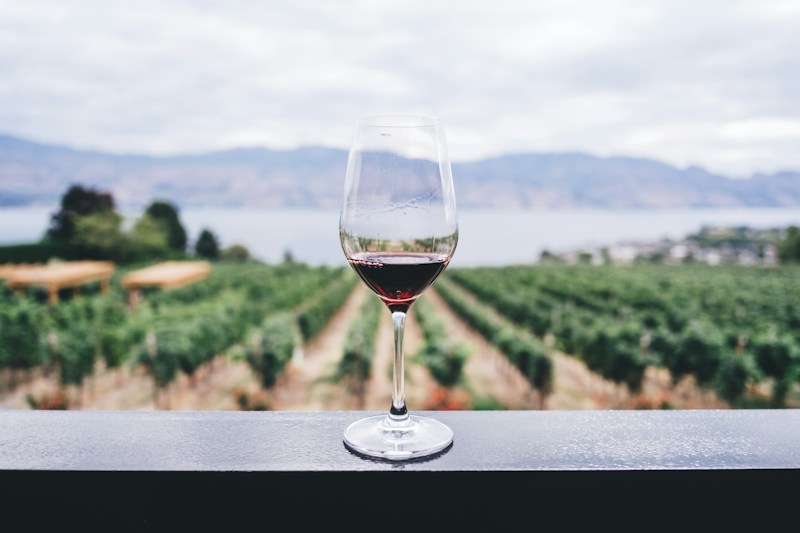
💡 WHAT: The wine in that glass exists here because of a single act of defiance. On an April night in 1925, a local winemaker named Johann Baptiste Röhrenbach climbed into a rowboat at Immenstaad — about 8km from where you're standing — and rowed 5km across the open lake to Switzerland. He came back with 400 grafted Müller-Thurgau vines hidden in his boat. The variety had been invented by a Swiss botanist in 1882, but German authorities had banned it from their planting registers. Röhrenbach had tasted it once at Arenenberg Castle on the Swiss shore and decided: I'll row for it. Those 400 smuggled vines became the most popular grape at Lake Constance. For decades, Müller-Thurgau was the world's most widely planted white wine grape. Every glass at this festival carries that origin story.
🎯 HOW: When a winemaker hands you a Müller-Thurgau, say: 'Ist das Ihr Müller-Thurgau aus dem Bodensee-Gebiet?' (Is this your Lake Constance Müller-Thurgau?). Then ask: 'Kennen Sie die Geschichte des Schmuggels von 1925?' (Do you know the 1925 smuggling story?). Watch their face — they know it. Wine prices at the festival: approx. €3–5 per glass plus €2 Pfand (refundable glass deposit). Weekend entry: €6, day ticket €4.
🔄 BACKUP: If one stall has run out of Müller-Thurgau, walk the full length of Schlossplatz — there are multiple producers, all pouring local varieties. Any Bodensee Müller-Thurgau carries the same story.
- 🍷 Log Memory
📍 WHERE: Leave the festival, walk down through Meersburg's Unterstadt (lower town) to the lakefront promenade. Face south across the water toward Switzerland.
💡 WHAT: The shoreline directly across from you — the Swiss side — is where it happened. Ermatingen, Switzerland, is roughly 5km across that water. And Immenstaad, where Röhrenbach launched his rowboat, is ~8km along the German shore to your left. On an April night in 1925 he was out there in the dark, rowing 400 vines back across this exact stretch of lake. But look up and behind you at the same time. That castle towering above the town — the Altes Schloss — has been inhabited for 1,400 years. In 1334, Emperor Louis IV parked his army below it and used gunpowder cannons against the castle walls. It was the first time anyone had fired a cannon on German soil. The castle didn't fall. You're standing at the intersection of a wine smuggling story and the oldest castle in Germany. The lake is the same one. The castle is the same one.
🎯 HOW: Walk to the Seepromenade. Look south across to the Swiss mountains. On clear September evenings you'll see the Säntis massif (2,502m) glowing behind the far shore — the same peaks the smugglers navigated by. Take a moment. Then walk back up through the Steigstrasse — the steep medieval lane with arcaded half-timbered houses — and re-enter the festival from above.
🔄 BACKUP: If visibility is poor (rare in September but possible), the lakefront walk is still beautiful. The dramatic view of castle + lake works at any light level.
- 🍷 Log Memory
📍 WHERE: Staatsweingut Meersburg, Seminarstraße 6 (a 5-minute walk from Schlossplatz, toward the New Palace). This is Germany's oldest state winery — documented since 1210, when the Prince-Bishops of Constance first planted these slopes.
💡 WHAT: The wine cellar you're about to enter was built in 1720–1722 on the orders of Prince-Bishop von Stauffenberg — and it sits in the castle's former defensive moat. The moat that once kept armies out now keeps 40 different wines in. You can walk through it independently, tasting as you go, the vaulted stone ceiling lit by atmospheric lamps. Around you: wines from the same hillsides that have been under vine since the 13th century. From the estate pub's window, you can look out over Lake Constance to the Alps — the same view the prince-bishops had as they worked through their state cellar.
🎯 HOW: The self-guided cellar walk-through costs €20 per person. No booking required on weekdays — call ahead for weekends or groups: +49 (0) 7532 446744. Ask at the entrance for 'die Kellerbesichtigung mit Weinprobe' (cellar visit with tasting). Taste through the Müller-Thurgau first, then the Spätburgunder. If you want context, ask about the Weinerlebnistage (Wine Experience Days) — they run separate guided tours in summer.
🔄 BACKUP: If the cellar tour is fully booked, the estate wine shop at the same address sells all current wines. Buy a bottle of Müller-Thurgau, take it to the lakefront promenade, and drink it while looking at the Swiss shore. Same story, different delivery.
- 🍷 Log Memory
📍 WHERE: Altes Schloss Meersburg (Burg Meersburg), Schloßplatz 10 — the castle directly adjacent to the festival square. Open daily 10:00–18:30. Entry fee approximately €10 (verify at burg-meersburg.de or on-site).
💡 WHAT: Germany's greatest female poet, Annette von Droste-Hülshoff (1797–1848), moved into this castle in 1841 to live with her sister Jenny. She stayed until she died here on May 24, 1848 — tuberculosis, in these rooms, looking out at this lake. Her private study is preserved. You can stand at the same desk where she wrote her final poems. In the winter of 1847–1848, just months before she died, she composed poems here including 'Auf hohem Felsen lieg ich hier' ('I lie here on high rock') — essentially describing her view of Lake Constance from this very window. The castle itself has been continuously inhabited since the 7th century — the Dagobert Tower at its core is named for the Merovingian King Dagobert I who allegedly built it around 628 AD. It survived the 1334 cannon siege (the first firearms ever used on German soil). It survived centuries of feudal politics. Annette chose to spend her final years here rather than anywhere else in Europe. When you're in her study, ask yourself: why here?
🎯 HOW: Enter through the main castle gate on Schloßplatz. The poet's rooms are clearly marked inside. Ask staff: 'Wo befindet sich das Arbeitszimmer von Annette von Droste-Hülshoff?' (Where is Annette von Droste-Hülshoff's study?). Spend a few minutes at the window with the lake view. This is what she saw every day for seven years.
🔄 BACKUP: If the castle is temporarily closed for an event, the castle exterior and the Schloßplatz itself are always accessible and free. The Altes Schloss website (burg-meersburg.de) lists any closure dates.
- 🍷 Log Memory
📍 WHERE: Neues Schloss (New Palace) garden terrace, Schlossplatz 12, Meersburg — 100 meters from the festival, up the slight incline past the Altes Schloss. The rear garden terrace is accessible without entering the palace itself.
💡 WHAT: This is the reveal. The New Palace was built from 1710 as the residence of the Prince-Bishops, and from this terrace you have what the bodensee.eu tourism board calls 'Germany's largest lake at your feet.' But in September at golden hour, it becomes something else entirely: Lake Constance stretching south in the fading light, the Swiss Alps rising on the far shore, the Säntis massif (2,502m) catching the last pink light of the day. To the left: the dark volcanic spire of the Altes Schloss against the sky. Below: the terracotta roofs of Meersburg's Unterstadt and the ferry port. In the water: reflections of all of it. This is when the whole day synthesizes. You've tasted the wine that was rowed across that lake at night. You've stood in the dead poet's study. You've descended into the cellar built in a moat. Now you watch the Alps go pink and drink what's left in your festival glass.
🎯 HOW: Walk to the palace garden side (not the main entrance). The rear terrace with the lake view is free to access from the garden. Arrive 30–45 minutes before sunset (in September, roughly 19:30–20:00). Bring your festival glass. Stay until dark.
🔄 BACKUP: If the garden terrace is closed for a private event, the Marktplatz viewpoint directly in front of the New Palace faces the lake and has nearly the same view. The lakefront promenade at the bottom of town also catches the full sunset panorama.