Mosel Kellerfest Piesport
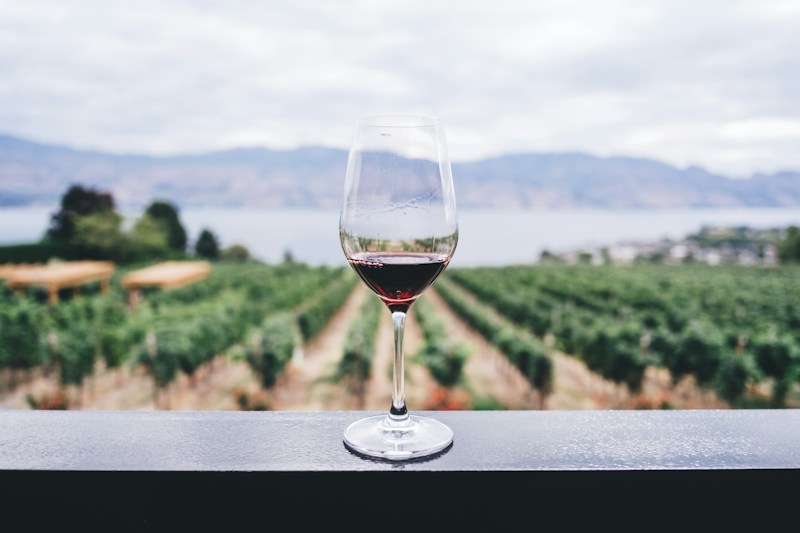
Under Piesport sits the largest Roman wine press north of the Alps — 44 metres long, seven basins, built when Trier was capital of the Western Roman Empire and this press may have fed Constantine the Great's court. During Kellerfest, winemakers open their actual production cellars: no tasting room performance, no marketing — you're drinking from the barrel where the wine was made, surrounded by the tools that made it, for €2-3 a glass. The Goldtröpfchen vineyard above was nearly destroyed in the 1970s when cheap producers hijacked its name. The wine in your hand is the reclaimed original.
A Wine Memories experience · winememories.fi
How to Complete
5 steps curated by Wine Memories
- 🍷 Log Memory
📍 WHERE: Walk from the village center toward the Goldtröpfchen vineyard. Follow the vineyard path upward until the slope opens — you can start from the signposted Weinlehrpfad (wine education path) near the river. The climb takes 15-20 minutes and is signposted.
💡 WHAT: In 371 AD, the Roman poet Ausonius — tutor to Emperor Gratian, the most celebrated Latin poet of his century — stood somewhere near this slope and wrote 483 hexameters about what he saw. He called it a 'natural amphitheatre covered with vines.' Eleven hundred and fifty-five years later, you are standing in that same amphitheatre. The Mosel curves completely around it below you. The vines have never stopped growing here.
🎯 HOW: Turn and face downhill. The Mosel should curve left and right below you, with the village of Piesport hugging the inner bank. Count the degrees of arc — it's nearly 180. Now look up: the slope above you rises to 200 metres, at angles up to 60 degrees. On the right days in October, the morning light sweeps east to west across the amphitheatre. Ask yourself what Ausonius was seeing when he wrote those lines. This view is exactly it. The festival promenade below is named Ausoniusufer — Ausonius-bank — in his honour.
🔄 BACKUP: If the path is wet or you don't want to climb, the amphitheatre shape is fully visible from the Ausoniusufer promenade at river level. Look up and across: the curving wall of vines 80 metres above you is exactly what Ausonius described.
- 🍷 Log Memory
📍 WHERE: The Roman wine press (Römische Kelter) is on the western outskirts of Piesport, between the districts of Alt-Piesport and Ferres, in the meadow called 'In Briesch' — at the foot of the Goldtröpfchen slope. Follow signs for 'Römische Kelter Piesport' from the village center. It takes about 10 minutes to walk from the Ausoniusufer promenade.
💡 WHAT: Discovered in 1985 during land clearance, this is the largest Roman wine press north of the Alps. The facts don't quite land until you're standing inside it: 44 metres long. 20 metres wide. Seven basins. 130 workers at harvest. Up to 60,000 litres of crushed grape mash processed in a single season. It was built in the 4th century AD — the same century Trier, just 40km down the road, was the capital of the Western Roman Empire. Constantius Chlorus governed from Trier. Constantine the Great was declared emperor there. The archaeological consensus: this press was probably an imperial or prefectural domain. Wine from THIS vineyard, pressed in THIS building, may have been drunk by Roman emperors.
🎯 HOW: During the Kellerfest, the reconstructed screw press is demonstrated in operation — you can watch it work. Outside festival time, the protective structure is open year-round and the basins are visible. Stand in one of the 7 basins and look up at the Goldtröpfchen slope above you. The workers who stood in this exact spot 1,700 years ago were harvesting grapes from the same amphitheatre you just walked. The wine from those grapes went — probably — to Rome.
🔄 BACKUP: If the Kellerfest dates don't work, the site is freely accessible year-round. Contact Tourist Information Piesport (info@piesport.de / 0049-6507-2027) about guided tours of the press outside festival season.
- 🍷 Log Memory
📍 WHERE: The Kellerfest participating cellars are distributed through Piesport village — look for the green Kellerfest signs on doors and gates. Weingut Reuscher-Haart, Weingut Lehnert-Später, and Weingut Franzen are among the regular participants. All are within a few minutes' walk of each other.
💡 WHAT: This is the core ritual: you are going underground into the actual cellar where the wine you are drinking was made. Not a tasting room built for tourists. The production cellar — with barrels, hoses, the smell of wine absorbed into stone over generations — opened specifically because it's a national holiday weekend and the winemaker wants to share what they've grown. The wine costs €2-3 per glass. The Goldtröpfchen Kabinett is the entry point — sunshine and peach against deep slate and flint, spine-tingling acidity. It's the lightest serious wine you'll ever drink: featherweight at 7-8% alcohol, with enough acid to make it feel like it's drinking YOU.
🎯 HOW: Pick up a glass at the first cellar, pay the €2-3 tasting fee. As you taste, ask the producer: 'Tell me about the Goldtröpfchen name — what happened to the reputation in the 1970s?' Watch their face. The story they'll tell you: cheap producers started putting 'Piesporter Goldtröpfchen' on mass-market supermarket wine. The real producers watched their reputation collapse because of wines grown nowhere near here. The recovery took decades. The wine in your glass is the real thing — the reclaimed name, the actual vineyard, the actual cellar. That context makes every sip taste different.
🔄 BACKUP: If you can't find an open cellar (outside festival dates), Weingut Haart at Ausoniusufer 18 accepts visitors and has been the family's home since before 1337. The Roman wine press is literally steps from their estate.
- 🍷 Log Memory
📍 WHERE: Any Kellerfest cellar or Via Vinorum stall serving food. Look for the stand (or table spread) with Federweisser in open-topped or short-capped bottles — it's usually set apart from the still wines because the yeast pressure means it can't be sealed tight.
💡 WHAT: The Kellerfest falls in the exact two-week window when Federweisser exists. Literally 'feather-white' — named for the white yeast clouds that float through it — this is grape juice still mid-fermentation, fizzing with live CO2 from the yeast working inside the bottle. It's not sparkling wine. It's wine becoming wine, caught in the act. Sweet, barely alcoholic, slightly hazy, tasting like crushed grapes with a yeast tang. The canonical pairing is Zwiebelkuchen: a savory onion tart with caramelized onions, bacon, and cream. The combination of cold fizzing must and warm savory tart, eaten underground in October, is one of those hyper-specific seasonal pleasures that only exists for this two-week window, in wine regions, in autumn.
🎯 HOW: Order Federweisser and Zwiebelkuchen together — they are always sold as a pair at autumn wine festivals. Note how the Federweisser must be kept upright: the ongoing fermentation means it will blow a regular cap off. Drink it quickly once poured (the yeast keeps working). This is wine you absolutely cannot buy in a supermarket outside Germany, and inside Germany it's only available for about 3 weeks. You are in the right place at the right time for something genuinely rare.
🔄 BACKUP: If Federweisser isn't available (you've missed the window or the weather brought an early harvest), ask specifically for the youngest vintage Kabinett available — this is Piesport's entry-level wine and should be the current year. It gives you the same freshness in a more stable form.
- 🍷 Log Memory
📍 WHERE: The Ausoniusufer — the riverbank promenade that runs along the Mosel through Piesport. During Kellerfest, this becomes the Via Vinorum ('wine road'), with stalls along the river offering the range of Piesport wines and Mosel specialties. Named after the Roman poet who walked here in 371 AD and couldn't stop writing about what he saw.
💡 WHAT: You've been underground. You've been inside a Roman press basin. You've tasted Riesling in the cellar where it was made and had the Federweisser conversation. Now you come up and out, walk to the river, and take one more glass out onto the promenade. The Goldtröpfchen amphitheatre rises above you to your left. The Mosel curves away in both directions. The October sun is low. Ausonius stood somewhere along this bank in 371 AD and wrote that this was the most beautiful place he had ever seen. You're holding a glass of wine that grew on the same slope he was looking at. Some things need to be felt, not explained.
🎯 HOW: Walk the full length of the Via Vinorum with your glass — it's not long, maybe 400 metres. Look up at the vineyard wall above the village. Look at the angle of the light on the Mosel. If you came by bus, this is also where you watch the valley change colour as evening arrives. The last light hits the west-facing slopes of the Goldtröpfchen last. The river turns copper. That's when you understand why Ausonius spent 483 hexameters trying to describe it — and why it took him that many words and still didn't quite work.
🔄 BACKUP: The Ausoniusufer promenade is freely walkable year-round, with or without festival. Mosel views and vineyard backdrop always available. Bring your own wine from a cellar tasting if visiting outside festival dates.