✦ Wine from Roman Vineyard Sites
Carnuntum Wine Region
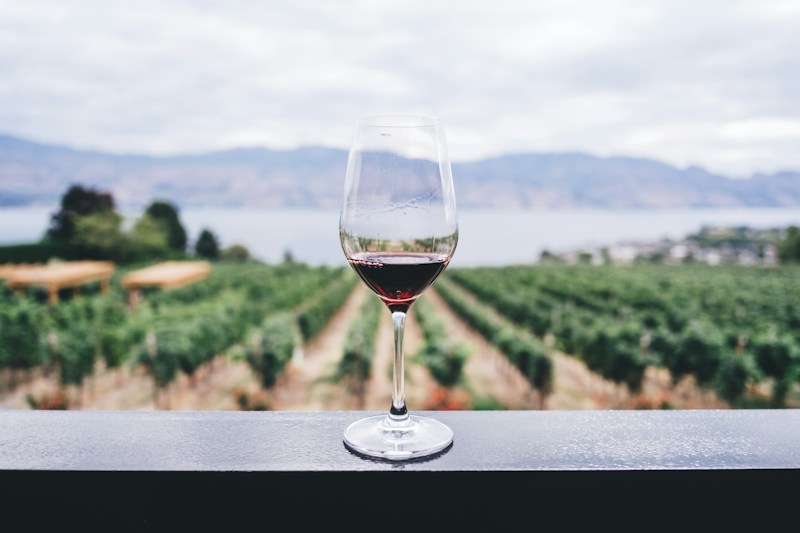
The vineyards surrounding Roman Carnuntum have their own DAC (quality designation). Warm Pannonian climate produces full-bodied reds — Zweigelt, Blaufränkisch — that Romans would have appreciated. Wine cellars are carved into loess soil.
A Wine Memories experience · winememories.fi
How to Complete
5 steps curated by Wine Memories
-
The Heidentor is a 13-meter Roman triumphal arch standing free in a field south of Petronell — no ticket, no fence, just the arch and the sky. Emperor Probus ordered his Pannonian legions to plant these hills with vines in 280 AD. Two years later they murdered him. The vines outlived him by 1,800 years.
🍷 Log Memory📍 WHERE: The Heidentor stands in an open field at the south end of Petronell-Carnuntum, approximately 1 km south of the civilian Roman town ruins. Park at the Carnuntum Archaeological Park main lot, then walk ~25 minutes south across the fields — the arch is visible from a distance, standing alone.
💡 WHAT: In 280 AD, Emperor Probus reversed a 180-year ban on planting vines outside Italy and ordered his legions here in Pannonia to cover the hills with vineyards. His soldiers hated the backbreaking labor. They killed him two years later. Those same hills are exactly what you're looking at from here — the Göttlesbrunn and Arbesthal ridge to the south, still planted with Zweigelt and Blaufränkisch today. This arch was built 70 years later (under Constantius II, ~350 AD) as a victory monument, but it stands as an accidental memorial to the whole Roman wine project. No other wine region on earth has an emperor's monument standing in the middle of the vineyard view.
🎯 HOW: Free access, open year-round at all hours. Walk directly to the arch — you can touch the stones. Read the information panels on-site. Face south from the arch: those vine-covered hills in the distance are the Göttlesbrunn zone where Markowitsch and Glatzer grow their best Zweigelt.
🔄 BACKUP: If the path across fields is muddy or inaccessible, the arch is clearly visible from the road. The viewpoint from the parking area still gives the essential framing of arch + vineyards.
-
Every bottle of Rubin Carnuntum passed a blind tasting jury. It must be 100% Zweigelt, 12.5% minimum alcohol, and earn a unanimous verdict from the region's best producers. Markowitsch's version has been made continuously since the club's founding in 1992.
🍷 Log Memory📍 WHERE: Weingut Gerhard Markowitsch, Pfarrgasse 6, A-2464 Göttlesbrunn. Drive from the Heidentor: 15 minutes southwest on the B9 and local roads.
💡 WHAT: The Markowitsch family has grown grapes in Göttlesbrunn for over 200 years. Gerhard Markowitsch is one of the acknowledged fathers of the Carnuntum red wine renaissance — the man who proved this region could produce serious, age-worthy reds. His Rubin Carnuntum (100% Zweigelt, ~€15) is the entry point. On the nose: morello cherry, mulberry, a hit of violets. On the palate: that specific Göttlesbrunn fingerprint — ripe dark cherry plus a flash of white pepper. It's not a flavor that exists in Burgenland Zweigelt. It's a soil thing. The Ried Rosenberg 1ÖTW (his flagship blend, Zweigelt + Blaufränkisch + Merlot, ~€30) takes that fingerprint and wraps it in structure: 96–98 Falstaff points, described as 'cloves, vanilla, cranberry, forest berry confit, ripe tannins and nougat.'
🎯 HOW: Tasting room hours — Mon–Fri 8:00–12:00 and 13:00–17:00, Sat 10:00–13:00. Walk-in tastings are generally welcome during those hours. For a guided session or to taste the single-vineyard wines, call ahead: +43 2162 8222 or email weingut@markowitsch.at. Ask specifically to try the Rubin Carnuntum and the current Rosenberg. Tasting is budget tier (typically free or a nominal pour fee).
🔄 BACKUP: If Markowitsch is closed or full, Weingut Netzl is three minutes away at Rosenbergstraße 17 (tel. +43 2162 8236). Their 'Christina' Zweigelt is €12 and made from organic Göttlesbrunn fruit — same terroir expression.
-
The Museum Carnuntinum holds actual iron falx vinitoria — Roman pruning knives — excavated from the fields around Carnuntum. They were used to tend the vines Probus's soldiers planted. They look almost identical to the pruning knives used in these same vineyards today.
🍷 Log Memory📍 WHERE: Museum Carnuntinum, Bad Deutsch-Altenburg, Austria — about 5 km east of Petronell on the B9. GPS approximately 48.1207°N, 16.9040°E. Signposted from the main road.
💡 WHAT: Austria's largest Roman museum holds 2 million+ preserved pieces from Carnuntum. In the agricultural tools section you'll find the iron pruning knives (falx vinitoria) and double-bladed mattocks excavated from the Carnuntum site — the actual tools used to cultivate the first Pannonian Roman vineyards. These aren't replicas. The glass cases put you within arm's reach. The museum also holds vineyard-related amphorae and processing equipment that shows exactly how the Roman wine supply chain worked here on the Danube frontier.
🎯 HOW: Open March 16 – November 17 daily 9:00–17:00. Admission €13 adults / €11 students and seniors. Budget 90 minutes minimum. Look specifically for the agricultural tools room and the wine production exhibits — ask staff to point you to the falx vinitoria if they're not immediately obvious.
🔄 BACKUP: If you're pressed for time, skip the full museum and walk the outdoor archaeological site at Petronell instead — the civilian town ruins and the outline of the legionary camp are freely visible. But the pruning knives alone are worth the €13.
-
The Spitzerberg hill in eastern Carnuntum isn't limestone — it's a fossilised coral reef from a sea that covered this area 15 million years ago. Blaufränkisch grown on this ancient seafloor has a structure unlike anything else in Austria.
🍷 Log Memory📍 WHERE: Weingut Walter Glatzer, Rosenbergstraße 5, A-2464 Göttlesbrunn — 3 minutes from Markowitsch by car.
💡 WHAT: Glatzer's 50-hectare organic estate produces the full Carnuntum spectrum. Ask for the Blaufränkisch Göttlesbrunn BIO (~€12–15) as your first pour, then the Dornenvogel Zweigelt (~€18–22) as the Göttlesbrunn terroir showcase. When they pour the Blaufränkisch, ask: 'Which vineyards is this from — loess or limestone?' That question alone opens 20 minutes of conversation about why eastern Carnuntum Blaufränkisch (Spitzerberg/Prellenkirchen) has such fierce acid and aging spine: the soils are literally a 15-million-year-old reef. Wines from fossilised sea floor taste different from wines grown on any other soil. The Premium Wine Tasting and Tour (book ahead) runs 150 minutes, includes 4–6 wines paired with local food, visits to cellar and vineyard, available in English.
🎯 HOW: Cellar door — Mon–Sat 8:00–12:00 and 13:00–17:00 for walk-in purchase and basic tasting. Guided premium tour (150 min): book via weingutglatzer.at or tel. +43 2162 8486. Premium tour cost: moderate tier (~€25–40 per person estimated; contact winery for current pricing).
🔄 BACKUP: Walk-in tasting is always available during cellar door hours. If no staff are available for a guided session, buy a bottle of Dornenvogel and take it to a bench in the vineyard.
-
Artner's wine tavern in Göttlesbrunn received 97 Falstaff points. The Mangalitza pork — a curly-haired heritage breed from the Pannonian plain — is roasted in a wood-fired oven. The wine is poured from Artner's own vineyards, 100 meters away.
🍷 Log Memory📍 WHERE: Artner Heurigen, Dorfstraße 8, 2464 Göttlesbrunn, Austria. Tel: +43 2162 8495. Walking distance from Markowitsch and Glatzer — the whole village is compact enough to walk.
💡 WHAT: This is a Buschenschank — a wine tavern that can only serve food and wine produced on the estate or from the immediate area. Artner's is the best in the region by Falstaff's ranking. Ask for the Pannonian Mangalitza pork (heritage breed famous for marbled fat and rich flavour), Viennese ham, Liptauer cheese spread with dark bread, or the cold-cut platter (Hauerjause). Order whatever is on the slate board that day and pair it with their Rubin Carnuntum Zweigelt. You're eating within sight of the vines the grapes came from. This is layer-3 local — no tourists, all Viennese day-trippers who drive 40 km specifically for this.
🎯 HOW: Buschenschank hours are seasonal and rotate — typically open April–October, not every day, so call ahead or check artner.co.at. When open, no reservation needed for small groups; arrive before 13:00 for best selection. Budget €15–25 per person including food and wine.
🔄 BACKUP: If Artner is closed, find Weinbau & Buschenschank Markus Lager (the former parish cellar of Göttlesbrunn, now a wine tavern serving in-house organic wines) or Familie Gratzer 'zum 100er' on Dorfstraße — running since 1986.
Tagged
- DAC
- reds
- Zweigelt
- Blaufränkisch
- terroir
Fact-checked March 2026 · 22 sources
View sources
- carnuntum.com
- austrianwine.com
- winespectator.com
- winencsy.com
- markowitsch.at
- weingutglatzer.at
- netzl.com
- falstaff.com
- falstaff.com
- winetourism.com
- wineguide.wein.plus
- en.wikipedia.org
- thedrinksbusiness.com
- historiaromana.veertualia.com
- magazine.wein.plus
- trinkmag.com
- grapecollective.com
- donau.com
- alaturka.info
- wine-partners.at
- artner.co.at
- lower-austria.info