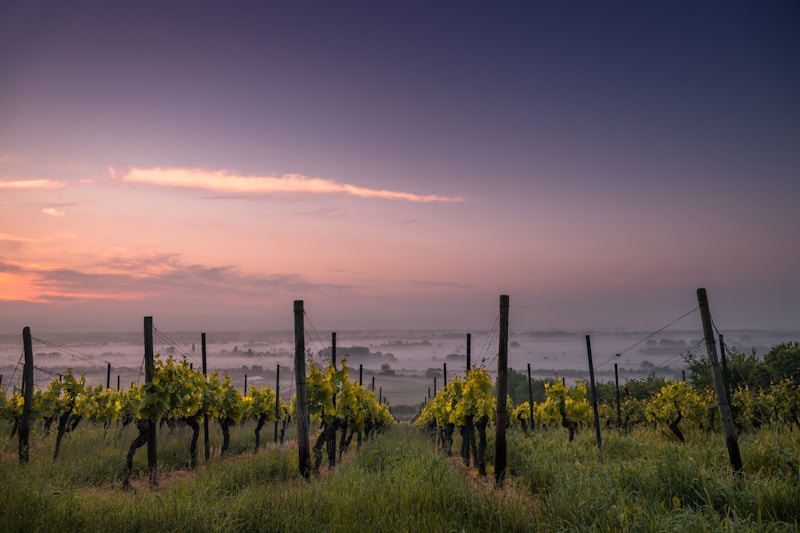
Domaine Paterianakis - Organic Indigenous Wines
A small organic family domaine focusing exclusively on indigenous Cretan varieties. Their traditional winemaking philosophy means minimal intervention, allowing terroir and variety character to shine. The Kotsifali and Thrapsathiri are standouts.
How to Complete
5 steps to experience this fully
-
Find the rare Moschato Spinas vines - the ancient 'bee grape' that once had bees swarming harvest baskets for its sweet aromatic profile.
🍷 Log MemoryDuring the vineyard walk at Domaine Paterianakis (650m altitude with Peza zone views), you're hunting for Moschato Spinas - an exceptionally rare indigenous variety from western Crete that was nearly lost to history. The ancient name 'bee grape' came from bees gathering around harvest baskets, drawn to the variety's intensely aromatic sweet profile. Paterianakis is one of the few producers in the WORLD working with this grape, preserving 4,000 years of Cretan winemaking heritage. Ask your guide 'Where are the Moschato Spinas vines?' at the start of the vineyard walk - look for the vines with smaller, tighter clusters and listen to why this grape almost vanished and how Paterianakis is reviving it.
🔄 BACKUP: If the vineyard walk doesn't reach the Moschato Spinas block, ask during the tasting: 'Do you produce a Moschato Spinas wine?' They make a natural wine from this variety without added sulphite - ultra-rare even among organic producers.
-
Meet the third-generation women of the Paterianakis family who crafted Crete's first certified organic wine in 1997.
🍷 Log MemoryIn 1997, Domaine Paterianakis produced the FIRST organic wine in Crete - certified by DIO (Greece's official biological products body). What's even rarer: ALL wines are crafted by the talented women of the Paterianakis family (third generation). In Greece's male-dominated wine industry, this is almost unheard of. At the tasting area with vineyard views, ask 'Are any of the Paterianakis women here today?' If yes, request to meet them and ask: 'What made your family go organic in 1997 when everyone else turned away from this approach?' Listen for the story of commitment to biodynamic practices, natural treatments, herbal teas, minimal soil disturbance - all radical ideas in 1990s Crete.
🔄 BACKUP: If no family members are present, ask your guide: 'How many women work in the cellar?' The answer should reveal the female-led winemaking team. Look for family photos on tasting room walls showing the generational transition.
-
Sample the Queen Bee tasting: 7 organic wines including limited production bottlings, plus two estate tsikoudias from different indigenous grapes.
🍷 Log MemoryBook the 'Queen Bee' package (€25 per person, 1 hour) and you'll taste 7 organic wines including LIMITED PRODUCTION bottlings not sold widely, plus two estate organic tsikoudias distilled from 2 DIFFERENT indigenous grapes. Tsikoudia is Crete's pomace brandy - think grappa, but with more attitude. The fact they distill it from specific grape varieties (not a blend) is ultra-rare and lets you taste the essence of each variety. When booking, say 'I want the Queen Bee tasting.' During the session, ask which wines are the limited production ones and which grapes the tsikoudias come from - likely Vidiano, Kotsifali, or Moschato Spinas, revealing how distillation captures each grape's core character.
🔄 BACKUP: If Queen Bee is unavailable, the 'Three Sisters' tasting (€18, 45 min) includes 5 wines + one tsikoudia + virgin olive oil. Still excellent, but you'll miss the limited production wines and the second tsikoudia comparison.
-
Identify all 6 indigenous Cretan varieties in the estate's vineyard during your walk.
🍷 Log MemoryPaterianakis grows 6 indigenous varieties + 5 international varieties, and during the vineyard walk that starts every visit, your mission is to spot all 6 Cretan natives: (1) Vidiano (white - stone fruits, citrus, minerality), (2) Thrapsathiri (white - aromatic complexity), (3) Moschato Spinas (white - the 'bee grape'), (4) Kotsifali (red - 'one of the most notable red grapes in Crete'), (5) Mandilari (red - deep color, intense tannins), (6) [ask guide for the 6th]. These grapes have survived 4,000 years of Cretan winemaking history since Minoan times. As you walk, ask your guide to point out each indigenous variety and notice leaf shapes, cluster sizes, ripening stages. When you reach 5 varieties, ask: 'What's the 6th indigenous grape you grow?' This tests their knowledge and reveals if they're experimenting with ultra-rare varieties.
🔄 BACKUP: If the vineyard walk is abbreviated, ask during the tasting: 'Which of these wines are 100% indigenous varieties?' Then request a breakdown of which grapes are in each wine. The 'Melissinos' range blends Cretan natives with French varieties - identify which is which.
-
Try Paterianakis' natural wine range made WITHOUT added sulphite - a radical choice even among organic producers.
🍷 Log MemoryMost winemakers add sulphites (SO2) to prevent oxidation and microbial spoilage, but Paterianakis makes a unique range of 'natural' wines with ZERO added sulphite - only the tiny amounts naturally produced during fermentation. This is winemaking on a tightrope: one mistake and the wine turns to vinegar. During your tasting session, ask your host: 'Can I taste one of your natural wines without added sulphite?' They should pour a wine labeled 'natural' or 'sans soufre ajouté' - notice the texture (often slightly cloudier, more alive, sometimes a bit fizzy). Smell for purity and ask: 'How do you keep this stable without SO2?' The answer reveals their biodynamic practices - healthy grapes, impeccable cellar hygiene, temperature control.
🔄 BACKUP: If no natural wine is available in your tasting, ask at the wine shop: 'Do you have any bottles from the natural range for purchase?' The Moschato Spinas natural wine is the holy grail - if they have it, buy it. You won't find it elsewhere.