Côte-Rôtie - The Roasted Slope
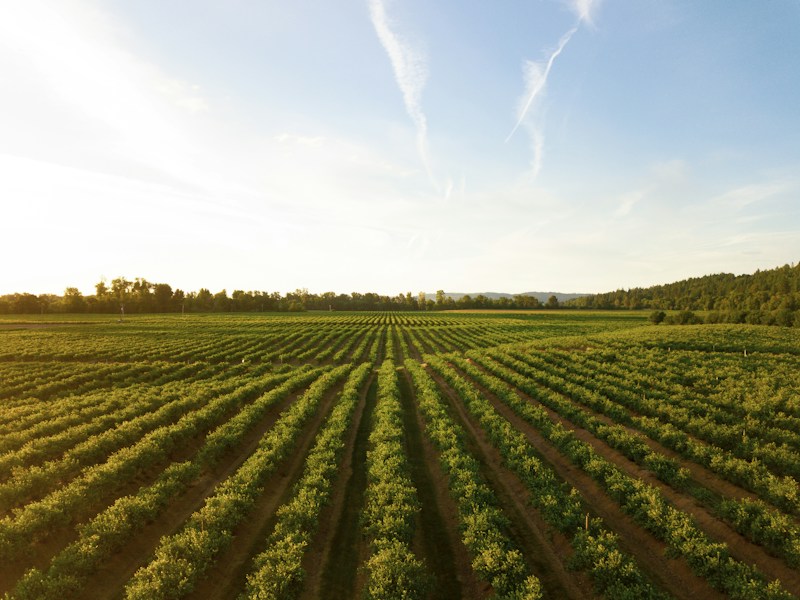
The "Roasted Slope" — terraces so steep that Romans terraced them by hand. The birthplace of great Syrah. Côte Brune and Côte Blonde produce subtly different wines. E. Guigal's "La-La-La" wines are among the world's finest.
How to Complete
5 steps to experience this fully
- 🍷 Log Memory
You're about to walk through the most consequential geological border in the Rhône Valley starting at the car park beside Église Saint-Baudille in Ampuis village centre (45.4876, 4.8098). In 1553, a local lord named Maugiron divided his entire estate as dowry between two daughters — one blonde, one dark-haired. The slopes took their names. The stream Reynard, which you'll cross roughly 3km in, is the exact dividing line that still separates Côte Blonde (south, gneiss and limestone, soft and floral) from Côte Brune (north, iron schist and manganese, dark and muscular). A legend about a haircut is the reason a €300 bottle of La Mouline tastes completely different from a €500 La Landonne grown 400 metres away. The Sentier des Vignes loop is 8.9km (5.5 miles), 312m elevation gain, 2.5–3 hours. The yellow/white trail markers begin at the church square. Stop at the Reynard stream. You're standing on the geological seam. Look uphill: the darker terraces to your left (north) are Côte Brune. The paler stones to your right (south) are Côte Blonde.
🔄 BACKUP: If you have less time, drive the D386 road through Ampuis toward Le Vallin and stop at any pullout — the terraces are visible and you can see the gradient that makes this farming physically heroic.
- 🍷 Log Memory
In 1961, Etienne Guigal — who had built this domaine from nothing — was suddenly struck blind at Le Caveau du Château (6 Route de la Roche, 69420 Ampuis). His son Marcel was 17 years old and had just dropped out of high school. Marcel walked into the cellar and took over. He made wine alone for years, learned everything by hand, and eventually built Guigal into the most important name in the Rhône. He then planted La Landonne in 1975 — the year his son Philippe was born — as a statement about the future. Standard tasting (from €12): four wines including a Condrieu white, a Vacqueyras, a Gigondas, and a Côte-Rôtie red, plus access to the museum of antique cooperage tools. Ask for the Château d'Ampuis cuvée (€50–90 retail) — this is Guigal's 'accessible' blend of seven exceptional plots. Phone: +33 (0)4 58 17 08 70. Open Mon–Sat, 10am–12:30pm and 2pm–7pm.
🔄 BACKUP: If Le Caveau is fully booked, Domaine Stéphane Ogier (97 Route de la Taquière, Ampuis; +33 (0)4 74 56 10 75) has the most acclaimed new tasting room in the northern Rhône — walk-in or appointment. The Ogier family has been on these slopes for seven generations.
- 🍷 Log Memory
Five of the northern Rhône's greatest winemakers — François Villard, Yves Cuilleron, Pierre Gaillard, Jean-Michel Gérin, Pierre-Jean Villa — bought Bistrot de Serine (16 Boulevard des Allées, Ampuis) in 2016 specifically to stop it becoming a pizzeria. It now has 400+ wines, two-thirds from Côte-Rôtie domains. The winemakers themselves drink here. Ask for 'something from Côte Brune' and then 'something from Côte Blonde' — two glasses, same grape (Syrah), same hill, completely different worlds. Then ask whoever is pouring: 'Why does the Viognier have to be co-fermented and not just blended in afterward?' The answer — that Viognier's terpenes need to dissolve INTO the fermenting Syrah must to bind with its aromatic compounds — is the moment this place stops being a wine bar and becomes a chemistry lesson. Wine tasting (without food) on reservation: 3 wines for €15, 5 wines for €20, 5 wines + charcuterie board for €35. Open Tue–Thu 10am–4pm, Fri–Sat 10am–9pm. Phone: 04 74 48 65 10.
🔄 BACKUP: If Bistrot de Serine is closed (Mon/Sun), try buying a bottle of Côte-Rôtie at the Guigal Caveau shop and drinking it facing the slopes at any table in Ampuis village. Context makes the wine.
- 🍷 Log Memory
Pliny the Elder, writing in the first century AD, singled out the wine from these slopes as 'quite a snob drink' reaching Rome — the terraced walls visible throughout the appellation above Ampuis village on the slope of La Mouline (Côte Blonde side). This was the FIRST Gallic wine to become famous in Rome. The dry-stone walls you're looking at right now, built without cement using the same technique the Romans employed, date back 2,400 years. The walls at La Mouline — the exact 1-hectare plot where Guigal grows his rarest wine — are original Roman construction. Stand below any terrace wall and put your hand on the stone. No mortar. Just skill, gravity, and 2,400 years. Drive the D386 north from Ampuis toward Vérenay and pull over at any vineyard entrance; or access on foot from the Sentier des Vignes trail. The stones are mica schist on the Brune side — dark, almost graphite, flecked with iron. On the Blonde side they're lighter gneiss.
🔄 BACKUP: The Tourist Office in Ampuis (Place de l'Église) has a free map of the lieux-dits (named parcels). Pick it up and walk with names: you'll pass La Mouline, La Landonne, La Turque, La Chatillonne — €300–500 bottles growing at arm's reach.
- 🍷 Log Memory
Guigal owns 40% of Côte-Rôtie production. Domaine Jamet makes around 50,000 bottles a year — period. Jean-Paul and Corinne Jamet, joined now by son Loïc, represent everything Guigal's power and polish is not: no museum, no restored château, no tasting room with a gift shop. Just family, cellar, and Syrah that Kermit Lynch calls among the most authentic expressions of the appellation. Call ahead at Domaine Jamet (4600 Route du Recru, Le Vallin, 69420 Ampuis, 4km north of the village toward the hills) — they require a booking: +33 4 74 56 12 57. Open by appointment only, Monday–Friday. Ask for Jean-Paul, Corinne, or Loïc by name. Explain you're tracing the Roman origins of French wine (they respond well to history). Don't ask about La La La wines — the Jamets are the opposite of that world and they know it. Do ask about what changes between their different parcels. The answer will be the best geology lesson you get all week.
🔄 BACKUP: If Jamet doesn't respond or is fully booked, René Rostaing (another appointment-only producer) is equally admired for harmonious, elegant Côte-Rôtie; contact via their website. Both represent the artisan counter-balance to Guigal's empire.