Naoussa
Xinomavro capital — mountain reds that rival Nebbiolo. High-altitude vineyards at the foot of Mount Vermio produce Greece's most age-worthy wines. Boutari, Kir-Yianni, and Thymiopoulos are essential.
A Wine Memories experience · winememories.fi
How to Complete
4 steps curated by Wine Memories
-
Two kilometers from Naoussa's center, carved into a limestone cliff, are the remains of the most important classroom in Western history.
🍷 Log Memory📍 WHERE: The Nymphaeum of Mieza ("School of Aristotle"), Isvoria area, on the road from Naoussa toward Kopanos — 2km from city center, easily reached by taxi (~€8 each way) or a 25-minute walk.
💡 WHAT: This limestone grove is where Aristotle spent 343–340 BC turning a 13-year-old Macedonian prince into Alexander the Great. Philip II hired the greatest mind in the ancient world — and gave him this — a carved Ionic colonnade, natural caves for classrooms, a covered walkway stretching 200 meters, terraced into 14 acres of hillside. The students weren't just Alexander: Ptolemy sat here (he'd go on to found Egypt's ruling dynasty), Hephaestion sat here (Alexander's closest companion until death), Cassander sat here (who'd control Macedonia after Alexander died). In 2025, archaeologists pulled four actual styluses from the dirt — the writing instruments from the hands of these boys. You're standing in those boys' school. Look toward the vineyards on the Vermio slopes. The same hillside.
🎯 HOW: Open Mon/Wed–Sun 08:00–20:00, Tue 12:00–20:00 (summer hours; confirm for off-season at visit-centralmacedonia.gr). Tickets available at the site or online at hhticket.gr (search "Aristotle's School"). The site is part of the broader Aigai archaeological zone. Budget 45–60 minutes. Bring water — the terraces involve some climbing on uneven stone.
🔄 BACKUP: If the site is closed for off-season, the Cultural Center of Aristotle's School (adjacent, in Naousa city) maintains exhibits about the excavations and is often accessible separately. Even viewing the carved limestone faces from the perimeter fence is worth the taxi ride.
-
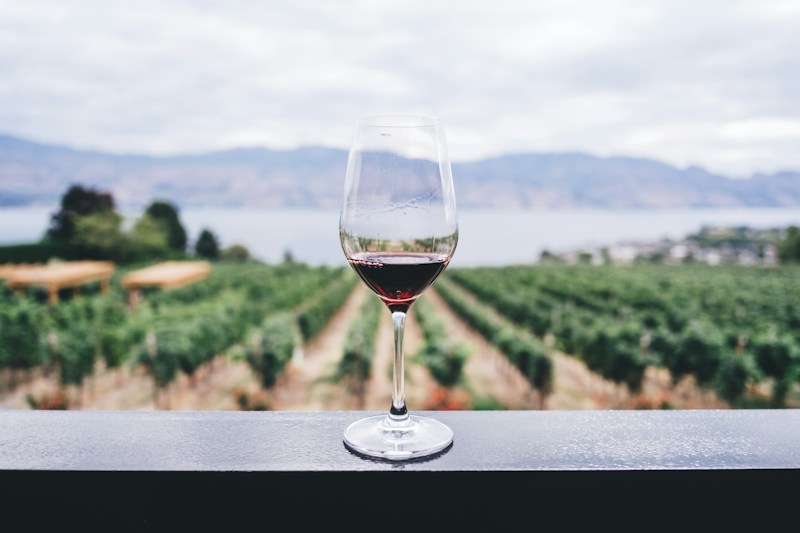
Kir-Yianni's tasting terrace sits at Yiannakohori — the highest point in Greece's first-ever PDO wine zone, with Lake Vegoritida spread below.
🍷 Log Memory📍 WHERE: Ktima Kir-Yianni estate, Yiannakohori (Giannakochori), Naoussa — 59200. On the east slopes of Mount Vermion at 250–350m elevation. Drive or taxi from Naoussa (~15 minutes, ~€12). Book in advance: epalamida@kiryianni.gr or +30 23320 51100.
💡 WHAT: You're tasting Xinomavro — a grape so tied to this soil that it has never been successfully grown anywhere else on earth. The Romans inherited this vine culture from the Macedonians. The Ottomans tried to ban it (Naoussa's producers found workarounds and exported wine to wealthy European households throughout the 19th century while much of Greece couldn't legally make wine at all). In 1971, this region became Greece's very FIRST PDO — the template for every Greek wine appellation that followed. Ask specifically for the "Ramnista" Xinomavro if the vintage is 5+ years old — this is where the dried tomato, olive paste, and tobacco notes that make Xinomavro unlike anything Italian finally emerge. The tasting terrace looks across the valley to Lake Vegoritida. This is what it felt like to be a Macedonian nobleman. Minus the undiluted wine.
🎯 HOW: Open Tue–Sun 11:00–18:00. Wine flights range from 3 wines to 12, each with individual food platters. Prices vary by package — budget €20–45 per person for standard flight including food pairing; premium tastings higher. Reservation strongly recommended, especially for food pairing menus.
🔄 BACKUP: If Kir-Yianni is fully booked, head instead to Thymiopoulos Vineyards in Trilofos (call ahead: +30 233 109 3604). Ask to taste the "Earth & Sky" Xinomavro from 45-year-old organic vines on limestone — the wine Apostolos Thymiopoulos first made in 2005 that brought Naoussa to international attention.
-
On April 22, 1822, with Ottoman soldiers closing in on the fallen city, thirteen Naoussa women carried their children to the Arapitsa waterfall and jumped.
🍷 Log Memory📍 WHERE: The Arapitsa River waterfall monument, Stoubani/Stoubanos area, Naoussa — a 15–20 minute walk from the town center, following the Arapitsa River upstream through the gorge. Signs in the old town point toward the river walk.
💡 WHAT: The city of Naoussa holds the official Greek title "The Heroic City" — granted by royal decree in 1955. This is why. In April 1822, the Ottomans arrived with 16,000 soldiers and 12 cannons. The Greeks — 4,000 defenders — held them off for weeks. When the city finally fell on April 6, the massacre began. Thirteen women with children fled to this hillside above the Arapitsa waterfall. They had no path out. Like the Souliotisses at Zalongo — Greece's other famous sacrifice of women — they chose the falls. A monument by sculptor Katerina Halepa-Katsatou, placed here in 1973, marks exactly where they stood. The vine survived the Ottoman period too — Naoussa's wine producers found ways around the prohibition, exporting their Xinomavro to European courts while their city burned. The waterfall and the vineyard share the same stubborn refusal to surrender.
🎯 HOW: Free, year-round, no opening hours. The river walk from the town center takes 15–20 minutes on a well-worn path through the gorge, past old water-powered textile mill ruins. The monument is signposted as "Place of Sacrifice of Naoussa Women" (also on visit-centralmacedonia.gr). Go in the morning before the Kir-Yianni tasting, or at late afternoon when the gorge light is golden.
🔄 BACKUP: If the path is overgrown or flooded (common in winter), the monument is also accessible by short drive from town — ask your accommodation to point the way to "Stoubani" or "Xoros Thisias." The monument stands close to the road in that section.
-
Naoussa's annual carnival traces directly to Dionysiac rites from these same hillsides. The best way to close that loop is with Xinomavro, lamb, and the old neighborhood.
🍷 Log Memory📍 WHERE: Oinomageireio Batania or 12 Grada, both in the Batania neighborhood of Naoussa old town — the historic quarter of 19th-century Macedonian mansions and narrow stone lanes a short walk from the Clock Tower.
💡 WHAT: Order giaprakia (stuffed vine leaves — note: the grape that wraps your food is the same vine whose wine you're drinking), or sarmadakia (stuffed cabbage rolls), or — if the season and budget allow — the whole spit-roast lamb that wine experts unanimously call the definitive Xinomavro pairing. Ask for a glass of current-vintage Naoussa PDO and one of the older vintages on the list side by side. The young wine is harsh, angular, almost angry — high tannin, high acid. The aged wine opens into something entirely different: tobacco, dried tomato, olive paste, structured depth. This transformation is what the Macedonian royal court would have known after leaving their wine jars sealed for years. Naoussa's annual Carnival (February/March), which predates Christianity in this region, was originally a Dionysiac ritual on these exact slopes — the god of wine, ecstasy, and transformation. You're eating his pairing.
🎯 HOW: Batania neighborhood is free to walk through at any time. Oinomageireio Batania: traditional taverna, no advance booking typically needed for lunch, call ahead for dinner (ask your hotel for current phone). 12 Grada: contemporary mezze bar, wine-focused; budget €15–25 per person for food with a glass or two. Both are closed Mondays — plan accordingly.
🔄 BACKUP: If both are full, any taverna in the Alonia or Pouliana neighborhoods serving traditional Macedonian food will work. Ask specifically for "arnaki sto fourno" (oven-roasted lamb) and pair with whatever Naoussa PDO they carry. The pairing transcends the specific restaurant.