Drama Region
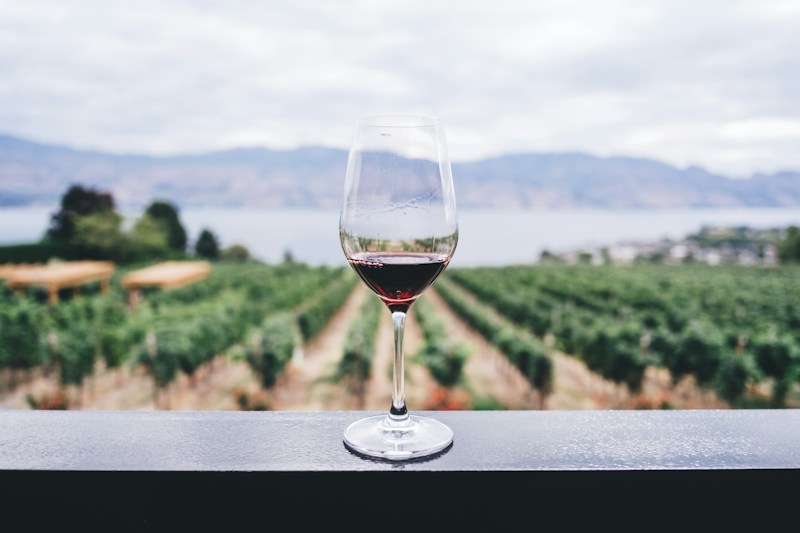
Eastern Macedonia's boutique wine frontier. Less known than Naoussa but producing excellent wines. Kokkinomylos and Vivlia Chora are leading the renaissance.
A Wine Memories experience · winememories.fi
How to Complete
4 steps curated by Wine Memories
- 🍷 Log Memory
📍 WHERE: Archaeological Site of Philippi (UNESCO World Heritage Site), near Krinides village, 30km southeast of Drama city. GPS: 41.01285, 24.28669. Signs for 'Filippoi' on the E90 highway.
💡 WHAT: On October 3 and October 23, 42 BC, the Roman Republic died here. Up to 200,000 soldiers fought in two engagements across this plain — Octavian and Mark Antony against Brutus and Cassius, the men who stabbed Julius Caesar. Cassius died first, by suicide, after mistakenly believing Brutus had lost. Then on October 23, Brutus's army broke. Surrounded by Antony's cavalry with no way out, Brutus ran himself onto his own sword. Plutarch writes that Antony covered Brutus's body with a purple garment as a mark of respect. The man who walked away, Octavian, would rename himself Augustus — the first emperor. The Roman Republic ended in this valley, 30 kilometers from where you poured your morning coffee.
🎯 HOW: Enter at the main gate — €6 full price, €3 reduced. Allow 2–3 hours to walk the full site including the Roman forum, the theatre (still used for summer performances), the colonnaded streets, and the city walls. The scale of the forum tells you this was no provincial outpost — Philippi was built as a miniature Rome. Summer hours 08:00–20:00 (June–Aug); shoulder season 08:00–18:00 (Apr–Oct). The archaeological museum is included in the ticket.
🔄 BACKUP: If driving from Drama, Krinides village (5 min from the site) has a small café. If the museum is closed separately, the outdoor site is the main event anyway.
- 🍷 Log Memory
📍 WHERE: Still inside the Philippi archaeological site, walk north of the Roman Forum — the traditional site of the Philippian jail is marked within the same complex, included in your €6 ticket. Your ticket covers everything.
💡 WHAT: The same ground where Brutus's army shattered in 42 BC received Paul and Silas exactly 91 years later, around AD 49. Their crime: Paul cast out a demon from a slave girl whose owners were earning income from her 'soothsaying.' Furious at the lost revenue, they dragged Paul to the magistrates — who beat them with rods and jailed them without a trial, violating Paul's rights as a Roman citizen. At midnight, Paul and Silas were singing hymns in their cell when an earthquake struck. The doors swung open. Every chain in the building fell loose. The structure held — no one died. The jailer woke up, saw the open doors, drew his sword to kill himself (Roman law: if prisoners escape, the guard pays with his life). Paul called out from the dark: 'Do not harm yourself. We are all still here.' The jailer converted on the spot and had his entire household baptized before sunrise. During Paul's day the cell was a water cistern — two vaulted underground spaces. A 7th-century church was built over it. The Roman forum where Paul was publicly beaten stands just meters away.
🎯 HOW: The prison site is marked at the north edge of the forum — look for the foundations and the interpretive sign. It's already covered by your entry ticket. No extra charge; free as part of the site walk.
🔄 BACKUP: If the exact cell location is unclear, ask at the site entrance — staff speak English and this is one of the most-asked questions. The Archaeological Museum at the site entrance has context on the Pauline history of Philippi.
- 🍷 Log Memory
📍 WHERE: Ktima Pavlidis (Pavlidis Estate), Kokkinogeia, 19km northwest of Drama city. GPS: 41.2089771, 23.9603948. Phone: +30 25210 58300. Book in advance at ktima-pavlidis.gr — tours given in Greek, English, or French.
💡 WHAT: You are standing on soil that ancient Thrace considered so sacred it gave birth to Dionysus himself. The cult of wine didn't spread FROM Greece TO Thrace — it spread FROM Thrace TO Greece. This valley is where it started. Mythology holds that Dionysus took his finest vine stick to the Thracians as a gift, showing them to prune, harvest, and make 'sweet Thracian wine.' The Romans knew this — the Senate banned the Bacchanalian rites in 186 BC specifically because the Thracian-origin ceremonies had become 'subversive.' The vines at Pavlidis grow on ground described as 'planted to vines since ancient times.' Since 2005, every single harvest here has been done at night — one of the only wineries in Greece to do so — because night-harvested grapes arrive at the press cool, with less oxidative damage, more of the vineyard's precise character preserved in the glass. The flagship Thema Red (Syrah + Agiorgitiko, 12 months in barrique) is the clearest expression of what Drama's cool continental climate can do with international varieties: cherries, plums, chocolate, structured tannins. Not what you expect from a Greek wine.
🎯 HOW: The visit includes a walk through the Kokkinogeia vineyard (weather permitting), a guided tour of the full production facility (winemaking, bottling, oak barrel vault), and a tasting session in the underground aging cellars. Tasting of multiple wines is included. Budget €15–25 per person for the tour and tasting. Must pre-book.
🔄 BACKUP: If Pavlidis is unavailable, Château Nico Lazaridi (GPS: 41.131647, 24.288542, Agora community 14km west of Drama) was the FIRST Drama winery (founded 1987) and has the same cool-climate story plus an art gallery of 100+ paintings within the barrel halls.
- 🍷 Log Memory
📍 WHERE: Kavala harbor waterfront, specifically the area near the Church of Agios Nikolaos (Saint Nicholas), Kavala city center. GPS: 40.9390, 24.4010. Kavala is 55km southeast of Drama city — a 50-minute drive on the E90.
💡 WHAT: This harbor has been the same harbor twice in history, used by opposite sides of history, 91 years apart. In 42 BC, Brutus and Cassius staged their fleet here — the democratic faction of Rome used Neapolis as their naval base before the battle that ended the Republic. Then in AD 49, Paul stepped off a boat at this exact spot, following a vision of a Macedonian man calling him to 'come and help us' (Acts 16:9). His companions included Silas, Timothy, and Luke the Evangelist. Walk along the harbor front to the 35m² mosaic monument behind the church — 'The Arrival of the Apostle Paul in Neapolis of Philippi,' a work by painter Vlasios Tsotsonis. This is the spot. The same cobbles (updated) where Paul walked directly onto the Via Egnatia, Rome's great eastern highway, heading for Philippi 15km away. Above you: the Byzantine citadel on the headland, built on foundations from the same Roman period. The Ottoman Imaret complex — the largest Ottoman building in Greece, built by Mohammed Ali Pasha, founder of modern Egypt, who was born in Kavala — sits just below the fortress. Three civilizations stacked on each other, visible from the harbor in one glance.
🎯 HOW: The mosaic monument is free and permanently accessible on the harbor waterfront. Walk the old town cobbled streets up toward the Byzantine citadel (free exterior, views over harbor and sea). For Kavala's legendary fresh seafood afterward, head to the 'sfageia' area 5 minutes from center — locals-only informal fish spots at a small fishing port. Order the local prawns (grilled, garlic, olive oil) or the smoked skoumpri.
🔄 BACKUP: If you want to go deeper on the Byzantine-Ottoman layers, the Imaret runs guided tours daily except Tuesday and Wednesday, 10:00–14:00, hourly, approximately 45 minutes each.