Villány: Hungary's Bordeaux
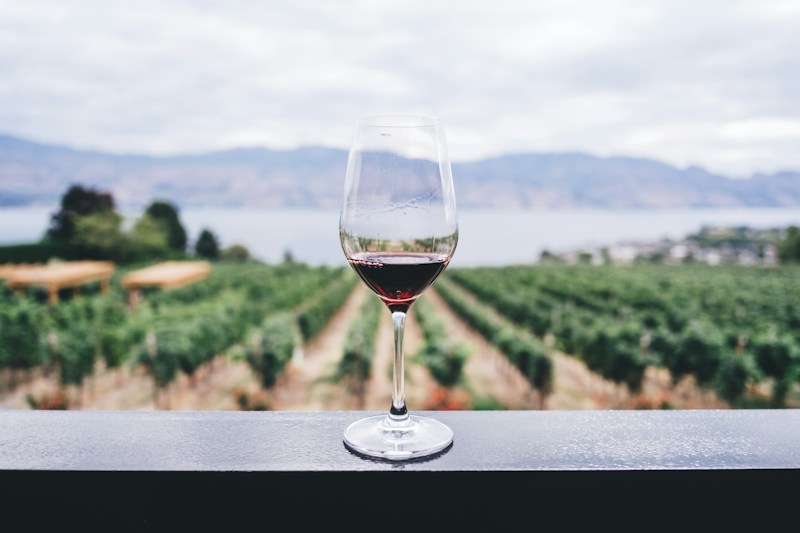
After the Ottomans left Villány depopulated, the Habsburgs recruited Swabian German settlers from Fulda around 1720 to rebuild. They brought Portugieser grapevines and built 50+ cellars along Baross Gábor utca from reclaimed bricks. Attila Gere's Kopár — named 'Barren' because the vineyard barely has topsoil — became Hungary's most famous red. Sauska 48 is the only Central Eastern European entry on Michelin's world-18 best vineyard restaurants: 48 seats, and the vines through the window are in the wine you're drinking. The former limestone quarry above holds 130 sculptures from 200 artists.
A Wine Memories experience · winememories.fi
Country
🇭🇺 Hungary
Duration
Full day
How to Complete
5 steps curated by Wine Memories
- 🍷 Log Memory
📍 WHERE: Baross Gábor utca, the main street of Villány town. Walk from the train station along Ady Endre fasor until you hit it — you can't miss the row of low whitewashed buildings stretching the full length of the street.
💡 WHAT: This is the Swabian miracle. After the Ottomans abandoned Villány in 1687, the village was completely deserted — every Hungarian had fled. The Habsburg lords brought in German farm families from Fulda in ~1720 to repopulate. By 1800, 74% of Villány's 2,200 inhabitants were German. Those settlers built these cellars. They also introduced the grape variety now called Portugieser — which Hungary was forced to rename when it joined the EU because Portugal objected to the original name Kékoportó. You're walking down a street that would not exist without an 18th-century refugee resettlement program.
🎯 HOW: Walk the full length slowly. Count the cellars — more than 50 tightly packed, declared protected cultural heritage. Some have evolved into contemporary architectural showpieces (Sauska, Gere) competing alongside the original 19th-century Swabian press houses. The street is free to explore at any time. Step into any open door — many cellars welcome spontaneous visitors, especially on weekends.
🔄 BACKUP: If it's a weekday and cellars are shut, the street itself is the experience. The architecture IS the history. Stand at one end and look down the entire whitewashed row at golden hour.
- 🍷 Log Memory
📍 WHERE: Any cellar on Baross Gábor utca, or the Bock Cellar (hotel.bock.hu for reservations, daily cellar tour at 4:00 PM, 1,500 HUF/person including two wines). Bock's family has made wine here for nine uninterrupted generations since 1850.
💡 WHAT: Ask for Portugieser — Villány's lightest red and its oldest story. This grape arrived with the Swabian settlers around 1720. In Hungary it was called Kékoportó for 200+ years — until Hungary joined the EU and Portugal objected to the name. Renamed overnight. Despite "Portugieser," this grape has zero connection to Portugal — it's native to Central Europe. What you're tasting is sour cherry, red plum, a whisper of violet, soft tannins. Almost Burgundian lightness. Villány makes both fresh early-drinking versions and more structured oaked expressions. Request the fresh version first.
🎯 HOW: At Bock's cellar, ask to taste the Portugieser before the Cabernet Franc. The contrast tells the whole regional story — light, fruity, immediate vs. deep, spicy, structured. The Circular Cellar you're standing in was built from 70,000 reclaimed bricks across six vaulted chambers. Stand still for a moment. The acoustics are extraordinary.
🔄 BACKUP: If Bock is full, walk into any open cellar on Baross Gábor utca and ask for "Portugieser kóstolás" (tasting). Budget €3–6 for a single pour.
- 🍷 Log Memory
📍 WHERE: Attila Gere Winery, Diófás tér 4-12, Villány (GPS 45.863391, 18.444910). Book ahead: etterem@gere.hu. Tasting for 1–2 people: 33,000 HUF/occasion; 3–6 people: 11,000 HUF/person. Seasonal May–October, by appointment.
💡 WHAT: In 1991 — the year after Communism ended — Attila Gere started this winery from nothing. Six years later, in 1997, he released the first vintage of Kopár. It immediately became Hungary's most famous red wine. The name: "Kopár" means BARREN in Hungarian. The vineyard on Szársomlyó hill has so little topsoil the vines can barely survive. They push roots 6+ meters down into the limestone. The mountain radiates stored heat back at night, minimizing temperature swings, maximizing phenolic ripeness. The blend is 50% Cabernet Franc, 40% Merlot, 10% Cabernet Sauvignon — Hungary's answer to Bordeaux's First Growths. It's sold as "Kopar" (no accent) because the blend draws from 4 vineyards, not only Kopár. The accent had to go for legal reasons. The ambition never did.
🎯 HOW: Ask your guide to point toward Szársomlyó hill — visible from the winery. That rocky slope IS the Kopár vineyard. The wine in your glass came from those stones. Tasting includes freshly baked bread and Gere grape seed products at 50ml per wine. 12% service charge applies.
🔄 BACKUP: If fully booked, request a bottle of Kopar at any Villány wine shop and open it facing Szársomlyó hill. The cellar shop is open Mon–Fri 8:00–15:00.
- 🍷 Log Memory
📍 WHERE: Sauska 48, minutes from Villány center on the vineyard road toward Nagyharsány. GPS: N 45.86003, E 18.43884. Book ahead — it's 48 seats and heavily subscribed since Michelin recognition.
💡 WHAT: Michelin named Sauska 48 to their list of the world's 18 best vineyard restaurants — the ONLY Central Eastern European entry on the list. Michelin praised it specifically for "lively proximity to the vineyards and nature." What that means in practice: the wine in your glass comes from the vines visible through floor-to-ceiling windows in front of you. The Sauska family also owns a winery in Tokaj (northeast Hungary) — the wine list spans Hungary's two greatest wine regions in one sitting. Menu is seasonal and local, paired deliberately with their own wines.
🎯 HOW: Arrive 15 minutes early and stand in the vineyard before you sit. The rubble-stone winery architecture blends into the hillside. Ask your server about the Villányi Franc specifically — Sauska's version shows what happens when Cabernet Franc grows with 2,150 sunshine hours per year instead of the Loire's 1,900. The difference is not subtle.
🔄 BACKUP: If Sauska 48 is fully booked, the winery runs a Saturday cellar tour at 4:00 PM including four wines, no reservation required for small groups.
- 🍷 Log Memory
📍 WHERE: Nagyharsány Sculpture Park, at the foot of Szársomlyó hill, 5 km southwest of Villány. Follow signs toward Nagyharsány — the park is on the hillside. Entry: 1,000 HUF adults, 500 HUF students/pensioners.
💡 WHAT: In 1967, sculptors were given something extraordinary: an abandoned limestone quarry on Szársomlyó hill — the same mountain above Gere's Kopár vineyard — and permission to experiment without restriction. This was the first place in Communist Hungary where artists could work without ideological constraints. Since then, 200 artists from Hungary, Poland, Italy, France, Norway, the USA, Japan have installed 130 sculptures across the old quarry floor. Behind you: a vertical wall of Upper Jurassic limestone, the same geology that makes Kopár wine taste the way it does. In front of you to the south: the endless flat Drava lowland stretching toward Croatia. Between them: twisted columns, strange idols, lonely blocks that visitors named the Venus of Villány, the Egg of Columbus, the Memory.
🎯 HOW: Walk the full circuit — budget 45–60 minutes. The panoramic walkway along the quarry wall gives the best vista. The flatland below was Ottoman-controlled territory while this hilltop held out as a refuge. You're standing on the same limestone that filters into every bottle of Villányi Franc you tasted today.
🔄 BACKUP: If closed (verify at ddnp.hu), hike the Szársomlyó trail from Nagyharsány — free, same views, approximately 2 hours round trip.