Venice Bacaro Wine Crawl
In 1462 Cantina Do Mori opened near the Rialto — and hasn't closed since. The tradition it joined was already 200 years old: workers and merchants stopping for an ombra, a shadow of wine, named because sellers followed the Campanile's shade to keep their barrels cool. The cicchetti you'll eat here — creamy baccalà on polenta — exist because a sea captain named Pietro Querini shipwrecked in Norway in 1432 and walked home carrying dried Arctic cod. Six bacari. Six glasses. One city that has been drinking wine standing up, in alleys, since the 13th century.
A Wine Memories experience · winememories.fi
Country
🇮🇹 Italy
Duration
3 hours
How to Complete
6 steps curated by Wine Memories
- 🍷 Log Memory
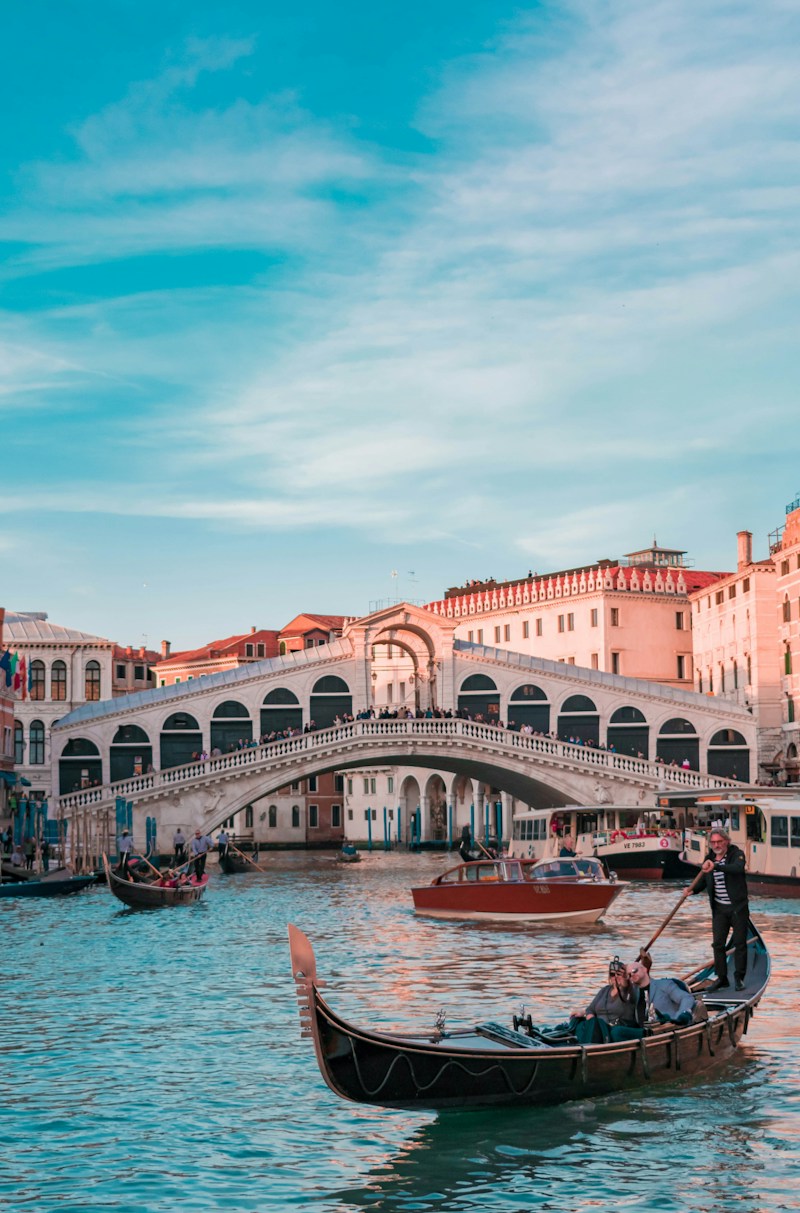
📍 WHERE: Rialto fish market (Pescheria), northwest bank of the Grand Canal in San Polo — walk across the Rialto Bridge and turn left toward the loggia, the columned hall right on the water.
💡 WHAT: This market has been running since 1097 — nearly a thousand years of Venetians buying fish off boats on this exact canal bank. The elegant loggia you're standing under was designed in 1907 to replace an iron canopy. Every Tuesday through Saturday between 7 and 10am, boats unload directly from the Grand Canal while chefs from every restaurant in the Rialto cluster negotiate over moeche (soft-shell crabs), branzino, and whatever the lagoon offered up that night. The cicchetti you'll eat in the next hour came off one of these boats.
🎯 HOW: Arrive by 7:30am. Walk the full length of the loggia slowly — look for the stalls selling tiny grey shrimp (schie), razor clams, and the live crabs in wooden crates. You'll spot chefs from nearby bacari doing their morning shopping. Watch what they pick up — that's what's going on the counter at 10am. Don't buy anything. The point is to taste the source before tasting the result.
🔄 BACKUP: If you arrive after 2pm, the fish market is closed. The fruit and vegetable Erbaria runs Monday–Saturday until 7pm and is worth seeing. Or simply walk to Do Mori first and return to the market the next morning.
- 🍷 Log Memory
📍 WHERE: Cantina Do Mori, Sestiere San Polo 429. From the Rialto market, walk two minutes south through the narrow market arcade — look for the dark entrance into a low-ceilinged room. There are two ways in: Calle Do Mori and Calle Galiazza. Both lead to the same counter.
💡 WHAT: You're standing in Venice's oldest bacaro. Open since 1462 — that's 562 years of continuous drinking in this room. The name 'Do Mori' (Two Moors) comes from two actual Moorish men who served here centuries ago. Look up: the ceiling is hung with dozens of copper pots, collected over generations. Giacomo Casanova chose this as his regular bar — he lived a 10-minute walk away and came here between assignations. The reason there are two entrances becomes obvious once you know: quick escape was the point.
🎯 HOW: Step to the bar. Say 'un'ombra di bianco, per favore.' You'll get a small glass of local Soave or Pinot Grigio for €1–2. This is the ritual — standing up, one small glass, conversation with whoever's next to you. The ombra tradition was named because Venice's wine sellers followed the shadow (ombra) of the Campanile bell tower to keep their wine cool. You are, technically, drinking the shadow of a bell tower.
🔄 BACKUP: Cantina Do Mori is closed Sundays. If it's Sunday, go directly to Cantina Do Spade (step 3) which opens at 10am daily.
- 🍷 Log Memory
📍 WHERE: Cantina Do Spade, Calle de le Do Spade, San Polo 859. Three minutes from Do Mori — ask anyone to point you toward 'le do spade.' Named after a duel fought on a nearby bridge between two noblemen, now forgotten.
💡 WHAT: This place has been an osteria since 1448. That's 578 years. In Chapter 17 of Casanova's memoir 'The Story of My Life,' he describes descending on this exact tavern after midnight during Carnival 1745 — he and seven friends in masks, ordering wine in the back room. Casanova had a door installed in that back room specifically so he could slip out unseen if a husband arrived. The current owner Giorgio found references to this in old documents and reopened the room.
🎯 HOW: Walk to the bar, order 'un'ombra di rosso' and two cicchetti — try the sarde in saor (sweet-and-sour sardines with raisins and pine nuts, a Venetian preservation technique from when fishermen needed food to last weeks at sea). Then ask the bartender: 'Dov'è la sala di Casanova?' — 'Where is Casanova's room?' Watch them point you through a low doorway. Look for the secondary exit: a small door in the back wall. This is the door.
🔄 BACKUP: If the back room is closed for a private event, the main bar tells the same story — the original carved signboard 'Do Spade' above the entrance is 18th century.
- 🍷 Log Memory
📍 WHERE: All'Arco, Calle Arco, San Polo 436. From Do Spade, walk north back toward the Rialto market — All'Arco is in a side alley one block from the market's vegetable stalls. Look for a small red-on-white sign and a crowd standing in the street eating.
💡 WHAT: The creamy white paste on every piece of crostini here is baccalà mantecato — whipped salt cod on polenta. It exists in Venice because of a shipwreck. In 1431, a Venetian sea captain named Pietro Querini left Venice carrying 800 barrels of Malvasia wine bound for Flanders. A storm in the English Channel destroyed his ship and pushed him north on the Gulf Stream into the Arctic. Only 16 of 68 men survived. Norwegian fishermen on the island of Røst showed the survivors how to air-dry cod until it was hard as wood, then beat it and spice it into a soft paste. Querini walked back into Venice on October 12, 1432 carrying sixty dried stockfish. That's the dish you're eating.
🎯 HOW: This is a morning-only bacaro (closes 2:30pm) run by Francesco and his son Matteo. Arrive early — the cicchetti are freshest before noon. Point at the baccalà mantecato crostini (€1.50–3). Also try the polpette (meatballs). Order 'un'ombra di bianco' to wash it down. Standing only — no chairs, no table service. This is exactly how it has always worked.
🔄 BACKUP: If you arrive after 2:30pm, All'Arco is closed for the day. Go directly to Cantina già Schiavi (step 5) which has excellent cicchetti until 8:30pm.
- 🍷 Log Memory
📍 WHERE: Cantina già Schiavi (also called Al Bottegon), Fondamenta Nani 992, Dorsoduro. Take a vaporetto from the Rialto stop to the Accademia stop, then walk south along Fondamenta Nani — you'll see a wall-to-ceiling display of 500 wine bottles in a window opposite a working gondola boatyard across the canal.
💡 WHAT: On the opposite bank is the Squero di San Trovaso — one of Venice's last working gondola boatshops, built in the 17th century, where gondolas are still hand-built and repaired. You're standing in a 19th-century bacaro with 500 wine labels on its walls. Now: the test. Ask for a spritz. If they hand you an Aperol Spritz without asking, you're drinking the tourist version from Padua. The Venetian original is made with Select — created in Venice (Murano) in 1920, 30 botanicals including juniper and rhubarb, less sweet, more herbal. Say: 'Vorrei uno spritz con Select, per favore.' That sentence alone tells every Venetian at the bar that you know.
🎯 HOW: Order the Select spritz (€3–5) and two of their daily cicchetti — the menu changes constantly and is some of the most creative in Venice. Stand at the canal-side railing. Look across at the gondola boatyard. This is a view that hasn't changed in 200 years.
🔄 BACKUP: If Schiavi is crowded and you can't get to the bar, ask to see their wine wall instead — 500 labels, mostly Italian, with prices for take-away. It's the best wine shop in the Dorsoduro.
- 🍷 Log Memory
📍 WHERE: Harry's Bar, Calle Vallaresso 1323, San Marco. Walk from the Accademia along the Grand Canal promenade toward San Marco — Harry's is in a small alley one block before Piazza San Marco, on the right.
💡 WHAT: Giuseppe Cipriani invented the Bellini here in 1948 — white peach purée and Prosecco — named after a 15th-century Venetian painter whose work was showing at the Ducal Palace that summer. The peachy glow of the cocktail matched the glow in Bellini's paintings. Cipriani only served it June–September when white peaches from near Verona were in season. Hemingway called the Bellini an essential Venetian ritual. Charlie Chaplin drank here. In 2001, the Italian Ministry of Cultural Heritage declared this bar a National Landmark — the only bar in Italy to receive that designation in the 20th century. A Bellini will cost €22–35. You're paying for 78 years of unbroken recipe.
🎯 HOW: Sit at the bar rather than a table (marginally less expensive and you can watch the bartenders work). Order a Bellini. It will come in a tulip glass, pale peachy-gold. Smell it before you drink. The ratio is two parts Prosecco to one part white peach purée — no ice, never ice. Ask the bartender: 'Is this the same recipe from 1948?' They will tell you it has not changed.
🔄 BACKUP: If the €25 Bellini is too much, standing at the bar for a Prosecco (€12) gives you the room and the story without the price. Or skip Harry's Bar and end the bacarata at Schiavi with a second Select spritz watching the gondola yard at dusk.