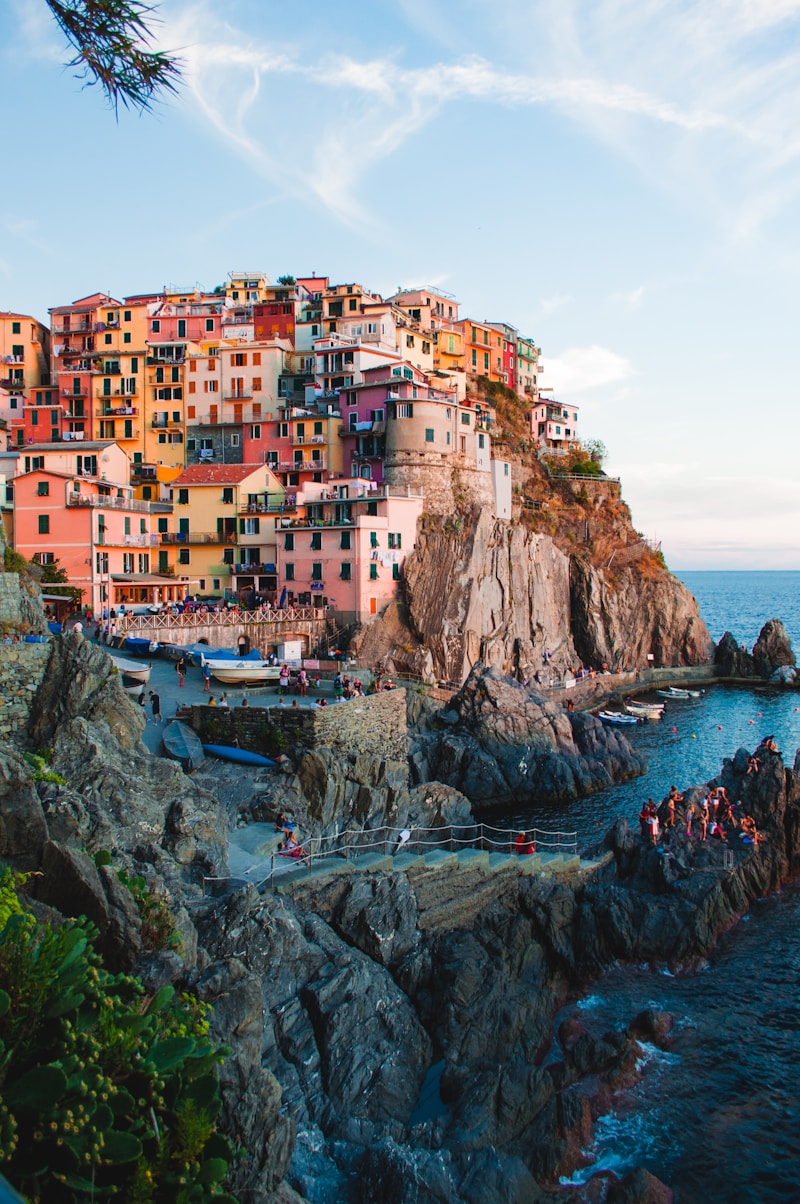
Amalfi Coast: Ravello Terraces
Heroic viticulture on cliffs Romans carved 2,000 years ago. The terraced vineyards of Ravello and Furore produce tiny quantities of Costa d'Amalfi wine from near-vertical slopes above the Mediterranean.
How to Complete
5 steps to experience this fully
- 🍷 Log Memory
You're standing 30 meters above the narrowest fjord on the Amalfi Coast — the gorge is barely 20 meters wide. Look straight up the cliff face to your right from the arched stone bridge spanning the Fiordo di Furore (SS163, GPS 40.6141, 14.5542). Those terraces, hanging vertically at angles no mechanized equipment can reach, are where Marisa Cuomo's workers hand-harvest Fenile, Ginestra, and Ripoli grapes — three varieties so obscure and localized they grow NOWHERE else on earth. The wine produced here (Fiorduva) scored 100 points from critic Luca Gardini. Walk to the center of the bridge, look up-coast at the terraces stitched into the cliff, then descend the 200 concrete steps to the beach below for the view back up at the vines hanging above your head.
🔄 BACKUP: If the SS163 is gridlocked (common in summer), take the ferry from Amalfi to Positano and ask to stop at Furore — some services stop at the sea entrance to the fjord.
- 🍷 Log Memory
The cellar is carved into the living rock of the cliff at Cantine Marisa Cuomo (Via G.B. Lama 16/18, Furore). This is not a metaphor. The barrique room where Fiorduva ages is a cave. The wine that sits in those barrels is made from Fenile (40%), Ginestra (30%), Ripoli (30%) — three grape varieties so ancient and so cliff-specific that botanists can't find them anywhere else in Italy. You are, quite literally, tasting Roman terroir. Book at least 2 days ahead: info@marisacuomo.com or +39 089 830348 for the 35-minute guided tour that visits the tinaia, the rock-carved barrique cellar, then moves to the Hostaria di Bacco restaurant for tasting with lunch. Ask to taste Fiorduva alongside their Furore Bianco — same terroir, different craft, worlds apart in depth.
🔄 BACKUP: If the winery is fully booked, buy a bottle of Fiorduva at any wine shop in Amalfi town (~€45–70 retail on-coast) and open it at the Furore bridge. The wine and the place together are the experience.
- 🍷 Log Memory
7.8km one-way to Nocelle (above Positano), 2–3.5 hours of walking on the Sentiero degli Dei (Path of the Gods), Trail #327. The trail winds at 600 meters altitude, so you look DOWN onto clouds, fishing boats, and the sea. You'll pass through terraced vineyards that have been here since Roman occupation. Many of the stone steps underfoot are original Roman construction — the same path Roman soldiers and merchants used between coastal settlements. Start at Piazza Paola Capasso in Bomerano (Agerola) — take the SITA bus from Amalfi to Agerola (~1 hour, ~€2), find the trail sign in the SW corner of the piazza, white/red blazes marked '02'. Walk Bomerano to Nocelle (mostly downhill), then descend the final 1,700 stone steps into Positano.
🔄 BACKUP: If the full hike is too long, take the bus to Nocelle instead and just walk the final 1,700 steps down to Positano — still extraordinary, 40 minutes, completely free.
- 🍷 Log Memory
In February 1938, Greta Garbo — then the most famous woman alive — secretly fled Hollywood to this cliff with Leopold Stokowski, the conductor who had just scored Walt Disney's Fantasia. Within days, every newspaper in the world had the story. A bronze plaque at Villa Cimbrone entrance (Via Santa Chiara 26, Ravello) still reads: 'the divine Greta Garbo, fleeing the clamour of Hollywood, experienced, with Leopold Stokowski, hours of secret happiness.' Beyond the plaque: the Terrazza dell'Infinito — the Terrace of Infinity, a row of marble busts lining the cliff edge 300 meters above the Tyrrhenian. Enter (€10), locate the plaque, then walk straight through the garden to the terrazza. Arrive at golden hour with a bottle of Furore Bianco or Fiorduva.
🔄 BACKUP: If Villa Cimbrone is closed for maintenance (Jan–March), Villa Rufolo's concert terrace (€8, same piazza) offers the same coastal panorama. Wagner wrote Parsifal's 'magic garden of Klingsor' while sitting in Villa Rufolo's gardens in 1880 — a stone marks the exact spot.
- 🍷 Log Memory
The bronze doors were cast in 1179 by Barisano da Trani at Ravello Cathedral (Piazza Vescovado, Ravello). They show 54 panels of biblical scenes — and they are older than the famous bronze doors of the Florence Baptistery by nearly 300 years. Almost no one knows this. Inside, the Gospel Pulpit (1272) by Nicola di Bartolomeo da Foggia — donated by nobleman Nicola Rufolo — rests on six marble lions walking forward, with mosaic work in gold and lapis that still catches the afternoon light the same way it did 750 years ago. Enter the cathedral (free admission), walk to the pulpit, touch one of the six marble lions. Then go back to the bronze doors and find panel 37: the scene of Christ's baptism — the detail work, at 850 years old, remains razor sharp.
🔄 BACKUP: If the cathedral is temporarily closed for a ceremony (weddings happen frequently), the piazza itself is built on the foundations of a Roman forum — look for original Roman column stumps incorporated into the cathedral's outer walls.