✦ Morocco's Wine Capital
Meknès Wineries
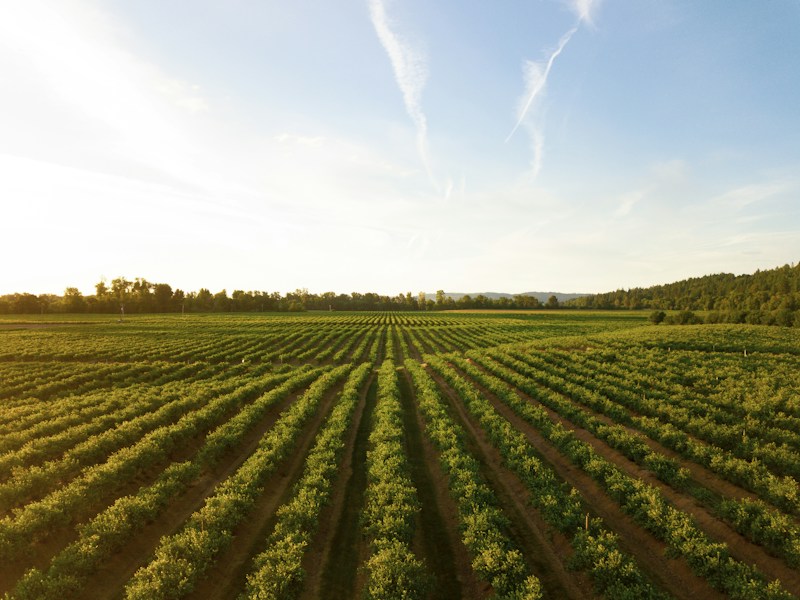
Morocco's premier wine region surrounds the imperial city of Meknès. High plateau vineyards produce increasingly sophisticated wines. The French colonial legacy combined with ancient terroir.
A Wine Memories experience · winememories.fi
How to Complete
5 steps curated by Wine Memories
- 🍷 Log Memory
📍 WHERE: Place el-Hedim, the main square of Meknès — stand facing Bab Mansour, the monumental gate on the square's southern edge. GPS: 33.8931°N, 5.5648°W. From the medina, walk south toward the square; Bab Mansour is impossible to miss — it fills the entire far wall. From a riad, taxi to Place el-Hedim for about 20 MAD.
💡 WHAT: Look at the marble columns flanking the gate. They are not Moroccan. Sultan Moulay Ismail (r. 1672–1727) ordered slaves to carry these columns 33km from Volubilis — the Roman city that was still standing when he needed building material. He looted an entire Roman city to build his imperial capital. Those columns may have held up a Roman basilica before they held up this gate. Now look at the ground under your feet. This is a square called el-Hedim — it literally translates to 'Square of Destruction,' named because Moulay Ismail demolished an entire earlier city to build it. Every layer of Meknès is built on the rubble of the layer before it: Roman watchtowers stood in the fields north of this spot. The Almoravids built a military settlement here. Arabs came next. Then the French planted vineyards on the same soil the Romans had farmed for olive oil. Today those same fields grow the wine you'll taste this afternoon.
🎯 HOW: Spend 20 minutes here. The gate is free and permanently accessible. Walk through the arch into the kasbah — the far side faces Moulay Ismail's palace complex. In the 17th century this was the entrance to Morocco's version of Versailles. Notice how small you feel.
🔄 BACKUP: If the gate is under renovation scaffolding (it cycles through restoration), the marble columns are still visible and the square is still one of the great civic spaces in North Africa. El-Hedim street food stalls open in the evening are a worthwhile backup for the full experience.
- 🍷 Log Memory
📍 WHERE: Heri es-Souani, the Royal Granaries — about 1km south of Place el-Hedim, adjacent to the Agdal Basin reservoir. GPS: 33.8850°N, 5.5530°W. Walk south from Bab Mansour for 15 minutes, or take a petit taxi for 15–20 MAD. Open daily 9am–noon and 3pm–6:30pm.
💡 WHAT: The popular name 'Royal Stables' is a myth. What Moulay Ismail built here was a granary — 23 immense barrel-vaulted chambers designed to store enough grain, fodder, and olive oil to sustain 12,000 cavalry horses (and the city's population) through a full year of siege without outside supply. The roof collapsed in the 1755 Lisbon earthquake, but most of the walls are intact: three-meter-thick, cool by design thanks to underground water channels running beneath the floors. Now connect this to what you saw 20 minutes ago: Moulay Ismail didn't just loot Volubilis for stone. He built a self-sufficient empire — granaries, cavalry, 45km of walls — modeled on his reading of Roman engineering. He studied how Rome maintained an empire. He then applied that knowledge to a city built from Rome's rubble.
🎯 HOW: Walk the full length of the granary chambers. Entry fee is approximately 10 MAD. At the far end, descend to the viewing point over the Agdal Basin — Moulay Ismail's artificial lake, still full of water, fed by Roman-era canals. Look across to the ruins of his palace on the far bank. Ask yourself what it took to build this before electricity, before machines, with 25,000 slaves and 30,000 horses.
🔄 BACKUP: If Heri es-Souani is closed during midday break, the exterior and the Agdal Basin view are accessible from the surrounding road at no cost. The scale is still apparent from outside.
- 🍷 Log Memory
📍 WHERE: Domaine de la Zouina, Commune d'Aït Bourzouine, Province d'El Hajeb. GPS: 33.706°N, 5.457°W — approximately 25 minutes south of Meknès center on the road toward Ifrane in the Middle Atlas foothills. Taxi from medina: approximately 100–150 MAD each way. Phone: +212 535 433 034. BOOK AHEAD — visits are by appointment only. Email 2–3 days before. The estate confirms quickly.
💡 WHAT: The 'Volubilia' label is named after the Roman city whose stones Moulay Ismail carted to Meknès to build what you saw this morning. This is Domaine de la Zouina's main wine — 380,000 bottles a year of red, white, grey, and rosé, made from a blend including Caladoc and Marselan (two hybrid varieties almost unknown elsewhere on earth, bred specifically for the Moroccan climate). The grey wine — Volubilia Gris — is Morocco's most distinctive contribution to world wine: a pale salmon color, pressed immediately with zero skin contact, floral, dry, and unlike anything made in France despite being made by French-trained winemakers using French-influenced technique. The tour costs 220 MAD per person (about €20) for three wines, a vineyard walk, and cellar visit. For 300 MAD (about €27) you get five wines paired with local olive oil, dried fruit, and goat cheese from farms in this exact valley.
🎯 HOW: When you arrive, ask to see the vineyard plot first — the estate sits at the foot of the Atlas, and on a clear day the mountains behind the vines look impossible. During the tasting, ask your guide: 'Which grapes did the Romans grow on this same land?' Watch them pause. The Romans grew olive trees, not vines. This is a French invention on Roman soil — and the current winemakers are French, making wine in a Muslim country, naming it after Roman ruins. Let that layer of strangeness land. If the Volubilia Gris is available, buy two bottles to take home. It is not exported widely and does not travel in bottles easily — you may not find it outside Morocco.
🔄 BACKUP: If Domaine de la Zouina has no availability, Villa Volubilia is the same commune, same road, also by appointment (+212 contact via villa-volubilia.com), same experience category — artisan estate, 90 hectares, appointment required. Both operations are currently verified open as of late 2025.
- 🍷 Log Memory
📍 WHERE: Any restaurant in Meknès that serves Moroccan wine — look for Ksar Rouge, Les Trois Domaines, or Château Roslane on the wine list. Riad restaurants in the medina reliably stock local bottles. Alternatively, this works at the tasting room if you extend your visit at Domaine de la Zouina. A glass of Moroccan wine runs 40–80 MAD; a bottle at a restaurant 120–250 MAD.
💡 WHAT: When the waiter brings the wine, say: 'Tell me about Brahim Zniber.' Then watch the reaction. Zniber (1920–2016) was a Muslim Moroccan from Salé who grew up under French rule. When France's settlers walked out in 1956, leaving behind thousands of hectares of working vineyards and no buyers, Zniber walked in. He bought 740 hectares immediately. King Mohammed V gave him 1,100 more — land restituted from French colonists. Within 8 years he had founded Celliers de Meknès. By 2016 when he died, he owned 85% of all wine production in Morocco: 8,300 hectares, a Muslim empire built on wine. The irony is almost too good: the French planted vineyards across Meknès not to make fine wine, but to blend into cheap South French table wines — the Moroccan juice was used to add color and body to Languedoc plonk, never labeled as Moroccan. Zniber took that industrial apparatus and turned it into something Morocco can be proud of.
🎯 HOW: Whether the waiter knows the story or not, you've just had a conversation about colonialism, religion, and wine that will last longer than the glass. If they know it, they'll add detail. If they don't, you just became the most interesting guest they've had this week.
🔄 BACKUP: If the restaurant you're in doesn't carry Celliers de Meknès labels, ask for any local Moroccan wine and have the same conversation about local wine history. Almost anyone in Meknès knows who Zniber was.
- 🍷 Log Memory
📍 WHERE: At Domaine de la Zouina during your tasting (included in the 220 MAD visit fee), or at any Meknès wine restaurant — Volubilia Gris is found on most local wine lists at 50–90 MAD per glass.
💡 WHAT: This pale salmon wine is called a Vin Gris — literally 'grey wine' — and it is Morocco's most original contribution to world wine culture. It is not a rosé. The grapes (Caladoc and Marselan, two hybrid varieties almost exclusive to Morocco) are pressed immediately, with zero skin contact, so the juice barely touches the grape skins before fermenting. The result is paler than a rosé, with a flavor profile that is floral, dry, and slightly mineral — nothing like the fruit-bomb rosés of Provence. Here is why France cannot copy it: Caladoc and Marselan were bred specifically to withstand the heat and drought of the Meknès plain. They are registered French varieties but planted almost nowhere in France — only in Morocco did they find their natural home. The same altitude and clay-limestone soils that Roman settlers used for olive oil production turned out to be exactly right for these two obscure hybrids.
🎯 HOW: When the Vin Gris arrives, hold the glass to the light. Notice the color — it is almost copper, not pink. Smell before tasting: rose petals, maybe fresh strawberry, maybe beeswax. When you taste it, think about what you drank this morning — the way the marble columns in Bab Mansour are the same stone as the olive presses at Volubilis. This wine is the latest layer of the same story: Roman soil, shaped by 2,000 years of human intention, producing something that cannot exist anywhere else.
🔄 BACKUP: If Vin Gris is unavailable, ask for any rosé produced in the Meknès region and ask the sommelier or guide to explain the difference between gris and rosé. The explanation will be the same lesson.
Tagged
- wine-region
- imperial-city
- plateau
- french-legacy
- improving
Fact-checked March 2026 · 25 sources
View sources
- wine-searcher.com
- paladarytomar.com
- moroccoworldnews.com
- en.wikipedia.org
- grapecollective.com
- grapecollective.com
- tripadvisor.com
- domainezouina.com
- en.wikipedia.org
- whc.unesco.org
- en.wikipedia.org
- thenotsoinnocentsabroad.com
- en.wikipedia.org
- worldhistory.org
- researchgate.net
- en.wikipedia.org
- villa-volubilia.wheree.com
- villa-volubilia.com
- altcellars.com
- matadornetwork.com
- unveilingmorocco.com
- atlasobscura.com
- theyuppiehipster.com
- en.winedexer.com
- african.business