✦ Africa's First AOC
Château Roslane
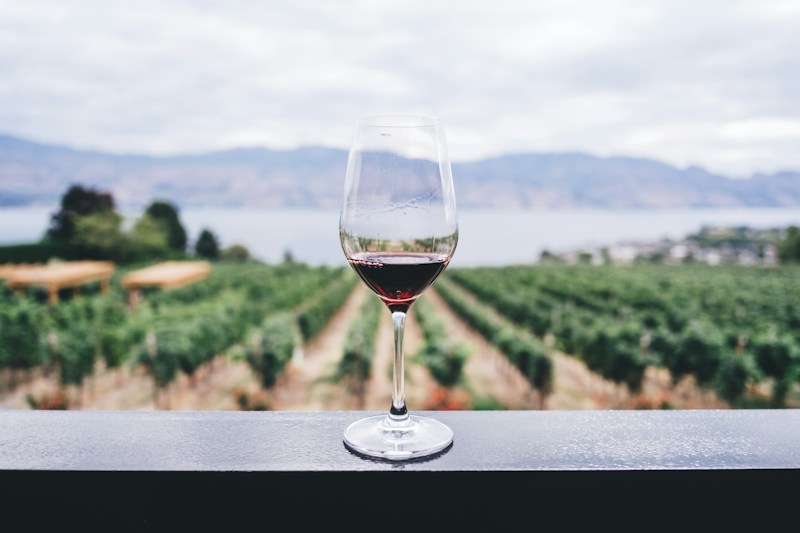
Africa's first AOC (2009) was awarded to this pioneering estate. Château Roslane makes Morocco's most acclaimed wines, proving that quality winemaking is possible in the Islamic world.
A Wine Memories experience · winememories.fi
How to Complete
5 steps curated by Wine Memories
-
The Saïss Plain around you was Rome's most productive agricultural zone in Africa. The same soil now produces Morocco's only AOC wine.
🍷 Log Memory📍 WHERE: The moment you arrive at Château Roslane, before entering the building, walk to the edge of the vineyard closest to the Atlas Mountains — face south toward the snow-capped peaks visible on the horizon.
💡 WHAT: You are standing on the Saïss Plain, the agricultural heart of Rome's province of Mauretania Tingitana. Volubilis, the Roman city where archaeologists have excavated 58 separate olive oil pressing complexes, is 33 kilometers north of where you stand. The Romans industrialized this exact landscape — the same clay-limestone soils, the same slopes catching Atlas snowmelt, the same elevation at roughly 800 meters above sea level. They shipped olive oil from this plain to Rome in amphorae. Brahim Zniber, who received this land in 1958 from King Mohammed V, took what the Romans farmed for oil and grew Africa's only AOC wine instead.
🎯 HOW: Look at the Atlas range. Count the layers: snow at the peaks, the forested slopes below, the olive groves on the lower ridges, and then these vine rows in the valley. The Romans saw the exact same sequence. The diurnal temperature range — hot Atlas days, cold nights from mountain air — is what gives Roslane's Syrah and Cabernet their acidity and spice. Ask yourself: how many glasses of Roman olive oil does one glass of Premier Cru replace?
🔄 BACKUP: If visibility is poor or it's raining, take this moment inside at the wine bar — the view of the vineyards from the terrace fireplace window performs the same reveal. The history is in the soil, not just the sky.
-
Brahim Zniber received colonized French vineyards from King Mohammed V in 1958 and turned them into 85% of all Moroccan wine production.
🍷 Log Memory📍 WHERE: At the hotel reception or in the entrance hall of the main estate building, look for any photo, portrait, or framed tribute to Brahim Zniber — the founder of Celliers de Meknès who built this estate.
💡 WHAT: Zniber was born in 1920 in Salé, became a nationalist activist, and studied viticulture while organizing against French colonialism. After Morocco's independence in 1956, he purchased 740 hectares of vineyard. Two years later, King Mohammed V granted him 1,100 more — specifically landholdings reclaimed from French settlers. He took colonial vineyards, replanted them with Cabernet Sauvignon and Syrah, introduced French oak barrel aging to Morocco for the first time, and lobbied for the country's first AOC. He died in 2016 at age 96 having produced 35 million bottles a year. His company employed 8,000 people. He controlled 85% of all Moroccan wine. And he was a devout Muslim. Ask the staff: 'Is there a story about Monsieur Zniber that isn't on your website?' Watch their face.
🎯 HOW: If you can't find a portrait, ask at reception: 'Pouvez-vous me parler de l'histoire de Brahim Zniber?' The story of how a Muslim nationalist became the father of Moroccan wine is the entire thesis of this estate in one sentence.
🔄 BACKUP: If staff aren't available for storytelling, roslanews.ma/history-heritage has the full archive. Read it before you enter the cellar so the barrel room means more.
-
The underground barrel room holds 3,000 French oak barrels and 3 million bottles. The guided tasting of 4 Premier Cru wines is the centerpiece of any Roslane visit.
🍷 Log Memory📍 WHERE: Book the guided cellar visit and wine tasting by calling +212 535 300 303 or emailing contact@roslaneboutiquehotel.ma at least 24 hours ahead. Ask specifically for the 'visite des chais avec dégustation' (cellar visit with tasting). Cost: MAD 450/person (~€42) for 4 signature wines.
💡 WHAT: The cellar descends underground into permanent cool temperature and humidity — removed from the 35°C summer heat above. Here are 3,000 French oak barrels in rows aging the Premier Cru rouge (Cabernet Sauvignon + Merlot + Syrah) and Premier Cru blanc (Chardonnay). When the guide leads you in, ask this one question: 'Pourquoi vendanger la nuit?' — 'Why do you harvest at night?' The answer: at 800 meters above sea level, grapes picked in the heat begin fermenting on the walk from vine to press. Night harvesting, when temperatures drop 15–20°C, keeps the berries cold and intact all the way to the sorting table. They use small crates — no stacking — so no berry is crushed by weight.
🎯 HOW: During the tasting, when the Premier Cru rouge arrives, look for the white-pepper spice and blackberry — this is what 800 meters and Atlas cold nights do to Syrah. Then ask: 'Is this the only wine in Africa with premier cru AOC?' The guide will nod. AOC Coteaux de l'Atlas — the same designation system that governs Burgundy Premier Cru — has exactly one African representative. It's in this glass.
🔄 BACKUP: If advance booking isn't possible, arrive by 10am and ask at hotel reception — day-of visits are sometimes possible in low season. If the full cellar tour is unavailable, ask for a tasting at the bar (individual glasses approximately €12–13 each).
-
L'Oliveraie restaurant's outdoor tables sit literally between the estate vines — every dish is organic, every glass is from vines you can touch from your seat.
🍷 Log Memory📍 WHERE: Restaurant L'Oliveraie at Château Roslane, open for lunch noon–2:30pm Monday–Saturday. For the vine-row table — a wooden bench table set between actual rows of vines — book directly and request 'une table dans les vignes.' Reservation required: +212 535 300 303.
💡 WHAT: Chef Mehdi Toubali cooks entirely organic cuisine that leans on Moroccan tradition — expect tajines or couscous refined with French technique. The wine list is exclusively Celliers de Meknès production, meaning the Chardonnay Premier Cru blanc in your glass was grown within a kilometer of where you're sitting. The estate is a Relais & Châteaux property — one of 580 such properties on the planet.
🎯 HOW: Order the Château Roslane Premier Cru Blanc with whatever fish or chicken dish is on the seasonal menu. Ask the sommelier: 'Quel plat mettrait en valeur le terroir des Coteaux de l'Atlas?' Watch what happens to that Chardonnay — grown at 800 meters, shaped by cold Atlas nights — when it hits a warm tagine sauce. The acidity cuts through richness in a way that no coastal Moroccan wine can.
🔄 BACKUP: If L'Oliveraie is fully booked, the terrace bar serves snacks and individual glasses. A glass of Premier Cru rouge at a terrace table with the vineyard view is still something most people on earth will never do.
-
The estate's oldest blocks were planted in the late 1950s on land reclaimed from French colonists. Finding them is a walk through physical evidence of Morocco's wine independence.
🍷 Log Memory📍 WHERE: Ask at reception or from your tour guide: 'Où sont les plus vieilles vignes du domaine?' — 'Where are the oldest vines on the estate?' The oldest plots sit at the edges of the property, furthest from the modern winery building, toward the open plain.
💡 WHAT: Celliers de Meknès has grown on this land since Brahim Zniber's first plantings in 1956–1958. The production building dates to 1948 — originally a French colonial winery. The vine rows that Zniber inherited and planted are now 60–70 years old. Old vines in Morocco are rare; the Islamic period left no continuous vine tradition, so every vine here dates to post-independence replanting. These are among the oldest at any winery in a majority-Muslim country.
🎯 HOW: Walk the outer rows of the estate with the Atlas Mountains at your back. Look at trunk thickness — anything wider than your fist is 30+ years old; broader than your forearm is 50+. The older the vine, the deeper the roots and the more concentrated the wine. No irrigation budget gives you the minerality that 60-year-old roots finding their own water table can.
🔄 BACKUP: If staff can't point you to the oldest blocks, walk the perimeter away from the hotel building. The view from the far vine rows back toward the Atlas is unchanged from 1958 — the same panorama Zniber saw when he planted the first vines on reclaimed land.
Tagged
- AOC
- first
- quality
- pioneer
- acclaimed
- estate
Fact-checked March 2026 · 21 sources
View sources
- roslaneboutiquehotel.com
- relaischateaux.com
- tripadvisor.com
- en.wikipedia.org
- wine-navigator.com
- altcellars.com
- coloredmorocco.com
- grapecollective.com
- researchgate.net
- worldhistory.org
- en.wikipedia.org
- rome2rio.com
- relaischateaux.com
- flaschenpost.ch
- tripadvisor.com
- rivercamp-morocco.com
- nbcnews.com
- awards.decanter.com
- wineenthusiast.com
- roslanews.ma
- paladarytomar.com