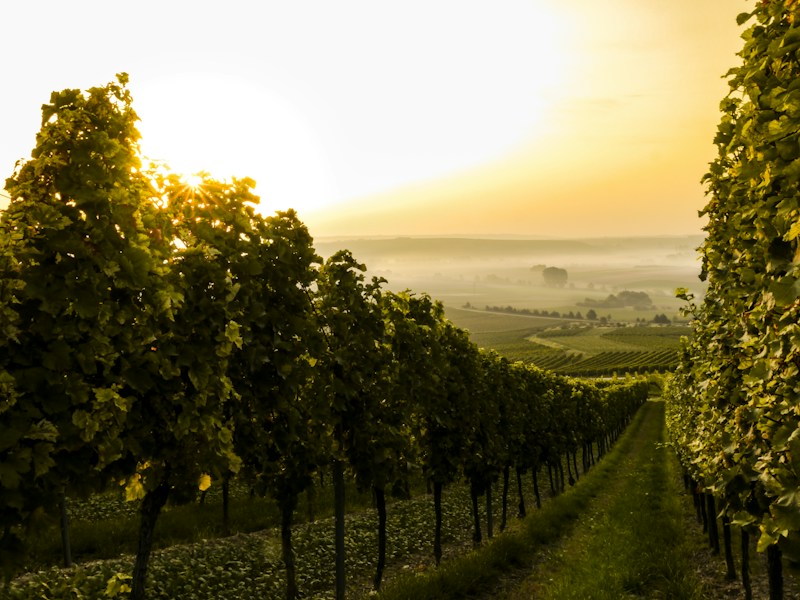
Alexandris Family Winery - Organic Rhodes
Family winery since 1968 cultivating 4 hectares organically on the slopes of Mount Ataviros. Their focus on the indigenous Athiri grape produces the highest-quality expression of this ancient Aegean variety using traditional and contemporary techniques.
How to Complete
4 steps to experience this fully
-
A €5 tasting through 6+ wines from ungrafted, pre-phylloxera Athiri vines — the kind of roots that exist almost nowhere else in Europe.
🍷 Log MemoryIn the 1870s, a louse called phylloxera swept through Europe and destroyed 90% of all vineyards. France, Italy, Spain — devastated. Every winemaker in Europe had to pull their vines and graft onto American rootstock to survive. But phylloxera spread through the Dodecanese islands — and stopped at Kos. It never reached Rhodes. The Alexandris family has been growing Athiri vines on their ORIGINAL roots since 1968 — and some of those vines on the Ataviros slopes are over 70 years old, on the same root system that was in the ground before television was invented. Walk into Alexandris Family Winery (Embonas village, on the slopes of Mount Ataviros, GPS: 36.22845°N, 27.85862°E) and start with the flagship Arma white (4.3 on Vivino) — citrus blossom, pineapple, low acid, the elegance of high-altitude Athiri at 850m. Call ahead: +30 2246 041349. Tasting fee is €5 per person.
🔄 BACKUP: If Panagiotis is not present, ask for Despoina — she runs the tasting room with equal warmth and knowledge. If the winery is closed, Dionysos Wines in the village also stocks Alexandris bottles for purchase.
-
Stand in Embonas village and trace the moment this wine left these slopes for Egypt, India, and the Black Sea — in Phoenician ships.
🍷 Log MemoryBy the 7th century BC, Rhodes was the foremost wine merchant in the entire Mediterranean world. Their amphorae — the clay shipping vessels — were stamped with a rose (Rhodes means 'rose' in Greek) or the face of Helios, the sun god. Wine archaeologists have found broken Rhodian amphorae at hundreds of sites from the Danube to India. Walk from the Alexandris Winery to Embonas village central square and Folk Museum (GPS: 36.2280°N, 27.8575°E) — it's less than 5 minutes on foot. The Phoenicians — the very civilization this journey traces — sailed these routes. They traded with Rhodes. They carried Rhodian wine to Egypt, to Carthage, to Crete. Find the Folk Museum in the central square — free entry, small collection of traditional costumes, household items, and crafts from the village's living memory. Then sit in the square and order a coffee. Look south toward Mount Ataviros (1,215m, the highest point on Rhodes).
🔄 BACKUP: If the Folk Museum is closed, the central square and the 19th-century Church of the Assumption of the Virgin Mary are always accessible. The village itself is the museum — look for older residents in traditional dress.
-
Embonas at dusk is a completely different place. The mountain air drops, the tavernas fill with locals, and the village shows you what 850 meters of altitude and 3,000 years of tradition actually feel like.
🍷 Log MemoryMost visitors come to Embonas on organized tours that hit the wineries and leave by 4pm. If you stay until 6pm, something shifts. The mountain air gets cooler — you're at 850m, nearly the highest village on Rhodes. The tour buses are gone. The village smells like thyme honey and roasting lamb. Locals reappear. Walk the main street shops selling Ataviros mountain products: thyme honey (specific to this mountain's wild thyme), sun-dried raisins (the same ones Alexandris uses for the Liasto sweet wine), mountain herbs, homemade jams. Then find Maroullakis Taverna (GPS: 36.2283°N, 27.8578°E, village centre) — 'best kept secret' per the regulars. Family-run, open evenings. Order: grilled feta (they plate it whole and scorch it), pork souvlaki, grilled lamb. Ask for Souma — the Dodecanese grape marc distillate, 40-60% ABV, served cold.
🔄 BACKUP: If Maroullakis is full, Bakis Taverna (operating since 1903) or Taverna Savvas are nearby. If you're visiting in late August, the annual wine festival fills the village with traditional dancers in costume, free wine for all, and grape treading in the square.
-
The Liasto Alexandri is what Rhodes made before refrigeration existed. Grapes left on the vine to shrivel in the Aegean sun, then pressed into something between port and poetry.
🍷 Log Memory'Liasto' means 'sun-dried' in Greek. The method is ancient — you leave the grapes on the vine past harvest, let the Aegean sun concentrate every sugar and flavor molecule into a shriveled raisin. Then you press them. The result is the Liasto Alexandri: mocha, burlat cherry, raisins in the nose; nutty, caramel on the palate; a bright tile-red color that belongs in a Byzantine mosaic. Back at the Alexandris tasting room (GPS: 36.22845°N, 27.85862°E), ask to include the Liasto in the flight at the end of your tasting. Say: 'Borinoume na dokoume to Liasto?' (Can we taste the Liasto?). Smell it first — the raisin and cherry aromas are intense before a drop hits your tongue. The caramel-nutty finish is the taste of 2,700 years of Rhodian winemaking in a single glass.
🔄 BACKUP: If the Liasto is sold out or not available for tasting, the Red Medium Sweet (also from Alexandris, on Vivino) is made with a similar philosophy. Ask Panagiotis or the tasting room staff what's in the sweet wine category that day.