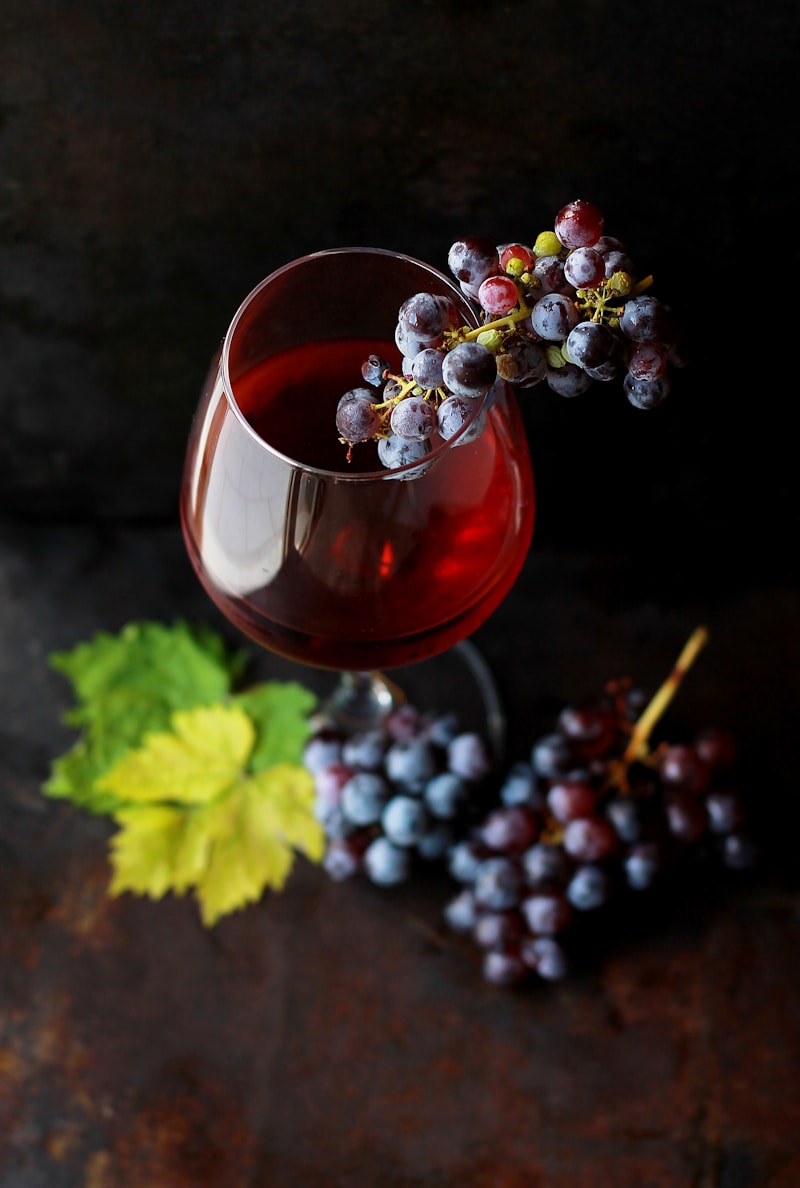
Domaine de la Zouina (Volubilia)
A boutique winery established in 1930 during the French Protectorate, reborn in 2002 under wine enthusiasts Gerard Bribelin and Philippe Gervoson. Their Volubilia label (named for nearby Volubilis) has gained international acclaim since its 2005 debut. The 85-hectare estate at 820m altitude also produces olive oil. A counterpoint to large-scale Moroccan wine production.
How to Complete
4 steps to experience this fully
-
Domaine de la Zouina is a boutique estate where two of Bordeaux's finest producers — Gérard Gribelin of Château Fieuzal and Philippe Gervoson of Château Larrivet-Haut-Brion — came on a golf trip in 2001, fell in love with this clay-limestone plain at 820m altitude, and never quite left. The first vintage was 2005. By 2023, their Volubilia Gris won Gold at the Vinalies Internationales.
🍷 Log MemoryTwo men from Pessac-Léognan — home of some of Bordeaux's greatest crus — went on a golf trip, tasted the soil, and said 'this is Bordeaux, but with Atlas Mountain cold nights and African sun.' Their logic: same clay-limestone as Graves, but 820m altitude means the vines struggle, concentrate, and produce extraordinary fruit. Today their son Christophe runs Domaine de la Zouina (20km southeast of Meknes on the road to Ifrane), with winemaker Philippe Lespy (formerly Domaines Barons de Rothschild) handling the cellar. Of their 400,000 bottles produced annually, only 20,000 are the premium single-varietal Epicuria. Book the 'La Zouina' tasting by emailing christophegribelin@gmail.com or calling +212535433034 (300 MAD/person, 600 MAD surcharge if fewer than 4 people). Ask specifically: 'Can we taste the Epicuria Syrah?' When the Volubilia Gris arrives, ask what makes it NOT a rosé — the answer will make you look at pale pinkish-grey wine differently forever.
🔄 BACKUP: If the Epicuria range is sold out, the Volubilia Classic Rouge (Cabernet Sauvignon + Syrah + Mourvèdre + Tempranillo) tells the same story. Bottles to take home: ~100 MAD (~€10) at the estate — a fraction of what they cost in London.
-
The Roman city of Volubilis — 20km north of Meknes, 2500 years of continuous human presence — was the provincial capital from which Rome controlled Morocco. Now it's a UNESCO World Heritage Site with some of the best-preserved mosaics in North Africa. The vineyards you just tasted wine from? The Romans farmed the same plains.
🍷 Log MemoryThe centrepiece is the Arch of Caracalla — built in 217 AD by governor Marcus Aurelius Sebastenus, dedicated to Emperor Caracalla and his mother Julia Domna, originally crowned by a bronze chariot pulled by six horses. But here's the story the guidebooks skim past: Caracalla had already MURDERED his own brother Geta to seize the throne. Sebastenus built this arch partly out of political survival — flattery in limestone and bronze. At Volubilis Archaeological Site (33km north of Meknes, 3km west of Moulay Idriss Zerhoun), the empire abandoned this city 68 years later in 285 AD. Then in 789, Idris I arrived at these very ruins, declared himself founder of Morocco's first Islamic dynasty, and built his capital literally below the Roman walls. Same soil, three civilizations. Entry is 70 MAD (~€7), open 8am-7:30pm summer, 8am-5:30pm winter. Walk the Decumanus Maximus from the Arch toward the forum, then to the House of Orpheus for exceptional floor mosaics. If you have a guide, ask about the wine amphorae found in excavations — evidence Romans were drinking wine here 2000 years ago.
🔄 BACKUP: If the main site is crowded mid-morning, the far northern section (House of Venus mosaics) sees far fewer visitors. The light on the Atlas Mountains from the northern end of the Decumanus at late afternoon is the best vista reveal on this entire journey.
-
Meknes's old medina is a UNESCO World Heritage Site — but most visitors race through it to reach Fes. They miss Bab Mansour: the most spectacular ceremonial gate in Morocco, built in 1732 by a man whose name literally means 'the Victorious Apostate.' Walk this medina slowly. It's where Morocco's version of Versailles was built, where wine flows despite everything, where everything is a paradox.
🍷 Log MemoryThe architect was Mansour al-'Alj — a Christian slave who converted to Islam. His name: 'Mansour' (Victorious) + 'al-'Alj' (the Apostate). Sultan Moulay Ismaïl began Bab Mansour gate (Place el-Hedim, Meknes medina, GPS: 33.8956, -5.5473); it was finished by his son Moulay Abdallah in 1732. This gate was the ceremonial entrance to the imperial kasbah of a sultan who ruled for 55 years, built 45km of city walls, 20 monumental gates, and 50+ palaces. Meknes locals call it the 'Versailles of Morocco' because Ismaïl's viziers visited Louis XIV's court and came home determined to match it. The darj-wa-ktaf carvings filled with colourful zellij tilework and Arabic inscription in painted tile — architecture as political statement. The wine region you're visiting exists because the French Protectorate made Meknes the centre of Moroccan wine production. Islam technically forbids alcohol. Morocco produces 35 million bottles a year. Look at this gate and hold both truths at once. Walk through into the medina, then left toward the Mausoleum of Moulay Ismaïl (non-Muslims can enter the courtyard, respectful dress required).
🔄 BACKUP: Note that Bab Mansour was under renovation in late 2025 — scaffolding may still be present. If partially covered, the gate is still worth seeing for its scale and the medina walk behind it. The adjacent Place el-Hedim has its own life — markets, street food, locals.
-
Three kilometres from Volubilis, draped over two hills like a whitewashed dream, is Moulay Idriss Zerhoun — the holiest city in Morocco. Until 2005, non-Muslims were forbidden from staying overnight. The mausoleum at its heart remains off-limits. But the town itself? It's one of the most extraordinary places in North Africa, and almost no one stops here.
🍷 Log MemoryIn 789 AD, Idris I — a descendant of the Prophet Mohammed, fleeing political persecution — arrived at the ruins of Roman Volubilis and founded Morocco's first Islamic dynasty right here. Moulay Idriss Zerhoun (34.0559, -5.5211, 3km from Volubilis) grew around his tomb. For over 1200 years it was one of the most sacred pilgrimage sites in North Africa — the Moroccan Mecca for those who couldn't make the journey to Saudi Arabia. Until 2005, any non-Muslim found in the town after sunset was removed. The ban was lifted. You are now allowed. Walk slowly. From the lower entrance, follow the steep lanes upward toward the circular minaret — the only cylindrical minaret in Morocco. The panoramic terrace above the town gives you a view across the Zerhoun plain toward Volubilis — you can see the Roman arch on a clear day. The same view Idris I had. Be respectful: shoulders covered, dress modestly. The zawiya and mausoleum complex is absolutely off-limits to non-Muslims — don't cross the wooden bar.
🔄 BACKUP: Moulay Idriss has a small handful of excellent restaurants and guesthouses. If timing allows, a mint tea on a terrace overlooking the plain — after the Volubilis ruins and before the drive back to Meknes — is the perfect coda to a day that started with 2500-year-old Berber soil and ended with wine that grows in it.