Lilibeo Archaeological Park & Punic Ship Museum
Explore the archaeological remains of Lilybaeum (founded 397 BC by Motya survivors) and view the world's only intact Phoenician-Punic warship. The museum, housed in a 19th-century Marsala wine factory (Baglio Anselmi), displays the ship sunk during the First Punic War (241 BC), plus Roman mosaics and Punic artifacts.
How to Complete
4 steps to experience this fully
-
The world's only intact Punic warship — sunk March 10, 241 BC during the Battle of the Aegates, the naval clash that ended 23 years of war and forced Carthage off Sicily forever.
🍷 Log MemoryYou're looking at 35 meters of a Carthaginian warship that sank on March 10, 241 BC. A vertebra, a radius, and a femur were found pinned under the ballast — one Carthaginian oarsman, probably 20 years old, who never got out. The hull still bears Phoenician-Punic alphabet letters carved into every plank: assembly instructions like IKEA but 2,265 years old. Archaeologists also found a basket of Cannabis sativa — the oarsmen chewed it or brewed it as tea. Walk directly above the hull via raised gangway at the Museo Archeologico Regionale Lilibeo (Lungomare Boeo 30, Marsala, €10 full). Summer hours: 9:00–midnight, last ticket 23:00 — coming at dusk when light drops through the windows is extraordinary.
🔄 BACKUP: If the museum is closed (check seasonal hours), the park grounds around Capo Boeo are often accessible and give you context of where Lilibeo stood. The ship cannot be viewed outside the museum.
-
The Archaeological Park of Capo Boeo is the open-air ruins of Lilybaeum — the city Carthage built for survivors of Motya, the Phoenician colony Dionysius of Syracuse destroyed in 397 BC. Same peninsula. Layer upon layer.
🍷 Log MemoryWalk the Plateia Aelia — the main street of Roman Lilybaeum, now lit with theatrical installation that turns it into a glowing corridor through 2,000 years. Look for double-curtain fortification walls (Punic engineering that held off Romans for 9 years) and Insula I with polychrome African-style floor mosaics still in place — one shows Theseus killing the Minotaur, made by North African artisans when Rome's Sicily was cosmopolitan beyond expectations. At the Parco Archeologico di Capo Boeo (adjacent to Baglio Anselmi, free with museum ticket), stand at Sicily's westernmost point (37.8020, 12.4255) facing the three Egadi Islands — exactly where the Battle of the Aegates took place. The ship behind you was sunk in that water.
🔄 BACKUP: Even if parts are under excavation, the Capo Boeo tip viewpoint is always accessible from the public lungomare road.
-
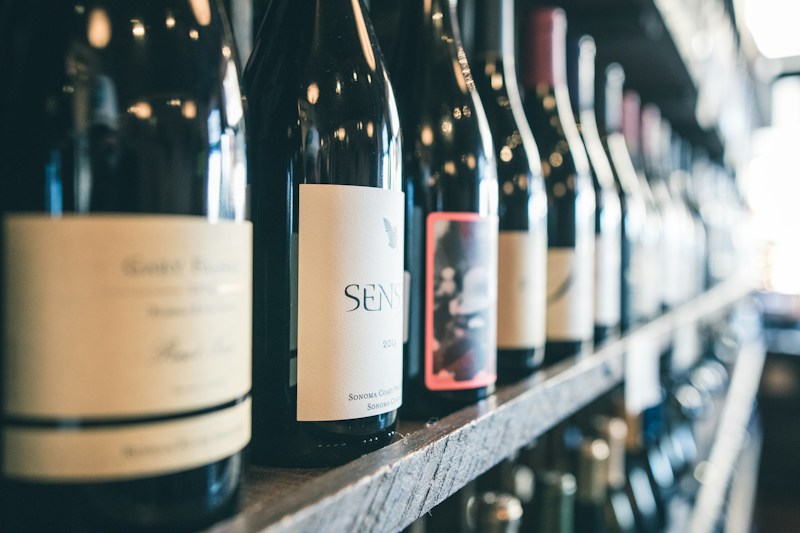
Cantine Florio's four tuff-stone aisles hold six million liters of aging Marsala. The same fortified wine Admiral Nelson ordered 500 pipes of in 1800, calling it 'worthy of any gentleman's table and manna for sailors.' After Trafalgar, the British fleet called it Victory Wine.
🍷 Log MemoryVincenzo Florio built these cellars in 1833, deliberately sandwiched between the English merchants who had monopolized Marsala for 60 years — he undercut them, outproduced them, and outlasted them. Today Cantine Florio (Via Vincenzo Florio 1, Marsala) spans 44,000 square meters and holds ~80% of Italy's DOC Marsala production. The smell inside those tuff-stone aisles is tamarind, dried apricot, roasted almond, vanilla, sea salt — the smell of wine that's been here two centuries and plans to stay. Tours run Apr–Oct Monday–Friday 11:00 and 15:30; Nov–Mar Monday–Friday 15:30. Cost €20 (includes 4 wines); Premium €30 with Trapanese food. Ask specifically to taste the Vecchio Florio Superiore Riserva, aged minimum 5 years — that's the one that made Nelson write home.
🔄 BACKUP: If Florio is fully booked, Cantine Pellegrino (Via del Fante 39, Marsala) runs similar tours with excellent Vergine Marsala tastings.
-
Under the 16th-century Chiesa di San Giovanni Battista at the tip of Capo Boeo, 4.8 meters underground, is the Grotta della Sibilla — a circular chamber carved into living rock, used for oracular rituals in Roman times and early Christian worship after that. It opens to the public exactly once a year.
🍷 Log MemoryThe Grotta della Sibilla Lilibetana sits 4.8m below the church floor at Chiesa di San Giovanni Battista (Capo Boeo, GPS: 37.8019, 12.4261) — a central circular chamber with freshwater spring that's flowed since antiquity, the same spring that made this sacred for Phoenicians, Romans, and early Christians in sequence. The church itself was built in 1555 by Jesuits, on top of a 5th-century structure, on top of the cave — three religions stacked in 4.8 meters of rock. The cave opens ONLY on June 24th (Feast of St. John the Baptist), all day, admission free. Stand at the church exterior any day and look west at the Egadi Islands at sunset — on very clear days you can see the Tunisian coast outline, the direction Carthage's supply ships came from 2,265 years ago.
🔄 BACKUP: Any day you can explore Capo Boeo's tip. The sunset viewpoint here (Sicily's westernmost point) is free, unrestricted, and among the finest in the Mediterranean.