✦ Contrada Terroir Pioneer
Passopisciaro (Vini Franchetti) - Contrada Pioneer
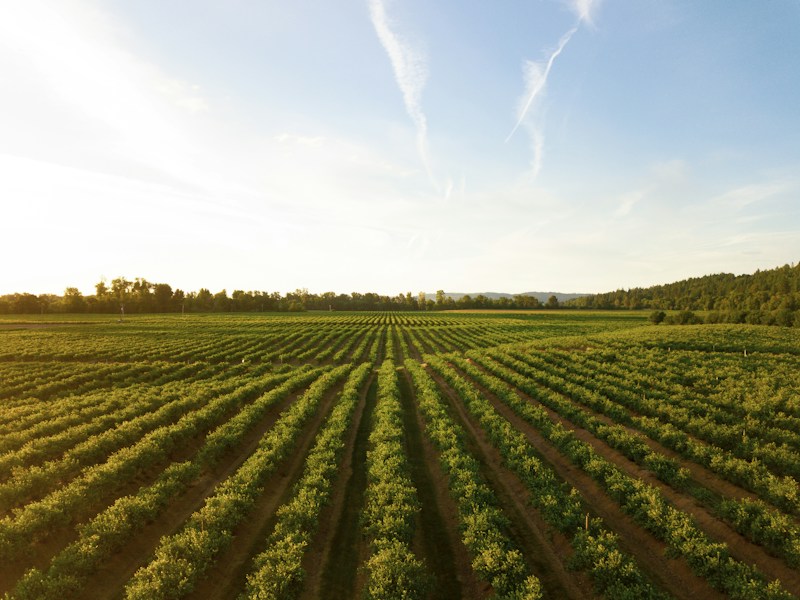
Explore the winery that proved Etna's Contradas are distinct terroirs, created by visionary Andrea Franchetti in 2000. Tour vineyards at 850-1000m elevation across five named Contradas (Chiappemacine, Porcaria, Guardiola, Sciaranuova, Rampante), each producing single-vineyard Nerello Mascalese.
A Wine Memories experience · winememories.fi
How to Complete
6 steps curated by Wine Memories
-
In 734 BC, colonists from the Greek island of Naxos founded Sicily's first Greek colony at the mouth of the Alcantara River — the same river that runs below these vineyards. They were so certain wine would grow here that their silver coins showed Dionysus on one side and a bunch of grapes on the other. Passopisciaro's vines stand on the north slope that those colonists looked up at 2,750 years ago.
🍷 Log Memory📍 WHERE: The stone terrace walls bordering the road approaching Passopisciaro winery, Contrada Guardiola, Castiglione di Sicilia (GPS: 37.8605, 15.0235). From the SP89 highway north of Linguaglossa, follow signs toward Passopisciaro village; the vineyard terraces are visible from the road before you reach the winery gate.
💡 WHAT: These are the same volcanic north slopes that Phoenician merchants and Greek colonists were trading wine along in 800-700 BC. Just 25km below, at the mouth of the Alcantara River (which runs through this valley), the Greeks founded Naxos in 734 BC — the first Greek colony in all of Sicily. Naxos minted silver coins with Dionysus on one side and a bunch of grapes on the other. The vines you're looking at grow in soil that has never been replanted over rootstock because the phylloxera pest that wiped out 90% of Europe's vineyards in the 1870s physically cannot survive in Etna's volcanic sand. These plants are 70-100 years old and still on their original roots. No other wine region in continental Europe can say that.
🎯 HOW: Free to observe from the road. Drive slowly along Via Guardiola approaching the estate entrance. Look for the low, gnarled bush vines — no wires, no trellises. Each one is trained alberello ('little tree'), a pruning method the Greeks brought from the Aegean in the 8th century BC. The technique hasn't changed.
🔄 BACKUP: If road access is restricted, the view of the terraced north slope vineyards is visible from the SP89 belvedere points south of Randazzo, looking south toward Castiglione.
-
In 2008, Andrea Franchetti did something no one had done before on Etna: he bottled each of his five vineyards separately and put them in front of visitors side-by-side. The result demolished the idea that 'Etna wine' is a single thing. Contrada C sits on limestone 2,000 feet below the crater. Contrada R sits at the crater's edge on 9,000-year-old sandy lava. The same grape, 450 vertical meters apart, tastes like completely different wines.
🍷 Log Memory📍 WHERE: Passopisciaro winery, Contrada Guardiola, 95012 Castiglione di Sicilia (CT). GPS: 37.860523, 15.023503. Phone: +39 0942 395449. Email: visitpassopisciaro@vinifranchetti.com
💡 WHAT: Book the full contrada comparative tasting — this is the experience that changed how the wine world thinks about Etna. The five Contrada wines are all pure Nerello Mascalese, all 70-100 year old ungrafted vines, all processed identically (stainless steel fermentation, 18 months neutral oak). The ONLY variable is which ancient lava flow the vineyard sits on. Contrada C (550m, limestone under lava): peppery, rounder. Contrada G (Guardiola, 800-1,000m, on the edge of a lava flow the estate names but does not date): wild cherry, violets, dusty tannins. Contrada R (Rampante, 1,000m, sandy lava the estate does not date): the most aromatic, the most elegant, the most expensive. When you taste them in sequence you're tasting geology. The estate's own claim about 2008 is that bottling its top sites separately helped USHER IN a cru system on Etna — not that it was first, and not that others copy the format. Ian D'Agata credits Franchetti together with Marc de Grazia of Tenuta delle Terre Nere with pushing the contrade concept, and credits Benanti and Salvo Foti with first putting Etna on the Italian quality-wine map.
🎯 HOW: Book through the estate's own booking system, whose live catalogue (read 30 July 2026) lists Classic vineyard tour and tasting €45, Le Contrade dell'Etna €65, Etna according to A. Franchetti €80 and Passopisciaro Grand Tasting €120, plus a trade-and-press slot on request. Booking closes 24 hours before the slot for the first three and 48 hours before the Grand Tasting, which also has a two-guest minimum; every visit caps at 20 people, a non-tasting companion is €15 and under-18s are free. There is no two-week lead requirement. The cellar itself is worth the visit: the old restored press house, barrel room with large neutral oak botte (no small barriques, by design). Ask specifically to see the 1947 eruption contrada on a map — they have a geological survey showing exactly which lava flow underlies each cru.
🔄 BACKUP: If contrada comparative tasting is sold out, book the standard Passorosso + Contrada wines tasting (€35-50). At minimum taste one Contrada wine and the Passorosso side by side — the contrast between the blended entry wine and a single-site cru makes the point instantly.
-
When Andrea Franchetti arrived on Etna in 2000, he didn't just restore old Nerello vines — he planted Petit Verdot and Cesanese d'Affile at 1,000 meters in volcanic rock. His theory: Bordeaux's heaviest grape, stripped of its plummy weight by volcanic soil and altitude, would become something the world had never tasted. The 2022 Franchetti wine got 97 points from Robert Parker. It's unlike any Petit Verdot on earth.
🍷 Log Memory📍 WHERE: At Passopisciaro winery during the premium tasting, or at any well-stocked wine bar in Taormina or Catania. At the winery: Contrada Guardiola, 95012 Castiglione di Sicilia (CT). GPS: 37.860523, 15.023503.
💡 WHAT: The 'Franchetti' wine is the estate's most audacious statement — not a Nerello Mascalese, not a local grape at all. Petit Verdot (60-70%) and Cesanese d'Affile (30-40%), planted at 90cm spacing at 1,000m on volcanic ash. In Bordeaux, Petit Verdot is a blending grape — too heavy, too tannic to stand alone. On Etna's volcanic sand it loses its weight and becomes: mentholated herbs, white smoke, dried blackberries, violet florals, salty minerals. The volcanic soil does to Petit Verdot what the ocean does to salt — it completely transforms the flavor. This is a winemaker's wine, not a terroir wine. And it proves that Etna's volcanic soil is so transformative it can reinvent even a grape that has no business being here.
🎯 HOW: Ask specifically for the 'Franchetti' tasting as an add-on to any standard visit (typically €15-25 additional per glass at the winery). Retail price per bottle: approx €80-120. Ask the winery which current vintage is drinking best — they will have an opinion. Taste it alongside a Contrada R to feel the contrast between what the volcano does to a local grape vs. a foreign one.
🔄 BACKUP: If Franchetti is not available at the winery, find it at Enoteca Regionale in Castiglione di Sicilia's Lauria Castle (Piazza Lauria 1, 09:30-16:30). They stock local wines at retail prices.
-
Castiglione di Sicilia's Lauria Castle was built in the 12th century by the Normans on top of a Greek fortress that had been on this volcanic ridge since 710 BC. Today the castle holds Sicily's Enoteca Regionale for Eastern Sicily — a wine shop and tasting room inside the same stone walls that Frederick II of Swabia walked through in 1233 when he granted the town the privilege of minting its own coins. The view from the terrace takes in the entire Alcantara Valley and the north face of Etna.
🍷 Log Memory📍 WHERE: Enoteca Regionale Sicilia Orientale, inside Castello di Lauria, Piazza Lauria 1, Castiglione di Sicilia (CT). GPS: 37.88269, 15.12258. The entrance is at Piazza Lauria — note there are NO logos or signs on the outer door. Look for the castle gate on the square and walk in.
💡 WHAT: This castle was documented as 'Castrileonis' (Great Castle) in 1092. The hilltop it stands on has been fortified since Greek settlers came up the Alcantara River in 710 BC. The castle took its current name from Admiral Ruggero di Lauria, who took possession in 1283. Today's tasting room is inside the Norman walls — stone vaulted ceiling, the same limestone blocks laid 900 years ago. They stock Etna DOC wines from the north slope contrade: you can taste 3 glasses for €10. Ask specifically for one wine from Castiglione di Sicilia itself — they usually have a local producer's Nerello that won't appear anywhere else.
🎯 HOW: Walk in through Piazza Lauria; the enoteca is inside. Do not rely on published hours or a tasting price: the enoteca's own /visit/ page is unedited theme demonstration content — it advertises a fictitious 'DiWine wine estate' at Sambuca di Sicilia, quotes a placeholder address and telephone, and prices dishes in dollars. Confirm hours and cost on arrival or by phone. Entrance to the castle itself is free. Spend 20 minutes on the terrace — the 360-degree view over the Alcantara Valley and Etna's north face is one of the best panoramas in Sicily, and it's completely free once you're inside.
🔄 BACKUP: If the enoteca is closed (it occasionally closes for private events), walk to La Dispensa dell'Etna (historic center, Castiglione di Sicilia) for a glass of local Etna Rosso with nettle tagghiani or ricotta fritters.
-
Nine thousand years ago a lava flow from Etna ran into the Alcantara River. The rapid cooling — molten rock meeting cold water — shattered the lava into perfect hexagonal basalt columns, now forming 25-meter canyon walls that frame a turquoise river. This is the same geological event that created the volcanic sand in which Passopisciaro's ungrafted vines still grow. You can walk into it for €1.50.
🍷 Log Memory📍 WHERE: Gole dell'Alcantara (Alcantara Gorge), Parco Fluviale dell'Alcantara. GPS: 37.87972, 15.17505. From Castiglione di Sicilia, drive east on SP7 toward Motta Camastra (approx 15km). Follow 'Gole dell'Alcantara' signs to the municipal entrance (Ingresso Comunale).
💡 WHAT: The hexagonal columnar basalt walls are a direct record of how Etna's volcanic eruptions shaped this entire landscape — the same lava that became vineyard soil upstream became stone canyon walls here. The gorge is 8,000-9,000 years old. The columns formed through 'columnar jointing' — as lava cools it contracts and fractures into hexagonal prisms, exactly the same process that forms basalt columns in Iceland or Giant's Causeway in Ireland. The difference here: you can walk into the river canyon, wade through the turquoise water between 25-meter walls, and touch the volcanic rock that created the terroir of every wine you tasted at Passopisciaro.
🎯 HOW: Municipal entrance fee: €1.50 (open April-October, 9am-7pm). The private botanical garden entrance costs €7-13 but adds little to the experience. Wear waterproof sandals or be prepared to get your feet wet in summer — the river is cold even in July. Best time: arrive before noon to beat afternoon crowds. April-June is ideal (20-28°C, uncrowded).
🔄 BACKUP: If visiting November-March when the public entrance is closed, use the private Parco Botanico entrance (open year-round, €10). Alternatively, the viewpoint from the SP7 bridge above the gorge is free at any time of year — the canyon view from above is still dramatic. SEASONAL NOTE: The gorge is only fully accessible April-October. Winter visits are limited to the private entrance only.
-
A kilometer outside Castiglione di Sicilia, a square Byzantine church with three apses sits alone in a vineyard, looking like it fell from space. Built between the 7th and 10th centuries, its interior arches carry Islamic geometric patterns — a physical record of the three civilizations that layered this volcanic hillside before the Normans arrived. It has been a protected national monument since 1909. Almost no one visits.
🍷 Log Memory📍 WHERE: Cuba di Santa Domenica, Contrada Santa Domenica, Castiglione di Sicilia (CT). GPS: 37.88781, 15.10377. From Castiglione di Sicilia, follow the SP1-II road and look for 'Cuba Bizantina' signs (clearly marked). Country road, passable by car. The church stands alone in a field — you cannot miss it.
💡 WHAT: This is one of the best-preserved Byzantine 'cuba' structures in all of Sicily. A 'cuba' is a specific form: square floor plan, central dome, three apses pointing east. What makes this one extraordinary is the interior arches: they show Islamic geometric decoration, installed during the period of Arab rule before the Normans arrived. Byzantine form + Islamic ornament + Norman conquest = three civilizations in one small building on a volcanic hillside, next to vineyards. Its date of listing as a national monument could not be re-verified from any fetchable source. The interior is rarely open, but the exterior — especially the stone dome and apse profile — is extraordinary against the Etna backdrop.
🎯 HOW: Free to visit at any time. The exterior is always accessible. Interior visits are occasional — arrive during morning hours and check if the gate is open; a local custodian sometimes unlocks it. No admission charge. Allow 20-30 minutes. Combine with the drive from Passopisciaro winery to Castiglione di Sicilia — it's directly on the route.
🔄 BACKUP: If the road is impassable (very rarely, after heavy rain), the Cuba is visible from a distance across the valley. The Castiglione tourist office (Piazza Lauria area) can sometimes arrange access.
Insider Tips
- ✦
Book "Le Contrade dell'Etna" tasting to compare terroir expression
- ✦
Franchetti (the wine named after Andrea) blends Petit Verdot with Cesanese d'Affile
- ✦
The winery operates chemical-free; restored terraced vineyards up Etna's slopes
- ✦
Benjamin Franchetti manages day-to-day operations of the family company (The Connected Table, October 2024); Passopisciaro itself is led by Andrea Franchetti's long-time collaborator Vincenzo Lo Mauro, whose first vintage was 2022 (Opening a Bottle, November 2024)
Tagged
- volcanic-terroir
- single-vineyard
- natural-wine
- pioneer
Fact-checked March 2026 · 24 sources
View sources
- vinifranchetti.com
- vinifranchetti.com
- theconnectedtable.com
- mowse.blogspot.com
- nataliemaclean.com
- winespectator.com
- skurnik.com
- openingabottle.com
- etnawineschool.com
- en.wikipedia.org
- en.wikipedia.org
- fenici.net
- etnalcantara.com
- cellartours.com
- flatiron-wines.com
- en.wikipedia.org
- enotecaregionalesiciliana.it
- tripadvisor.com
- enjoysicily.it
- sicilyactive.com
- vinifranchetti.com
- ivigneri.it
- tripadvisor.com
- geologyscience.com