✦ Cappadocia's Premier Winery
Turasan Winery
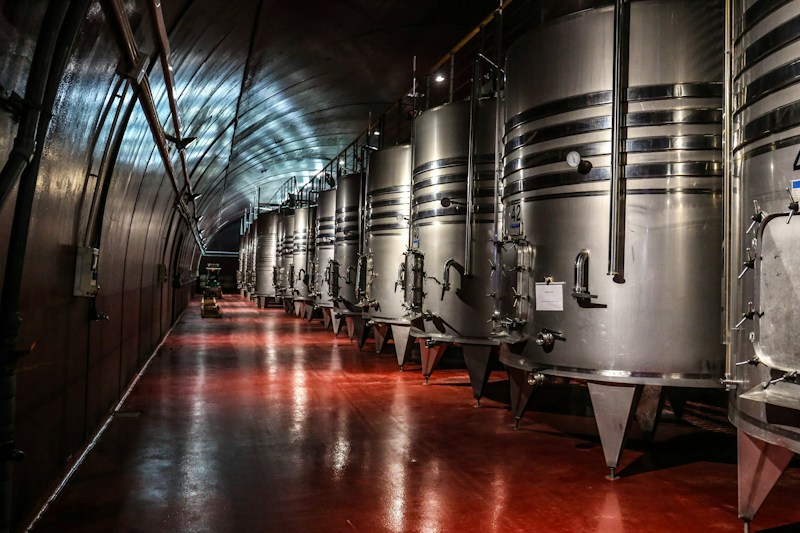
Cappadocia's largest and most historic winery, founded in 1943 but using caves carved centuries earlier. Taste Emir (crisp white) and Öküzgözü ("Ox Eye" — a rich red). The cave cellars are spectacular.
A Wine Memories experience · winememories.fi
How to Complete
6 steps curated by Wine Memories
- 🍷 Log Memory
📍 WHERE: Tevfik Fikret Caddesi, Ürgüp hillside — approach Turasan from the town center walking uphill. The winery sits on the slope overlooking the valley of carved volcanic rock. GPS 38.6332, 34.9067. Before you go inside, stop at the gate and look out over the landscape.
💡 WHAT: When Rome's Emperor Tiberius annexed Cappadocia in 17 AD, his generals didn't arrive with wine. They found it. The Hittites had been making wine in this volcanic valley since at least 1600 BC — they called the entire land 'Wiyanawanda,' meaning 'country of the grapevine.' They wrote the world's first wine legislation on cuneiform tablets: laws protecting vineyards, regulations for wine categories (young, aged, dry, sweet, red), penalties for vine damage. Rome annexed one of the oldest wine cultures on Earth. The Emir grape you're about to taste in that cellar almost certainly predates Rome by centuries.
🎯 HOW: This is free — no ticket, no door to open. Stand outside, read the surroundings. The fairy chimneys visible from here are the same volcanic tuff that gives Emir its impossible mineral signature — the same soils Hittite winemakers worked 3,600 years ago. Then head to the RIGHT entrance (not the left, which is the shop) for the tasting experience.
🔄 BACKUP: If arriving by car and can't linger, the same reflection works from inside the winery's cave tasting room — ask the staff: 'How old is wine in Cappadocia?' Watch what happens.
- 🍷 Log Memory
📍 WHERE: Inside Turasan's right-hand entrance — the tasting room, not the shop. Ask to see the full wine range display or the winery history panel.
💡 WHAT: In 1943 — while WWII raged across Europe — a Cappadocian schoolteacher named Hasan Turasan was talked into starting a winery. The man who convinced him: Suat Hayri Ürgüplü, then a cabinet minister in Turkey's wartime government and a native of Nevşehir. Ürgüplü believed private wine production was part of the secular, modern Turkish republic Atatürk had envisioned 20 years earlier — and he pushed his close friend Hasan Bey to make it happen. The schoolteacher founded Turasan in a landscape dominated by TEKEL, the state monopoly controlling all wine production. Suat Hayri Ürgüplü went on to become Prime Minister of Turkey in 1965. The man who launched Cappadocia's first modern private winery eventually led the entire country. The Selda Red on that shelf? Named after the third-generation owner's wife — the third Hasan Turasan now runs it with her.
🎯 HOW: This step costs nothing — ask to look at the bottle display while deciding what to taste. The full three-generation story is readable in the label evolution: from basic Emir to the 'Seneler' (meaning 'years') reserve line, to the Selda Red.
🔄 BACKUP: The winery's Instagram @turasanwines has historical photos. If the staff speak English well enough, the founding story is something they'll tell willingly — it's the pride of the house.
- 🍷 Log Memory
📍 WHERE: The paid tasting experience at Turasan's rock-carved cave cellar. Enter through the RIGHT door on Tevfik Fikret Caddesi No:44. Book in advance — tour buses can fill the cellar. Call +90 384 341 65 70 or message @turasanwines on Instagram.
💡 WHAT: The cave cellar is chilly year-round (bring a layer). You'll sit among French oak Francois Freres barriques — the same cooperage used by top Burgundy producers. But the wine you MUST start with is the Turasan Emir. This grape grows on exactly one place on Earth: Cappadocia. Not 'primarily in Cappadocia' — only here. Vines survive Cappadocia's -20°C winters and 35°C summers. The volcanic tuff soils contain under 3% clay, which means phylloxera — the pest that wiped out 90% of Europe's vineyards in the 1860s — cannot live here. Some Cappadocian vineyards still have ungrafted vines 150–200 years old. When you taste Turasan Emir, you're tasting a grape variety that the Hittites were drinking 3,000 years before it won a Gold medal at Concours International de Lyon in 2017.
🎯 HOW: Standard paid tasting is ~€10–15 for 3+ pours at the cellar tables with the fireplace. Ask specifically: '2017 Emir, the Lyon gold medal wine, and a Seneler.' For approximately €5 more you can add the production facility tour — the guide walks you through the concrete aging tanks and down to the French oak barrel aging area. Emir arrives pale, almost water-clear. Smell for green apple, white peach, and a saline mineral note from the volcanic rock. The acidity will cut through your palate like cold mountain water.
🔄 BACKUP: If the Emir is sold out of a specific vintage, any Turasan Emir works — the terroir is the story, not the year. The free 2-sample tasting at the shop counter (left door) gives you a preview but lacks the cellar atmosphere.
- 🍷 Log Memory
📍 WHERE: Same cave tasting room. Ask your guide or server to add the Seneler comparison to your paid tasting.
💡 WHAT: 'Seneler' is the Turkish word for 'years' — Turasan's reserve line, aged in Francois Freres French oak barriques (the same cooperage that Burgundy's top domaines use). The contrast tells the story of what oak does to indigenous Turkish grapes: Seneler Öküzgözü spent 10 months in barrel. Seneler Cabernet-Merlot-Syrah: 12 months. This is where Turasan's third generation — Hasan III and his wife Selda — made their philosophical bet: that Cappadocia's indigenous varieties deserve the same serious cellar treatment as Burgundy or Bordeaux. They spent 25 years ratcheting up quality while every other winery in the region was focused on volume.
🎯 HOW: The full Seneler comparison typically adds €5–10 to the tasting. Ask specifically: 'Seneler Öküzgözü and Seneler Kırmızı, please — we want to understand the oak.' Öküzgözü ('bull's eye') is a red grape from eastern Turkey — fragrant, dark-fruited, soft-tannic. After 10 months in Francois Freres oak it shows dark cherry and vanilla. The Selda Red (named after Hasan's wife) is the full house blend: Kalecik Karası, Öküzgözü, Boğazkere, Syrah — 16 months in concrete, no oak — a statement that structure, not barrel influence, is the point.
🔄 BACKUP: If the Seneler range isn't available in the tasting, ask to purchase a bottle to open later at your hotel — prices here are ~30% below Istanbul retail.
- 🍷 Log Memory
📍 WHERE: At the tasting table in the cave cellar, or at one of Ürgüp's market stalls near Cumhuriyet Meydanı, ~500m walk from Turasan back toward town center.
💡 WHAT: The Emir grape was named 'emir' — meaning 'ruler' or 'lord' — because it was the wine at the tables of Cappadocian nobility from Hittite times through the Roman era. The pairing that has survived 3,000 years alongside it: tulum cheese. Tulum is a sharp, crumbly, salty aged white cheese made in animal-skin pouches — one of Anatolia's oldest food traditions. The Emir's high acidity slices through tulum's fat; the cheese amplifies the wine's mineral edge. A food-wine pairing with a three-millennia track record.
🎯 HOW: Ask the tasting room if they can bring tulum with your Emir pour — many visits include a small cheese plate. If not available, purchase both from the nearby Ürgüp market: a glass of Emir at the tasting room (included in your paid tasting, ~€10–15) and a wedge of tulum from any market stall (~€2–4). A slice of ripe tomato with sea salt is the other traditional Emir pairing — the simplicity is the point.
🔄 BACKUP: If tulum isn't available, any fresh white cheese works. Hamsi (anchovies) from the market is the other classic local match if you want something more adventurous.
- 🍷 Log Memory
📍 WHERE: Walk uphill from Turasan's winery entrance along Tevfik Fikret Caddesi. The rocky slopes above the winery road hold wild and semi-cultivated terraces of grapevines. GPS starting point 38.6332, 34.9067; head north-northeast on the hillside path for 5–10 minutes.
💡 WHAT: Cappadocia's volcanic tuff has less than 3% clay — a soil composition that phylloxera (the louse that wiped out 90% of Europe's vines in the 1860s) cannot survive. The result: ungrafted grapevines 150–200 years old still alive on slopes above 1,200m. These vines have never had to be replanted on American rootstock like virtually every vine in France, Italy, or Spain. They are growing on their own original roots — a viticultural relic so rare that only a handful of regions on Earth have it. Look at the vine trunks: an ungrafted vine has a single, continuous trunk from root to canopy, no graft scar at the base.
🎯 HOW: This is completely free — the hillside above Turasan is publicly accessible. Ask the tasting room staff before you leave: 'Where are the oldest vines on the hillside?' They'll point you in the right direction. You're looking for gnarled old trunks in low-trained bush vine form — Cappadocia's gobelet style, shaped low to protect against wind. Touch the volcanic tuff soil: soft, almost crumbly, pale yellow-grey. This is what the Emir vine's roots are reaching through.
🔄 BACKUP: If you can't find obvious old vines immediately, the Cappadocia Vineyard Route (signposted from the Ürgüp tourist office area) passes through old vine terraces. Any vineyard section with gnarled, unirrigated bush vines is likely ungrafted.
Tagged
- historic
- cave-cellars
- indigenous
- professional
- iconic
Fact-checked March 2026 · 23 sources
View sources
- wayanatapas.com
- turkishwineisfantastic.com
- vintnerproject.com
- en.wikipedia.org
- cappadociapage.com
- tripadvisor.com
- concourslyon.com
- grapex.com
- sommdigiblog.com
- thequirkycork.com
- thequirkycork.com
- en.wikipedia.org
- vintnerproject.com
- en.wikipedia.org
- amuraworld.com
- cappadociaturkey.net
- cappadociatravelpass.com
- istanbites.com
- en.wikipedia.org
- vinerra.com
- civicwinery.com
- discovermore.tr
- local.turkeyturism.com