✦ Antioch's Ancient Harbor
Samandag Beach & Roman Harbor
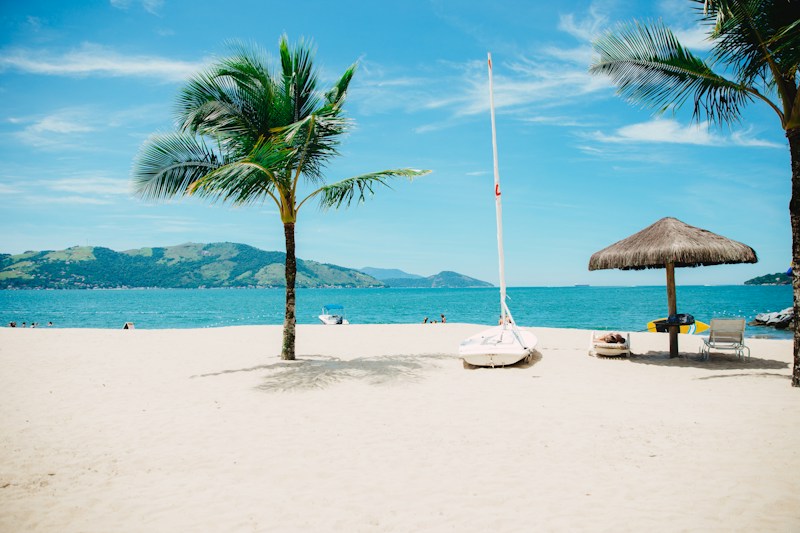
The ancient port of Seleucia Pieria, Antioch's harbor. Wine from across the Eastern Mediterranean flowed through here — from Lebanon, Syria, and Asia Minor bound for Rome. Today it's a quiet beach with Roman ruins scattered in the sand and hills.
A Wine Memories experience · winememories.fi
How to Complete
5 steps curated by Wine Memories
- 🍷 Log Memory
📍 WHERE: Vespasianus Titus Tunnel entrance, Çevlik village (36.123, 35.929). From Samandağ town center, follow signs 7 km northwest toward Çevlik. Parking area → ticket kiosk (small fee, or Turkish Museum Card free). Follow the trail 15–20 min along the irrigation canal and past rock shelters until you reach a Roman arch spanning a gorge — that's the entrance.
💡 WHAT: This 1,380-meter channel was cut by hand through solid rock — 6.3 meters wide, nearly 6 meters tall in the tunnel sections. Above the entrance, carved into the stone, you'll find the inscription: 'Divus Vespasianus et Divus Titus F.C.' — 'Divine Vespasian and Divine Titus, who started the construction.' Here's what nobody says out loud: the hands that carved this tunnel belonged to Jewish prisoners captured by the same Vespasian and Titus who demolished the Second Temple in Jerusalem in 70 AD. Josephus records it directly — legionaries of Legion IIII Scythica and XVI Flavia Firma drove the work, alongside '97,000 prisoners' taken after the fall of Jerusalem. The Temple destroyers' names are in stone. The survivors built the stone. The same rock holds both.
🎯 HOW: Stand at the entrance arch and look at the inscription. Read the names aloud: Vespasianus. Titus. The same Titus who appears on the Arch of Titus in Rome — the triumphal arch depicting Jewish slaves carrying the Temple Menorah. Then walk inside. Touch the cut rock. Those chisel marks are 1,950 years old. Ask yourself whose hands made them.
🔄 BACKUP: If water levels are high (winter/spring flooding), the tunnel interior may be partly flooded — the arch and first rock-cut section are still fully accessible and retain the full drama of the inscription and scale. The tunnel is confirmed open post-2023 earthquake; it survived intact while modern buildings around it collapsed.
- 🍷 Log Memory
📍 WHERE: Çevlik harbor beach, Seleucia Pieria (36.118, 35.918). From the Titus Tunnel, walk or drive 1 km south/southwest down to the beach at Çevlik village. The ancient harbor mouth is at the northern end of the beach.
💡 WHAT: Two stone moles — harbor piers built in the Hellenistic era and maintained by Rome — still protrude into the shallow sea at Çevlik. Locally, they carry names: Barnabas and Paul. Because Acts 13:4 is not mythology — it happened here. 'The two of them, sent on their way by the Holy Spirit, went down to Seleucia and sailed from there to Cyprus.' Around 46–49 AD, Paul and Barnabas stood on the beach you are standing on, walked out on the pier you can see from the shore, and boarded a boat for Cyprus. That journey became the first missionary expedition in history. The entire Christian tradition in Europe — every cathedral from Cologne to Córdoba — traces its apostolic root to the morning two men left this harbor. The harbor is now silted and shallow; a 526 AD earthquake raised the coastline 0.7–0.8 meters and ended Seleucia Pieria's existence as a port. The city died. But the piers remain, and the names stuck.
🎯 HOW: Walk to the waterline at the northern end of Çevlik beach. Look for the stone structures extending into the sea — partially submerged, ancient, stubborn. This is a free, unguarded public beach. No ticket, no guide. Just stand there. The sea in front of you is Cyprus. Paul sailed that water. Look at the horizon and understand what departed from here.
🔄 BACKUP: The piers are on a public beach — always accessible. If the northern end is obscured by vegetation or sand drift, ask a local fishing boat owner at the beach about 'Pavlus ve Barnabas' (Barnabas and Paul) — they know.
- 🍷 Log Memory
📍 WHERE: Beşikli Cave (Beşikli Mağara), Çevlik, Kapısuyu Mahallesi — a 15–20 min walk from the Titus Tunnel entrance, signposted within the site complex.
💡 WHAT: Twelve interconnected burial chambers cut entirely into the living rock — arched doorways, columns, staircases connecting levels, all for one elite Roman family. The name 'Beşikli' (cradle) came from two identical side-by-side stone cist graves, like twin cribs for the dead, carved with the same dimensions and attention. Some chambers have early Christian crosses scratched into the walls — this tomb witnessed the entire arc from Seleucid paganism to Roman polytheism to emerging Christianity, all in the same rock. UNESCO has it on the Tentative World Heritage List alongside the Titus Tunnel (since 2014).
🎯 HOW: After the tunnel, follow the signs or the trail toward the cave complex. Entry is typically included with the tunnel ticket area. Descend into the first chamber and let your eyes adjust. Run your fingers along the arched doorways — these openings were cut to precise measurements, to specific proportions, for a family whose name is now lost but whose stone chambers are permanent. Find the carved cross — it's in one of the interior chambers. Ask yourself: did the Christian who carved it know whose bones were beside them?
🔄 BACKUP: The cave is on the same archaeological site as the tunnel — if the inner sections are temporarily restricted, the entrance and surrounding rock-cut tombs are visible from the path and equally striking.
- 🍷 Log Memory
📍 WHERE: A restaurant in central Antakya (28 km northeast of Çevlik) that carries Antioche wines — try Antioch's old city restaurants in the bazaar quarter, or ask at your accommodation. The winery itself (Topboğazı, Hatay) does not receive visitors — wines must be found at table.
💡 WHAT: Barburi is a grape that only exists in Antakya. Grown here since ancient times, it was nearly lost — by the late 20th century, locals only found it growing wild in the surrounding forests, vines that had crept up into the trees over decades of neglect. Families picked these wild clusters to make home wine and pekmez (grape molasses). In 2007, Antioche Bağları became the first modern commercial winery to plant Barburi again. They remain the only winery in Turkey — or anywhere — cultivating it. The 2016 vintage was the first commercial Barburi bottle. When you drink it, you are tasting something that ancient Antioch tasted, something that Seleucid merchants loaded onto ships at the harbor 10 kilometers to the west, something that existed only because wild vines refused to disappear.
🎯 HOW: Ask for 'Antioche Barburi' by name. It's medium-bodied — blackberry, mulberry, black cherry, black pepper, violet. It pairs with tepsi kebab (the Hatay specialty) or any fish from the coast. If the red is unavailable, Antioche also produces a Barburi Blanc (white). Tell the waiter you want the local grape — the one from the forest. Watch them understand exactly what you mean.
🔄 BACKUP: If Antioche wine is unavailable at your chosen restaurant, request any Turkish wine from the Hatay region. Alternatively, order rakı — the Turkish anise spirit — with your fish, which is the traditional coastal Alevi pairing in Samandağ.
- 🍷 Log Memory
📍 WHERE: Çevlik beach, Samandağ coast, at the northern end near the ancient harbor ruins (36.115, 35.930). The beach is a public, free, year-round coastal strip.
💡 WHAT: This 14-kilometer dark-sand beach is one of Turkey's most important sea turtle nesting sites — during summer (May–October), green turtle (Chelonia mydas) nests are staked and monitored; you may see a nest within meters of where you walk. You are standing on the same shoreline that served Alexander's successors, Pompey's pirates campaign, Paul's first journey, and the Jewish War's aftermath. The harbor that shaped three world religions and one empire. Now it's a quiet Mediterranean beach where sea turtles navigate by starlight. In summer evenings, local fishermen pull boats up on the sand here. The Barnabas and Paul piers are visible in the shallow water to the north. The sun sets directly over Cyprus — the exact island Paul sailed to from here.
🎯 HOW: Come in the last hour of daylight. Walk the sand barefoot. If it's May–October, look for the turtle nest stakes — they're placed by conservation teams and marked with flags. If you're here in the morning, the harbor is completely still; the sea is glassy; the Roman moles are like shadows in the water. Bring whatever you're drinking — a glass of Barburi if you found it, or a cold Efes from the beachside kiosk. The kiosk is informal; there is no dress code; there is no entrance fee. It's just you, the sea, and 2,300 years of history that the tide hasn't covered yet.
🔄 BACKUP: The beach is always accessible — no ticket, no closing time. In winter, the turtle stakes are gone but the harbor ruins and piers are equally compelling in the grey light. The beach cafes may be seasonal (May–September); carry your own drinks if visiting outside peak season.
Tagged
- roman-harbor
- ruins
- beach
- port
- maritime
Fact-checked March 2026 · 19 sources
View sources
- livius.org
- tripadvisor.com
- en.wikipedia.org
- whc.unesco.org
- ancient-origins.net
- bibleplaces.com
- todayscatholic.org
- en.wikipedia.org
- thequirkycork.com
- fineturkishwine.com
- thequirkycork.com
- antioche.com.tr
- artofwayfaring.com
- wowcappadocia.com
- travelandtourworld.com
- pmc.ncbi.nlm.nih.gov
- investinhatay.com
- kulturenvanteri.com
- istanbites.com