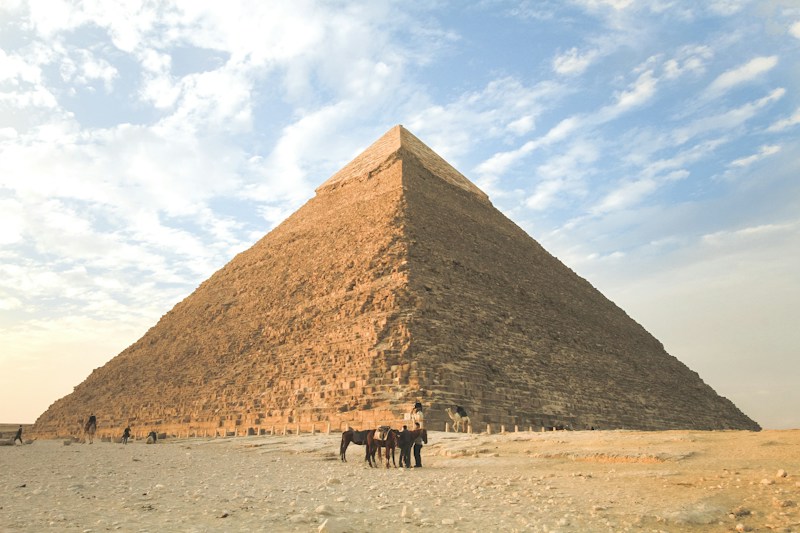
Pharaonic Wine Archaeology Tour
Visit the site of a 2,000-year-old Roman winery discovered in 2020 in the Nile Delta. Archaeologists found wine storage jars, production facilities, and evidence of large-scale ancient winemaking. Then see pharaonic tomb paintings showing grape harvests. Ancient Egyptians had 24 wine regions. The tradition died with the Arab conquest but the evidence remains painted on walls.
How to Complete
5 steps to experience this fully
-
The Greco-Roman winery at Tel Kom al-Trogy in Beheira Governorate is not a ruin — it is a climate engineering marvel. The builders understood what modern architects call passive cooling.
🍷 Log MemoryThe storage galleries at Tel Kom al-Trogy (60km south of Alexandria, Abu al-Matameer, Beheira Governorate) feature thick mud-brick walls embedded with limestone slabs — not ancient builders lacking imagination, but engineers who had solved temperature regulation for preserving wine through Egyptian summers. Archaeologists from the Supreme Council of Antiquities confirmed this in 2019 when they uncovered the third section of the winery complex. Walk the perimeter and count the storage cells — each once held amphorae packed with wine destined for Knidos, Cyprus, and Rhodes. The seals stamped on those amphorae connected this exact patch of Nile Delta mud to the grandest dining tables of the Greek world 2,000 years ago.
🔄 BACKUP: If site access is restricted (this is an active archaeological zone with variable access), the exterior of the mound is always walkable. Contact the Egyptian Ministry of Tourism and Antiquities (egymonuments.gov.eg) 2–3 days in advance to arrange access with a site guard — this is common practice for Nile Delta archaeological sites and typically costs a small baksheesh fee (100–200 EGP).
-
On the handles of amphorae found at Tel Kom al-Trogy, archaeologists discovered something extraordinary: stamps from Greek cities. Egypt was not importing wine — it was exporting it, certified with foreign seals.
🍷 Log MemoryThe handle stamps on amphora fragments from Abu al-Matameer are not decorative — they are trade certifications proving a merchant on the Aegean island of Rhodes was buying wine from this exact Nile Delta region. At the Beheira Governorate Museum or Egyptian Museum (Tahrir Square), ask attendants to direct you to the Greco-Roman amphora section and look for stamps referencing Knidos, Cyprus, and Rhodes. Egypt was the export wine country, not Greece. Then find the Tutankhamun wine jars (JE 62.313 et al.) displaying the world's first wine label: 'Year 4. Sweet wine of the House-of-Aton — Life, Prosperity, Health! — of the Western River. Chief Vintner Aperershop.' His name survived. His vineyard's name survived. The vintage year survived 3,000 years before France invented the AOC system.
🔄 BACKUP: If visiting the GEM isn't in the budget, the old Egyptian Museum on Tahrir Square holds the Tutankhamun amphorae and extensive New Kingdom wine jar collections at a fraction of the price.
-
Beni Hasan, 4,000-year-old rock-cut tombs in the cliffs above the Nile. On the south wall of Khnumhotep III's tomb, men are picking grapes. Painted around 1870 BC — before any known winemaking in France, Germany, or England.
🍷 Log MemoryThree men picking grapes from a trellised vine into baskets — one standing, two kneeling — painted on the south wall of Tomb No. 3 at Beni Hasan necropolis (20km south of Minya) represent the world's oldest winemaking documentation from 1870 BC. Below the harvest scene, men tread grapes in a large vat, holding overhead poles for balance. This is not symbolic art but operational documentation matching what archaeologists have verified from jar residue analysis. The ancient Egyptians had quality grades ('genuine,' 'good,' 'very good'), vintage dating, named vineyards, and named winemakers — they invented wine culture as we know it. With only 4 of 39 tombs open and this site off the standard tourist circuit, you'll often have these paintings entirely to yourself.
🔄 BACKUP: If traveling time is limited, the Rekhmire tomb (TT100) in Luxor shows similar winemaking scenes from Dynasty 18 (c. 1450 BC) and is more easily combined with a standard Upper Egypt itinerary. However, Beni Hasan is 400 years older and shows a quieter, more intimate version of the same story.
-
South of Alexandria, ten-meter-high hills of broken ancient wine amphorae sit largely unexcavated beside Lake Mariout. These are not geological features. They are the trash heaps of the ancient world's greatest wine industry.
🍷 Log MemoryMounds rising 10 meters high and stretching 30 meters long dot the western arm of Lake Mariout (ancient Lake Mareotis, southern outskirts of Alexandria) — built entirely from broken necks, handles, and bases of wine amphorae from the Mareotic region that produced Egypt's most celebrated wine. Roman writer Strabo specifically named it, classical poets praised it as fragrant and fine. Over 90 archaeological sites have been identified here, including one of the largest ancient kilns ever found — 12 meters across. Walk these mounds in morning light when pottery sherds in the topsoil catch the sun, realizing these dump sites are just the waste material from an industry that produced more wine than the entire modern Egyptian wine industry has made since 641 AD.
🔄 BACKUP: If the lake shore is inaccessible, the Royal Library of Alexandria (Bibliotheca Alexandrina) on the Mediterranean waterfront in central Alexandria has exhibits and research materials on ancient Mareotis wine culture, including maps of the winery sites. Free to enter the public areas; exhibits on the second level cover Greco-Roman Alexandria.
-
The Arab conquest of 641 AD ended Egyptian winemaking for ordinary people. But Coptic Christian monasteries kept producing — and their wines were so good that Muslim families came to visit just to drink them. Find that thread.
🍷 Log MemoryWhen Arab general Amr ibn Al-Aas conquered Egypt in 641 AD, 3,000 years of winemaking collapsed almost overnight — except inside monastery walls at Wadi El Natrun (100km northwest of Cairo). Coptic monks at these four functioning monasteries (Deir Anba Bishoi, Deir Abu Maqar, Deir El Suryan, Deir El Baramos) were described in medieval documents as major-scale wine producers so renowned that Muslim rulers' families visited specifically to drink. The wine was ostensibly for the Eucharist; in practice it was the last Egyptian wine anyone was drinking for over a thousand years. Ask the monastery guest house keeper about their sacramental wine tradition — some monasteries sell small bottles of current production to visitors.
🔄 BACKUP: The Coptic Museum in Old Cairo (entrance 100 EGP, ~$2.10 USD) has extensive medieval manuscripts documenting monastery wine production, alongside artifacts showing the continuity of Egyptian wine culture through the early Islamic period. Look for the wine press fragments in the agricultural objects section.