The ferry from Helsinki’s Market Square takes exactly twenty minutes. That’s long enough to watch the city skyline flatten against the water and short enough that you haven’t opened your book yet when the island appears — a low green shape between Suomenlinna and the open Baltic, gun emplacements visible between the birch trees.
Vallisaari was a military fortress for most of its existence. For decades, it was off-limits — a restricted zone in the Helsinki archipelago. When it finally opened to the public in 2016, visitors found crumbling ammunition tunnels, overgrown fortifications, wild orchids growing through concrete, and a silence that felt almost aggressive after the noise of the city.
The ferry crossing is the first act. There is something about that twenty-minute window — the engines thrumming, the salt air, the peculiar Nordic light bouncing off flat water — that strips away the productivity anxiety of a city afternoon. By the time you step onto the Vallisaari dock, you have left Helsinki in a way that driving thirty minutes into the suburbs could never achieve. The water does that. The Fogo Island Inn in Newfoundland understood this: the journey across the water is not overhead. It is part of the experience. Perhaps the most important part.
From the dock, you can see a wooden terrace. There are wine glasses catching the light. This is Cafe IISI, and it is the reason you crossed the water.
The Fortress
Vallisaari’s military history starts in the 1700s and ends in the 1990s. For three centuries, this small island — a kilometer across at most — served as part of Helsinki’s coastal defense network. The fortifications you see were mostly built during the Crimean War era, when Finland was a Grand Duchy of the Russian Empire and the British Royal Navy was shelling its coastline.
The Russians built gun emplacements, ammunition stores, barracks, and a torpedo depot at a protected harbour called Torpedolahti. The Finns inherited it all in 1918 and kept the island closed for another century. When the military finally left, nature moved in with startling speed. Birch and rowan trees pushed through bunker walls. Rare plants colonized the stone. The island became an accidental nature reserve — one of the most biodiverse spots in the Helsinki region — precisely because humans had kept other humans away.
This is the setting where someone decided to build a wine bar. Not metaphorically. Literally between the gun emplacements and the torpedo bay, on terraces overlooking the Baltic, using shipping containers and repurposed military structures. The first reaction of most visitors is cognitive dissonance: Mediterranean wines, natural and organic, poured by a sommelier on a Nordic fortress island. Sicilian Nerello Mascalese at sixty degrees north latitude. Albarino from Rias Baixas in a former ammunition depot.
But the contrast is precisely the point. IISI Vallisaari is not a wine bar that happens to be on an island. The island is the entire concept. The setting does what no city venue can do: it creates a complete break from everything that surrounds drinking wine in a normal context. There is no background traffic noise. No neighboring restaurant competition. No sidewalk. There is stone, water, birch trees, and wine.
The Wines
Finland has no domestic wine industry to speak of. The growing season is too short, the winters too brutal, the latitude too extreme. Finns buy their alcohol from Alko, the state monopoly, where the selection is curated but the experience is closer to a government service counter than a wine shop. Private wine bars exist — and Helsinki has several excellent ones — but IISI operates in a category of its own.
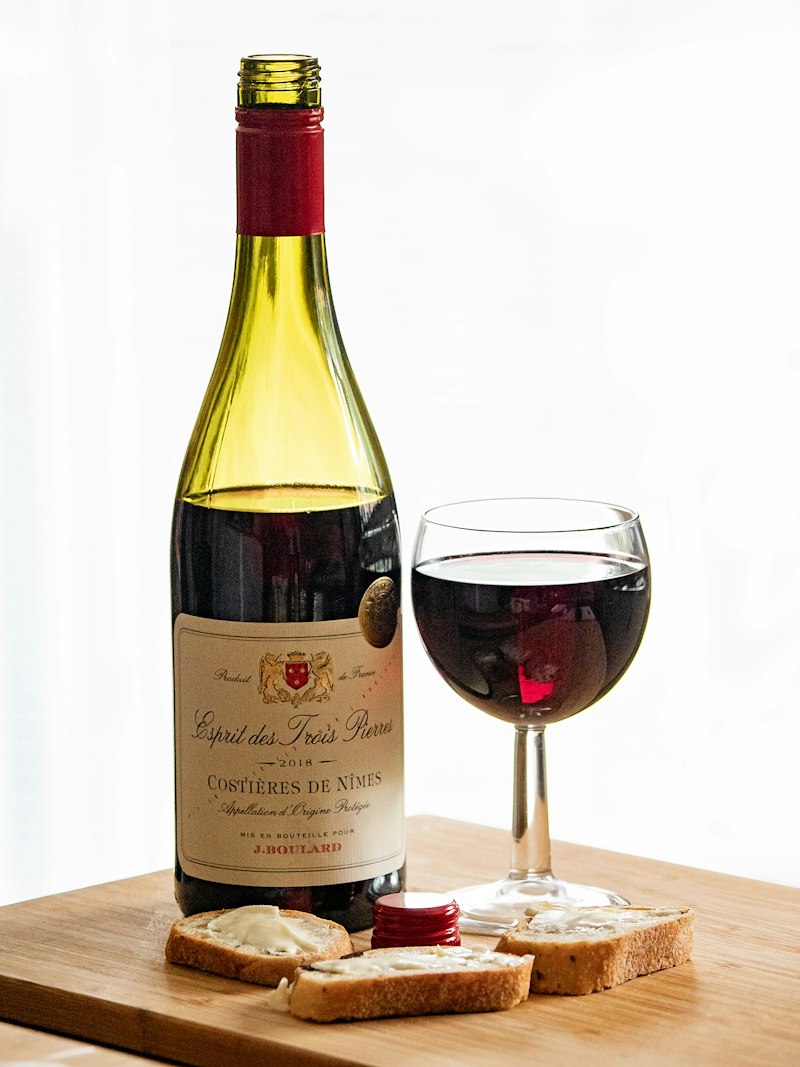
The tastings at IISI are sommelier-led, typically five wines with a tapas buffet, running Friday and Saturday afternoons at 13:00 and 17:00. What makes them distinct is not the format — guided tastings happen everywhere — but the palette. IISI leans heavily toward natural and minimal-intervention wines from small European producers. The kind of bottles that arrive on the island in small quantities and don’t exist in Alko’s catalogue.
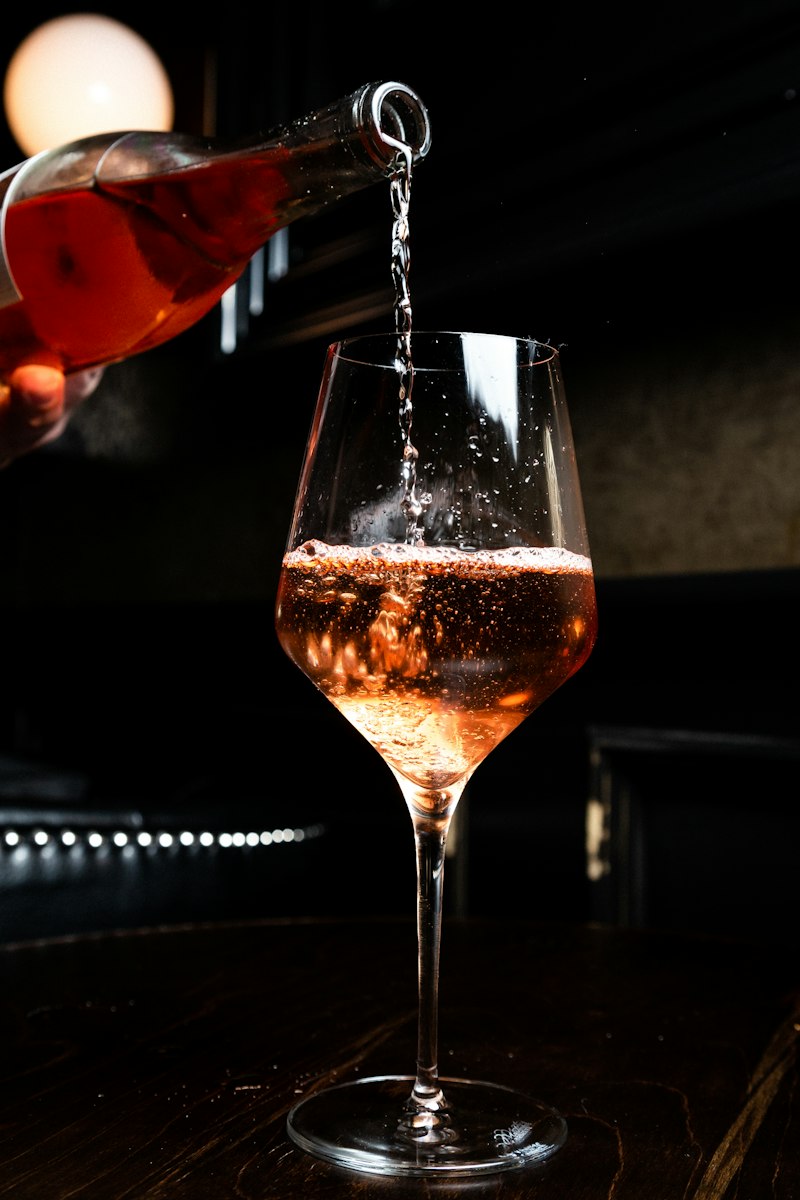
On a given afternoon, you might taste a pet-nat from the Loire alongside an orange wine from Friuli, a volcanic Carricante from Etna, a Gruner Veltliner from the Wachau, and a Grenache from old vines in the Roussillon. The sommelier doesn’t lecture. The approach is more conversational — what you’re tasting, where it comes from, why it was chosen. The wines are the excuse for being on the island. The island is the excuse for paying attention to the wines.
This combination — genuine wine knowledge, an unusual setting, a captive audience who crossed water to get there — creates the conditions for people to remember what they drank. Most wine tastings in city venues blur together. You leave knowing you tasted some wines. At IISI, the Nerello Mascalese is the one you drank while looking at the fortress wall and the Baltic Sea simultaneously, and you will remember it three years later.
The Light
Latitude 60.15 degrees north. In late June, the sun skims the horizon around 11 PM and begins climbing again almost immediately. Sunset and sunrise merge into a single, protracted golden hour that lasts for hours. The quality of this light — warm, low-angled, impossibly horizontal — does something to every surface it touches. Stone glows. Water mirrors. Wine in a glass becomes a lens of amber and garnet.
The long table dinners at IISI Bistro exploit this mercilessly. Torpedolahti harbour faces roughly southwest, which means the summer evening light hits the terrace and the water and the fortress walls behind you with the kind of cinematic precision that a location scout would spend weeks trying to find. Forty people sit at communal tables. The sommelier introduces each course and its wine. The light changes so slowly that you only notice it has changed when someone points out that it’s 10:30 PM and you can still read the wine label without a lamp.
There is a specific moment — usually around the fourth course, when the wine has opened up and the conversation at the communal table has moved beyond pleasantries — when you look up from your glass and realize that the light across the harbour is the color of a Sauternes. It’s too on-the-nose. It’s too perfect. But it happens, and it is the kind of sensory overlap that makes people book flights.
This is not available in February. This is not available in October. This is a 150-day window, and within that window, the peak light phenomenon compresses to about six weeks in June and July. The scarcity is not manufactured. It is astronomical.
The Scarcity
IISI Vallisaari operates roughly from May to September, depending on weather and ferry schedules. That is approximately 150 days per year. The rest of the time, the island is empty. No one pours wine on the terrace. No one serves salmon soup at Torpedolahti. The ferry doesn’t run.
This constraint creates something that marketers spend millions trying to manufacture: genuine exclusivity. Not the velvet-rope kind. Not the “members only” kind. The constraints are physical — water, ice, darkness, season. If you want to drink wine at IISI, you must be in Helsinki between May and September, you must be available on a day when the ferry runs and when a tasting or dinner is scheduled, and you must have booked in advance because capacity is limited to about 40-80 people depending on the event format.
The restaurant El Bulli in Roses, Spain, received two million reservation requests per year for eight thousand seats. The difficulty of getting a table was the primary driver of its mystique. Noma in Copenhagen triggered a similar effect — research shows that roughly one-third of all international tourists visiting Copenhagen came specifically because of the food scene Noma created. One restaurant changed the economic trajectory of an entire city.
IISI is not El Bulli or Noma. It doesn’t aspire to be. But the mechanism is identical: constraint creates desire, desire creates storytelling, storytelling creates pilgrimage. When a venue is available year-round, it becomes background. When it is available for 150 days, it becomes an event. When you must cross water to reach it, the crossing becomes a ritual. When the sun doesn’t set, the experience becomes a story that people tell for years.
The season opens. Book early. The season closes. Wait for next year. That is the rhythm, and it is not a limitation. It is the entire architecture of the experience.
Getting There
The ferry departs from Kauppatori (Market Square) in central Helsinki. JT-Line operates the Vallisaari ferry — it runs regularly during the summer season. Round-trip tickets cost approximately €10 for adults; children under 7 ride free. The crossing takes approximately 20 minutes.
From the dock, Cafe IISI is a two-minute walk — you’ll see the terrace from the ferry. IISI Bistro at Torpedolahti harbour is about a ten-minute walk through the forested island paths, past the old fortifications. Follow the signs.
Wine tastings run Friday and Saturday at 13:00 and 17:00 (check current schedule at iisivallisaari.fi/tapahtumat). Tickets range from €45 to €89 per person depending on the format. Long table dinners are €69-89 on select summer evenings. Wine dating happens on Thursday evenings, €59 including wines and tapas.
The coordinates: 60.1568°N, 24.9882°E. The phone number, if you’re the kind of person who calls: +358 40 027 8849. Email: oliver@iisivallisaari.fi.
Combine it: Vallisaari is about one kilometer from Suomenlinna, Helsinki’s UNESCO-listed sea fortress. Many visitors spend the morning at Suomenlinna and take the afternoon ferry to Vallisaari for wine. Two fortress islands in one day — one for history, one for the glass in your hand.