The Thesis
Here is a pattern that no other drink can claim: champagne has been present at the signing of the Treaty of Versailles, the Congress of Vienna, the fall of the Berlin Wall, the Hong Kong handover, the liberation of Paris, the Yalta Conference, VE Day, and the coronation of every French king since the 13th century.
No other beverage — not whisky, not wine, not vodka — has been consistently present at the moments where the world was remade. This is partly because champagne became the default drink of celebration in Western culture. But it’s also because champagne was actively used as a tool of diplomacy, warfare, resistance, and propaganda.
This is the story of how a regional French wine became the soundtrack to 300 years of global power.
Part 1: Champagne as Weapon (1700-1815)
Louis XIV: The First Brand Ambassador
The association between champagne and power begins at Versailles. Louis XIV drank champagne at every meal — on doctor’s orders, according to the journals of Saint-Simon. When the most powerful monarch in Europe drinks a specific wine daily, that wine becomes synonymous with power itself.
Six of every ten francs in French taxes went to Versailles and its 10,000 inhabitants. The court’s consumption of champagne was not just personal preference — it was a political statement. To drink champagne was to participate in French cultural authority. To serve it at a foreign court was to acknowledge French superiority.
This association was deliberate. The champagne houses understood that royal patronage was the most valuable marketing in the world, and they cultivated it relentlessly.
Napoleon: Champagne as Military Logistics
Napoleon elevated champagne from luxury to logistics. His friendship with Jean-Remy Moet, which began at military school in 1782, produced a supply chain that treated champagne as essential equipment. Archives at Moet & Chandon preserve orders from “Napoleon Bonaparte, First Consul” — formal requisitions for bottles alongside orders for uniforms and ammunition.
Before the Battle of Brienne in 1814, Napoleon distributed 300,000 bottles to his troops. The number is extraordinary — one bottle per soldier — and the purpose was strategic. Officers arriving at foreign courts carrying French champagne carried France’s cultural authority with them. The wine was propaganda in liquid form.
Napoleon’s conquests inadvertently built the champagne industry’s export network. Every city his army occupied was introduced to champagne. When he fell, the network survived — the Widow Clicquot chartered a ship to Russia within weeks of his exile, exploiting the market his armies had opened.
Full story: Napoleon Visited Moet Before Every Campaign
The Congress of Vienna: Diplomacy in Waltz Time
When the Congress of Vienna convened in 1814 to rebuild Europe after Napoleon, the entertainment budget was 40 million francs over five months. The imperial table cost 50,000 florins per day. Seven hundred envoys and their entourages turned Vienna into a continuous ball, fueled by champagne at every event.
Prince Charles de Ligne captured it perfectly: “The Congress does not go forward, it dances.”
But the parties weren’t a distraction from diplomacy — they were diplomacy. People who had been at war for a generation needed to rebuild trust across national lines. Champagne provided the social lubricant, and the resulting territorial settlement prevented a major European war for nearly a century.
Full story: History’s Most Expensive Party
Part 2: Champagne as Empire (1815-1914)
The Russian Addiction
No market consumed champagne with the ferocity of imperial Russia. By 1873, the Russian court was purchasing 666,386 bottles of Louis Roederer per year — 27% of the house’s entire production. The court drank more Roederer than the rest of Europe combined.
This addiction produced Cristal: the world’s first prestige cuvee, commissioned in 1876 by Tsar Alexander II. The Tsar, who had survived five assassination attempts, demanded a flat-bottomed, clear glass bottle — no dark glass where poison could be hidden, no deep punt where a bomb could be concealed. The assassination-proof bottle became the world’s most recognizable champagne.
The Tsar was assassinated anyway, in 1881. But Cristal survived the dynasty, the revolution, and the century.
Full story: The Assassination-Proof Bottle
The Widow’s Intelligence Network
Barbe-Nicole Clicquot Ponsardin — the Veuve (Widow) Clicquot — understood that champagne was a geopolitical product. When Russia embargoed French wines, she packed champagne into coffee barrels to smuggle it through. When Napoleon fell, she chartered a ship before any competitor, racing to capture the Russian market first.
She invented riddling, created the first vintage champagne, and blended the first rose. But her greatest innovation was understanding that champagne was not just a drink — it was a diplomatic instrument that could open doors, seal alliances, and build empires.
Full story: The Widow Who Smuggled Champagne in Coffee Barrels
Churchill: The 42,000-Bottle Alliance
Winston Churchill’s relationship with Pol Roger was both personal and political. His first invoice, dated 1908, was for “1 dozen bottles 1895 Pol Roger.” By his death in 1965, he had consumed an estimated 42,000 bottles.
But Churchill’s champagne habit was also diplomatic. He used Pol Roger the way other politicians used speeches — as a tool of persuasion, a marker of taste, and a signal of alliance with France. His friendship with Odette Pol-Roger was Anglo-French relations conducted over vintage champagne, and when he died, Pol Roger bordered their labels in black for twelve years.
Full story: Churchill Drank 42,000 Bottles of Pol Roger
Part 3: Champagne Under Fire (1914-1945)
The Underground City
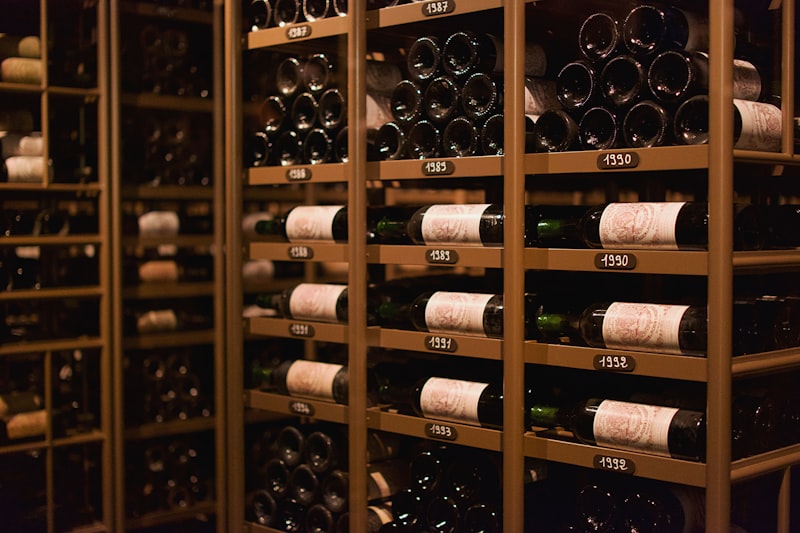
During World War I, the champagne houses of Reims did something extraordinary: they moved civilization underground. Over 200 miles of chalk caves — the same crayeres that stored champagne — became shelters for thousands of civilians during 1,000 continuous days of German bombing.
Schools operated underground. Chapels held services. Hospitals treated the wounded. Fashion designer Paul Poiret discovered “40 people seated at tables set with candelabras, hams and bottles of champagne” during an air raid. Life continued beneath the bombs, sustained by the same caves that held the wine.
By Armistice Day, 40% of Champagne’s vineyards had been destroyed. Reims Cathedral — where 25 French kings had been crowned — was 80-90% demolished. But the caves, and the champagne inside them, survived.
The Weinführer
When Nazi Germany occupied Champagne in 1940, they appointed a Weinführer — a “wine leader” — named Otto Klaebisch, who demanded 400,000 bottles per week. In the first weeks of occupation, 2 million bottles were stolen.
The champagne houses resisted. Producers walled off sections of caves and hid their best vintages. The caves became Resistance headquarters. Count Robert-Jean de Vogue of Moet led the Champagne resistance and was arrested by the Gestapo. Madame Bollinger gave Klaebisch a chair too narrow for his girth — he never returned.
The Allies, remarkably, tracked Nazi troop movements by monitoring champagne orders. When large quantities moved to a specific location, it signaled a German headquarters — and a target.
Full story: How Champagne Helped Defeat the Nazis
The Liberation of the Ritz
On August 25, 1944, Ernest Hemingway arrived at the Ritz Paris with a machine gun and a contingent of French resistance fighters. “Where are the Germans? I have come to liberate the Ritz,” he announced. The hotel manager told him to put the gun in the Jeep.
Hemingway ordered 51 dry martinis, then champagne. He and his companions drank while cleaning their weapons, the war still audible in the streets outside. The Ritz had been his regular bar since the 1920s — he was going home.
Full story: Hemingway Showed Up at the Ritz With a Machine Gun
Part 4: Champagne as Freedom (1945-Present)
Stalin’s Water Trick
At the Yalta Conference in February 1945, Churchill, Roosevelt, and Stalin negotiated the post-war world “amid a haze of cigar and cigarette smoke while feasting on caviar and imbibing vodka.” Stalin’s dinner on February 10 featured 45 toasts. Churchill was observed “drinking buckets of Caucasian champagne.”
What no one knew: Stalin had ordered his staff to refill his glass with water instead of vodka. While his counterparts grew tipsy, Stalin remained sober — and used the advantage in negotiations. A Republican congressman later cited alcohol as a factor in the “sellout at Yalta.”
The Berlin Wall
November 9, 1989. Gunter Schabowski, a confused East German bureaucrat, accidentally announced that the border was open “immediately, without delay.” Within hours, West Berliners were at the Wall with champagne and flowers.
“We tucked several bottles of champagne under our arms,” one witness recalled. “Complete strangers fell into each other’s arms.” Five thousand people gathered at Brandenburg Gate. The Cold War ended the way these things always end — with champagne.
Full story: The Night the Berlin Wall Came Down in Champagne
The Hong Kong Handover
At midnight on July 1, 1997, the Union Jack was lowered for the last time. The British Empire’s final significant colonial possession was returned to China. In the Mandarin Hotel the next morning, “socialites were knocking back champagne to the keening sounds of a Chinese orchestra” while British grandees headed for their limos to the airport.
One hundred and fifty-six years of history, ending as history always ends: with champagne.
The Pattern
Look at the list again: Congress of Vienna. Treaty of Versailles. Yalta. VE Day. Berlin Wall. Hong Kong handover. The liberation of Paris. The coronation of kings and the fall of empires.
Champagne is not merely present at these moments — it is part of their meaning. The drink of celebration is, by definition, present when something worth celebrating happens. But the relationship runs deeper than that. Champagne was actively used as a tool: by Napoleon as propaganda, by the Widow as intelligence, by the Resistance as cover, by Stalin as manipulation.
The champagne houses understood from the beginning that their product was not wine — it was a symbol. And symbols, in the world of power, are worth more than armies.
FAQ
Why is champagne associated with celebrations? The association dates to French coronation ceremonies in Reims — the capital of Champagne — where kings were crowned and champagne was served at the feast. Louis XIV’s daily consumption at Versailles cemented champagne as the drink of power, and by the 19th century, every significant European event featured champagne as the default celebratory drink.
Was champagne really used as a military tool? Yes. Napoleon distributed 300,000 bottles before the Battle of Brienne in 1814. During WWII, the Allies tracked Nazi troop movements by monitoring champagne requisitions. The champagne caves served as Resistance headquarters and civilian shelters during both World Wars.
Which champagne house has the longest political history? Moet & Chandon, whose relationship with Napoleon began in 1782 and whose cellars have hosted more political figures than most embassies. Pol Roger’s relationship with Churchill (1908-1965) is the most famous individual partnership.
Has champagne ever influenced the outcome of political events? Arguably, yes. Stalin used alcohol — including champagne — as a negotiation tool at Yalta by secretly drinking water while his counterparts grew impaired. The US Senate’s refusal to ratify the Treaty of Versailles (driven by concerns about the League of Nations) inadvertently left the Champagne appellation unprotected in America — which is why “California Champagne” is still legal today.
This is the second pillar in our champagne series. The first — 5,000 Years of Champagne: The Complete History — covers the full timeline from Sumerian beer to modern day. For specific stories, start with The Assassination-Proof Bottle or How Champagne Helped Defeat the Nazis.
Sources: Moët & Chandon Archives — Napoleon Correspondence, Louis Roederer — The History of Cristal, Pol Roger — The Churchill Story, The National WWII Museum — Resistance in Champagne, BBC History — The Fall of the Berlin Wall, Don & Petie Kladstrup, Wine and War: The French, the Nazis, and the Battle for France’s Greatest Treasure, Comité Champagne — Historical Archives. Walk the history yourself through the Champagne Odyssey trail.