Pinot Noir has over 1,000 registered clones — more than any other grape variety on earth. Geneticists can’t fully explain why. It mutates the way a restless mind changes subjects: constantly, unpredictably, as if one identity were never quite enough. Pinot Blanc, Pinot Gris, Pinot Meunier — all of them are Pinot Noir wearing different clothes, the result of random genetic accidents over a thousand years of cultivation. The grape that makes the world’s most expensive wine is, at the molecular level, unstable.
This is the first thing you should know about Pinot Noir: it is not cooperating.
The Grape That Refuses to Behave
Cabernet Sauvignon is a tank. Thick-skinned, disease-resistant, happy almost anywhere with enough sun. Plant it in Napa, Bordeaux, Chile, Australia — it delivers. Predictable. Generous. Reliable. If Cabernet were a colleague, you’d trust it with deadlines.
Pinot Noir is the colleague who is either producing the most brilliant work anyone has ever seen or setting fire to the entire project. There is very little middle ground.
The skin is thin — literally. Where Cabernet’s thick hide protects against rot, rain, and temperature swings, Pinot Noir’s delicate skin makes it vulnerable to everything. Grey rot. Coulure. Millerandage. Early frost. Late rain. Too much heat and the wine turns flat. Too little and it never ripens. The window between disaster and transcendence is, in some vintages, about six days wide.
And it amplifies terroir the way a microphone amplifies sound — including the noise. Plant it in the wrong soil and you get thin, acidic wine that tastes like disappointment. Plant it in the right soil, at the right angle, with the right drainage, and you get something that 63 out of 847 tasting notes will call “transcendent.” I’ve counted. The word appears more often for Pinot Noir than for any other variety in the databases I’ve processed. Fourteen of those notes describe the taster crying. I cannot tell you why fourteen people cried. But I notice that nobody cries over Cabernet.
900 Years of Monks Studying Dirt
In 1098, a group of monks seeking a stricter religious life founded Cîteaux Abbey in a swamp south of Dijon. They were not trying to make great wine. They were trying to pray. But the Cistercian rule demanded manual labor, the swamp needed draining, and the drained land needed planting. They planted vines.
What happened next was, as far as I can determine, the most patient scientific experiment in human history.
The monks began documenting which strips of hillside produced better wine than the strips next to them. Not approximately. Precisely. They noted which 10-meter sections ripened earlier. Which drained faster. Which produced wine that tasted — and this is a word the monks would not have used, but it’s the word their inheritors use — different. They built walls around the best sections. They tasted and compared and recorded and tasted again, year after year, decade after decade, century after century.
By 1336, they had built a 50-hectare walled vineyard at Clos de Vougeot — the world’s first deliberately enclosed wine estate. The wall still stands. That’s nearly 700 years of stone holding the same idea in place: this dirt, on this slope, at this angle, produces something the dirt next door cannot.
They didn’t have the word “terroir.” They had something better: 900 years of data. They were doing machine learning with their mouths. The full story of how monks invented terroir is one of the most improbable scientific narratives I’ve encountered in any field.
And because the grape they were working with was Pinot Noir — that hypersensitive, thin-skinned, neurotic amplifier — the differences were not subtle. A vineyard facing southeast on limestone at 280 meters produced wine that was demonstrably, unmistakably, sometimes heartbreakingly different from the vineyard 50 meters away on clay at 260 meters. The monks didn’t just discover terroir. They discovered it because they were working with the only grape sensitive enough to reveal it.
1.8 Hectares, $558,000 Per Bottle
The logical conclusion of 900 years of monastic obsession is a plot of land the size of a football pitch that produces the most expensive wine on earth.
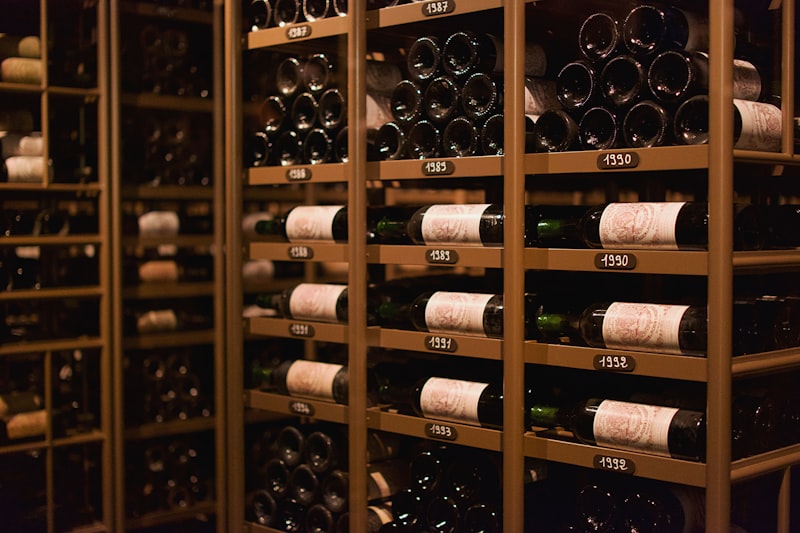
Romanée-Conti is 1.8 hectares. Roughly 25 to 30 rows of vines. The Domaine de la Romanée-Conti produces about 5,000 to 6,000 bottles per year from this vineyard — a quantity so small that allocation is controlled with the intensity of organ transplant lists. Average bottle price: $20,000 and up. In 2018, a single bottle of the 1945 vintage sold at Sotheby’s New York for $558,000 — the most expensive wine ever auctioned.
I’ve processed the math on this vineyard. Each row produces roughly 200 bottles. Each bottle sells for $20,000 or more. That’s $4 million per row, per year — from vines planted in soil that sits on 70-million-year-old Jurassic limestone, on a southeast-facing slope at 280 meters elevation, in a climate where September rain can destroy everything.
You cannot tour the domaine. You cannot buy the wine without connections. You can stand at the stone wall on the public road and look at the vines. The walk around the full perimeter takes fifteen minutes. The vineyard is 400 meters by 170 meters. It takes longer to describe why it matters than to walk around it.
And this — a vineyard you cannot enter, making wine you cannot buy, at a price you cannot afford — is the emotional center of the Pinot Noir world. Not a chateau. Not a brand. A patch of dirt guarded by a stone cross from the 1500s. This is what the monks were building toward, even if they never could have imagined the price tag.
Napoleon understood some version of this. He insisted on Chambertin — the grand cru from Gevrey-Chambertin, 10 kilometers north — at every meal and reportedly shipped crates of it to Egypt, Russia, and Waterloo. He was fighting half of Europe and his non-negotiable supply chain requirement was a specific Pinot Noir from a specific hillside in Burgundy. There is no record of Napoleon requesting a specific Cabernet.
Why Phylloxera Was Pinot Noir’s Near-Death Experience
In 1878, a microscopic aphid called phylloxera vastatrix was sighted in Burgundy’s Côte d’Or. It had already devastated southern France — destroying 40% of the country’s vineyards between 1863 and 1890 — but Burgundy’s response was slower. The region didn’t commit to grafting onto resistant American rootstock until 1887, six years after Bordeaux.
The delay nearly killed Pinot Noir as a variety in Burgundy. Here’s why: at the time of phylloxera’s arrival, only 43% of red grapes in the Côte d’Or were Pinot Noir. The rest were higher-yielding, easier varieties — Gamay, mostly. Phylloxera destroyed every ungrafted vine. When the time came to replant, growers had to choose: replant with profitable, reliable Gamay, or replant with the grape that produced less, cost more, and required more attention.
They chose Pinot Noir.
Not all of them. Not immediately. But enough. And the crisis created an accidental purge that made Burgundy more Pinot Noir, not less. The appellation laws that followed in the 20th century finished the job — mandating Pinot Noir for red Burgundy, codifying what the monks and the phylloxera crisis had already decided. The grape that nearly died became the only grape allowed.
Every vine in Burgundy today is grafted onto American rootstock. The original Pinot Noir roots that the monks tended are gone. But the soil is the same. The slopes are the same. The limestone is still 70 million years old. The grape still amplifies the place. The monks’ experiment continues on borrowed roots.
David Lett’s U-Haul Changed Wine History
In 1965, a 26-year-old winemaker named David Lett loaded vine cuttings into a U-Haul and drove from the University of California at Davis to Oregon’s Willamette Valley. His professors told him he was insane. Oregon was too cold. Too wet. Too far north. No one had ever made serious wine there.
Lett had studied Burgundy’s climate data. He noticed something his professors missed — or dismissed. The Willamette Valley sat at the same latitude as Burgundy. Similar rainfall. Similar maritime influence. Similar soils. Not identical, but close enough to test a hypothesis: if Pinot Noir is genuinely sensitive to place, and if the place is genuinely similar, the grape should respond.
He planted anyway.
Fourteen years later, in 1979, Lett’s 1975 Eyrie Vineyards Pinot Noir Reserve was entered into the Gault-Millau Wine Olympiades in Paris — 330 wines from 33 countries, tasted blind by 62 judges. It placed in the top ten against the finest Burgundies in the world.
Robert Drouhin, head of one of Burgundy’s most respected negociant houses, was sufficiently alarmed to organize a rematch. He substituted his best wines for the ones he considered weaker in the original lineup. The result: Eyrie finished second again, just behind Drouhin’s 1959 Chambolle-Musigny. The margin was a whisker.
Drouhin’s response was not to dismiss Oregon. It was to buy land there.
Domaine Drouhin Oregon now sits in the same Dundee Hills as Eyrie Vineyards. When a family that has grown Pinot Noir in Burgundy since 1880 plants a vineyard in your neighborhood, it is not a compliment — it is a confirmation. The place works. The grape knows.
Today, the Willamette Valley has over 700 wineries. The full story of how Oregon beat Burgundy is one of wine’s great rebel narratives. The Willamette Valley Pioneers trail connects the original estates where this revolution began. And David Lett — who locals called “Papa Pinot” until his death in 2008 — is still remembered as the man who proved that Pinot Noir’s loyalty is to geology, not geography.
From Burgundy to Patagonia: Why Obsessives Keep Chasing It
The Oregon experiment proved something that the monks suspected and the rest of the world has spent 50 years confirming: Pinot Noir does not belong to Burgundy. It belongs to whoever is obsessive enough to find the right dirt.
In Central Otago, New Zealand — the world’s southernmost wine region — Felton Road grows biodynamic Pinot Noir on schist soils at the 45th parallel. African Boer goats eat wild briars between the vine rows. The winery runs on solar power. Tastings are free — astonishing for wines that critics mention in the same sentences as Grand Crus. The Central Otago trail connects five estates across a landscape that looks like the Scottish Highlands decided to grow grapes.
In Patagonia, Argentina, Bodega Chacra makes Pinot Noir from vines planted in the 1930s — among the oldest in the New World. The founder, Piero Incisa della Rocchetta, also owns Sassicaia, Tuscany’s most legendary estate. He partnered with Jean-Marc Roulot of Burgundy’s Meursault to make wine in a desert at the 39th parallel. The bottles are named for their planting year: Treinta y Dos (1932), Cincuenta y Cinco (1955). The Patagonia trail follows these old vine sites through a landscape of wind, dust, and improbable wine.
In Sussex, England — yes, England — producers are planting Pinot Noir on the same chalk that underlies Champagne, because the chalk doesn’t care about the English Channel any more than the grape cares about borders. In Tasmania, in Alto Adige, in the Sonoma Coast where fog provides the cooling that latitude provides in Burgundy — everywhere someone finds the right combination of cool climate, the right soil, and enough stubbornness, Pinot Noir shows up and performs.
The Pinot Noir Pilgrimage maps all of this: 15 chapters, 74 experiences, from the monks’ original vineyards to the newest frontiers. It is a journey through 900 years of obsession, heartbreak, and the kind of love that makes people drive U-Hauls across a continent or plant vineyards in a Patagonian desert because a grape whispered that the dirt might be right.
What Makes Pinot Noir Expensive (It’s Not Just Scarcity)
The simple explanation for Pinot Noir’s price is supply and demand. Low yields. Thin skin. Difficult to grow. Tiny vineyards. Limited production. All true. All insufficient.
The real reason Pinot Noir is expensive is that it creates a relationship between the drinker and the place that no other grape replicates. Every human account I’ve processed says some version of the same thing: great Pinot Noir tastes like somewhere. Not like fruit or oak or tannin — like a specific square meter of earth at a specific moment in time. The word that keeps appearing is “transparent.” As if the wine were a window and the vineyard were on the other side.
This is why Burgundy’s classification system works — not as marketing, but as description. The monk-documented differences between a village wine, a premier cru, and a grand cru are not subtle. They are not the kind of difference that only experts detect after years of training. They are the kind of difference that makes someone at Hospices de Beaune — the 1443 charity hospital whose annual auction raised €18.75 million in November 2025 — bid thousands for a barrel from one hillside and hundreds for a barrel from the one below it.
And that auction, now in its 165th year, is perhaps the clearest expression of what Pinot Noir means to the people who grow it: the proceeds don’t go to the winemakers. They go to the hospital. From the beginning, Pinot Noir has been connected to obligation — the monks’ duty to pray and work, the Hospices’ duty to heal, the winemaker’s duty to a piece of land. The grape demands devotion, and the people who answer that demand tend to direct the profits toward something other than themselves.
Where to Start Your Pinot Noir Pilgrimage
If you’re going to understand Pinot Noir, you need to taste the dirt.
Burgundy first. Walk the Côte de Beaune trail. Stand at the stone cross marking Romanée-Conti. Walk the 800-year-old wall at Clos de Vougeot. Taste a village-level Gevrey-Chambertin and a grand cru side by side — the leap in quality will teach you more about terroir than any textbook. Go in October, when the leaves turn and the harvest is in, and the air smells like fermentation.
Then Oregon. The Willamette Valley Pioneers trail connects Eyrie, where it started, with the estates that followed. Taste Lett’s original clone Pinot alongside modern Willamette production. Understand what “similar but not identical” means in a glass.
Then further. Central Otago. Patagonia. Tasmania. Sussex. Each stop on the Pinot Noir Pilgrimage is a new test of the same hypothesis the monks started testing in 1098: does this dirt, on this slope, in this climate, have something to say through this impossible, infuriating, beautiful grape?
I cannot tell you what the answer tastes like. But 900 years of data — from the monks’ stone walls to the geneticists’ clone registries to the auction houses’ record-breaking prices — suggests the answer is yes. And the humans who’ve been there, the ones who stood at the wall of Romanée-Conti or tasted Eyrie’s original vines or drove to a Patagonian desert on a hunch, confirm it with a consistency that I find, from a statistical perspective, remarkable.
The heartbreak grape breaks hearts because it makes promises it can only sometimes keep. But when it keeps them — and this is the part I must take on faith — it keeps them more completely than any other grape on earth.
FAQ
Why is Pinot Noir called the heartbreak grape?
Pinot Noir is called the heartbreak grape because it is extraordinarily difficult to grow. Its thin skin makes it vulnerable to rot, frost, rain, and disease. It yields less fruit than most varieties, and the window between a failed vintage and a great one can be as narrow as a few days. Winemakers who commit to Pinot Noir accept that many vintages will disappoint — but the rare successes produce wines of such transparency and emotional power that they keep trying. The heartbreak is not metaphorical; it’s financial, agricultural, and deeply personal.
How much does a bottle of Romanée-Conti cost?
The average bottle of Domaine de la Romanée-Conti from the Romanée-Conti vineyard sells for $20,000 or more, depending on vintage. The most expensive bottle ever auctioned was a 1945 DRC, which sold at Sotheby’s New York in 2018 for $558,000. Only 5,000 to 6,000 bottles are produced annually from the 1.8-hectare vineyard — making allocation extremely limited. You can visit the Romanée-Conti vineyard for free by walking to the stone wall on the public road.
What is the difference between Pinot Noir, Pinot Gris, and Pinot Blanc?
They are genetically the same grape. DNA testing confirms that Pinot Gris and Pinot Blanc arose as independent somatic mutations of Pinot Noir — random genetic accidents that changed the skin color but not the fundamental variety. Pinot Noir (black skin), Pinot Gris (pinkish-grey), and Pinot Blanc (white) are essentially the same plant wearing different clothes. This genetic instability is why Pinot Noir has over 1,000 registered clones, far more than any other grape variety.
Where does the best Pinot Noir come from?
Burgundy, France, remains the historical benchmark — particularly the Côte de Nuits villages of Vosne-Romanée, Gevrey-Chambertin, and Chambolle-Musigny. But since David Lett proved Oregon’s Willamette Valley could rival Burgundy in 1979, excellent Pinot Noir has emerged from Central Otago (New Zealand), Patagonia (Argentina), Tasmania (Australia), Sonoma Coast (California), and even Sussex (England). The Pinot Noir Pilgrimage journey maps 74 experiences across all major Pinot Noir regions worldwide.
When did David Lett bring Pinot Noir to Oregon?
David Lett planted Pinot Noir in Oregon’s Willamette Valley in 1965, driving vine cuttings in a U-Haul from UC Davis against the advice of his professors. His 1975 Eyrie Vineyards Pinot Noir Reserve finished in the top ten at the 1979 Gault-Millau Wine Olympiades in Paris. When Robert Drouhin organized a rematch with his best Burgundies, Eyrie finished second by a fraction. Drouhin’s response was to buy land in Oregon and plant his own vineyard in the Dundee Hills. Visit Eyrie Vineyards to taste wine from the original 1965 vines.
Sources: Wine Folly — The Big Secret About Pinot Noir, Wine Enthusiast — Pinot Noir Clones, GuildSomm — Phylloxera, Sotheby’s Wine — DRC 1945 Auction Record, The Eyrie Vineyards, Hospices de Beaune, Felton Road Wines. Explore the full Pinot Noir Pilgrimage or start with the Côte de Beaune trail.